Image

Book Review: Red Sister by Mark Lawrence

Red Sister by Mark Lawrence

Title: Red Sister

Author: Mark Lawrence

Series: Book of the Ancestor #1

Genre: Fantasy

Rating: 4/5 stars

The Overview: At the Convent of Sweet Mercy young girls are raised to be killers. In a few the old bloods show, gifting talents rarely seen since the tribes beached their ships on Abeth. Sweet Mercy hones its novices’ skills to deadly effect: it takes ten years to educate a Red Sister in the ways of blade and fist. But even the mistresses of sword and shadow don’t truly understand what they have purchased when Nona Grey is brought to their halls as a bloodstained child of eight, falsely accused of murder: guilty of worse. Stolen from the shadow of the noose, Nona is sought by powerful enemies, and for good reason. Despite the security and isolation of the convent her secret and violent past will find her out. Beneath a dying sun that shines upon a crumbling empire, Nona Grey must come to terms with her demons and learn to become a deadly assassin if she is to survive… – Goodreads

The Review:

Red Sister surprised me in quite a few ways. I’d heard a lot about this author’s Broken Empire Trilogy, and much of the hearsay led me to believe I wouldn’t enjoy those books because of difficult subject-matter. However, when the author offered me a review copy of Red Sister, I decided to accept it… with reservations.

As it turns out, I didn’t need any. Red Sister was a really good first installment of The Ancestor series. What surprised me the most was how beautiful his writing and composition was. Very lyrical, but always careful not to overwhelm the story. The same could be said about his world building – it was a subtle integration of details that gradually described the interesting ailments of this world. There were a lot of cool ideas that I can’t wait to see expanded on in the next book.

My favorite part of the story was Nona, the main character. She was such an enigma! As with the world-building, Lawrence revealed bits and pieces about her past as the story went along, and I enjoyed diving into the mystery of it. She was a very compelling character. [Spoiler] highlight to reveal: Nona thought she was a monster, but found a home and friendship with these sisters even though, deep down, she didn’t believe she deserved it. Watching her find a place in this convent and become a cherished member was easily my favorite part of Red Sister – so profound! [End Spoiler]

Red Sister primarily takes place in a convent where the Sisters train on everything from spiritual focus (involving a bit of magic) to hand-to-hand combat. I love school settings as is, but it was cool to read about one in a dark and gritty context. But thankfully it wasn’t too dark, as some of his other works are rumored to be (which I’m sure are still good books, as lots of people really like them. I’m just too squeamish). Red Sister wasn’t nearly as gritty as I was prepared for, containing just enough to make the events realistic and intense without being off-putting.

Overall, Red Sister is a book I’ll be thinking about for a while. I’d recommend it to fantasy readers who don’t mind a little blood and gore. It’s definitely worth your time.

Thank you, Mark Lawrence, for the opportunity to read and review Red Sister. :)

Other books you might like:

by Niki Hawkes

Image

Book Review: The Life-Changing Magic of Tidying Up by Marie Kondo

Title: The Life-Changing Magic of Tidying Up: the Japanese art of decluttering and organizing

Author: Marie Kondo

Series: N/A

Genre: Self-Help

Rating: 4/5 stars

The Overview: Japanese cleaning consultant Marie Kondo takes tidying to a whole new level, promising that if you properly simplify and organize your home once, you’ll never have to do it again. Most methods advocate a room-by-room or little-by-little approach, which doom you to pick away at your piles of stuff forever. The KonMari Method, with its revolutionary category-by-category system, leads to lasting results. In fact, none of Kondo’s clients have lapsed (and she still has a three-month waiting list).

With detailed guidance for determining which items in your house “spark joy” (and which don’t), this international best seller featuring Tokyo’s newest lifestyle phenomenon will help you clear your clutter and enjoy the unique magic of a tidy home – and the calm, motivated mindset it can inspire. -Goodreads

The Review:

I have been an organizer all of my adult life, even going so far as to lists “organizing” as my strongest asset on job applications (as it turns out, all the jobs I’ve ever had have been optimal organizing jobs). 2017 is my year of Simplifying Life, which involves, you guessed it, organizing every aspect. So, when my library flashed an available copy of The Life-Changing Magic of Tidying Up in front of my face, I snagged it… Serendipity? I think so.

This book was fun for a couple of reasons. One of which was that it allowed me to compare my organizing skill set against a professional. I’m delighted to report that I actually came away from it with several new great ideas and a whole new perspective on how to get rid of stuff. The book is packed with many great tips along with an interesting look into how the author developed the KonMari method over the years. Also – it was amazing to finally find someone who can talk about organizing and getting rid of stuff without advocating minimalism! I love stuff. I love MY stuff. I just don’t want to be buried under it.

One of the best things Marie Kondo does is present her method with a clear order of operations for tidying (she uses the word “tidy” in the same way I would talk about organizing and getting rid of stuff). The idea is to ease you into the process by starting out with things that are easier to get rid of. #1 was clothing. This is already a revolution for me, because when I go through my stuff, I tend to always begin with keepsakes – the most difficult things to part with. Anyway, her method involves gathering every like-item of each category in one place. It’s important that you don’t worry about organizing until you’re done sorting items into either keep” or “discard”. One point of contention I’d like to briefly note here is that she advocates throwing things away, whereas I’m more inclined to donate. She does bring up donation as an option, but more often than not describes throwing away dozens and dozens of bags of items).

Her method hinges on 1. using your ability to identify which items bring you joy and 2. your willingness to get rid of everything that doesn’t. This is the part I found most helpful. You see, most other methods I’ve researched advocate identifying which items to discard. Whether it be “get rid of 1000 items over the next year” or “find one item a day to get rid of”. They put more emphasis on quantity over quality that IMO focuses on the negatives. Marie Kondo changed my perspective by conveying that what’s important is not what you discard, but what you choose to keep. With the other methods, it gets to a point where you’re hounding your house, looking for things to discard (I can attest that it can get really frustrating). Kondo has her clients physically touch every item and spend a moment considering whether or not it sparks joy. While her and I don’t agree on every point within her method, this one at least was a home run.

Speaking of not agreeing, the next category after clothing is books… Kondo is of the philosophy that if you buy a book and don’t read it right away, chances are you’ll never get around to reading it and it needs to go. The intention to read a book is not a good enough reason to keep it. BLASPHEMY! Now, I admit I get where she’s coming from, but I think this only applies to the average person and not us book-obsessed. Arguably, books are my life, and when you devour 60+ books a year, there’s a good chance you actually will get to a lot of the titles on your shelves (eventually).

But it got me thinking…

What if getting rid of the books you intend to read in favor of keeping just the books you are excited to read would actually make you feel lighter and more free? On one hand, being surrounded by books is one of my biggest joys in life, but (as any book lever can relate, that looming TBR can cause a ton of stress. I always enjoy what I’m reading, but much less when I’m focused on getting through my current reads because I’m impatient to get to my to-reads.

About five years ago, I had over 4000 books in my house. I don’t remember the exact numbers for the math I did, but at the current rate I was reading, it would’ve taken me over 40 years to get through all of them. Add to that all of the upcoming new releases and all of the hundreds of books on my Goodreads TBR that I have yet to purchase, and we have a problem. Let me repeat: 40 YEARS! How’s that for stressful? So I downsized, getting rid of everything I found only mildly interesting and only keeping the books I thought I’d pay attention to within the next 10 years. As I sit here thinking about all of my favorite books buried underneath mediocre TBR books, I can’t help but think that thinning it out yet once more might not be a bad idea. I definitely don’t condone throwing out most of your books if, like me, reading is your number one joy in life, but I can definitely see the benefit of making your collection something to be proud of. Her method definitely needs some tweaking for us bookish people, and I’ll probably develop some method of my own and talk more about it in my Simplifying Life: Books post coming this fall. Moving on…

Here are some other interesting ideas from this book:

Keepsakes: Kondo suggests going through keepsakes last. That way, you have a good handle and lots of practice using the KonMari method, and can more easily identify which things merit hanging onto. She claims that most keepsakes you don’t actually need to keep because the memories associated with them is already so strong, you won’t forget them after discarding the items. Thinking about my own keepsakes, I can definitely see how this is true – tossing that pile of rocks I have sitting on my shelf from my trip to Wyoming is probably not going to diminish my memory of the trip itself. This will be the hardest category for me because I’m incredibly sentimental about inanimate objects. I learned long ago that if I hold onto it for more than a month, that sucker ain’t ever leaving my house, no matter how trivial it is.

Papers: this is one of the categories I disagreed with Kondo about. She says, aside from a few documents you have to keep like birth certificates and car titles, everything else can be disposed of. I don’t know if it’s a cultural difference, but this woman has clearly never been through underwriting while buying a house in the US. Those people require EVERYTHING. Kondo’s claim is that whatever you discard, you can always get ahold of again if you need it. When disputing charges on my Century Link bill, however, and there bill access section is conveniently not working, that’s when I wish I had a printout of them stashed away. I will admit that the vast majority of papers we hang on to our unnecessary, but for me, the ones I choose to keep are there for convenience and to alleviate possible stress later. It seems like anymore these days the less documentation you have to back you up, the more people screw you over. Or maybe that’s just me. That said, I still only have a small 2-drawer filing cabinet (hot pink, of course) for everything.

Gifts: Kondo does a really great job trying to make you feel less guilty about getting rid of things you received as gifts. We all have them. And we hang on to a lot of them because we’re afraid it would hurt the person’s feelings if we got rid of them. I’m really horrible about this. My mom once gave me a bunch of socks she didn’t like, and I hung on to them for a couple of years before finally asking her if it was okay if I got rid of them. If it comes from my mommy or my husband, it’s really difficult for me to let go, even if I don’t like it. That said, when I do finally let some things go, I feel lighter somehow. Kondo’s argument is that the purpose of the gift was to make you feel appreciated by the gift giver. The item has already served its purpose, and what happens to it after that is the less important factor. I agree completely with that sentiment, and I certainly hope any gifts I’ve given weren’t held onto because of guilt. That said, just don’t let me know that you got rid of it – I gave my grandma a bird statue for her birthday one year and saw it sitting proudly on the table at her following garage sale a couple months later… Ouch.

Stocking up: People buy in bulk and stock up on all sorts of things, and Kondo thinks this is most often unnecessary. Her argument is, by the time you make it through your items, most of them have past their expiration date and have to be discarded, anyway. It’s a much more intelligent use of time money and space to only buy the items as you need them. As I sit here staring at the six boxes of expired peppermint tea that I’ve been buying over the last few years every time I got a coupon, I can totally see her point. I’m going to throw away a ton of tea that I bought on sale, which means I essentially wasted $20 rather than “benefiting” from a savings of $3. There are a few exceptions, but generally, I find her argument to be valid.

Humanizing Items: this is the final thing I didn’t quite see eye to eye with the author on. She says to treat each item like a person (that’s not exactly as she said it, but you get the gist). When you get home from the day and take off your shoes, you’re supposed to thank them for keeping your feet comfy throughout the day. When you get rid of a shirt, you’re supposed to send it off with the thank you for keeping you clothed all those years. I have a couple of issues with this (aside from the obvious). Primarily that doing something like this for every item in your house requires so much energy. I spend most of my day putting on a polite, friendly demeanor for coworkers and tenants, the last thing I want to do when I get to my home – a place where I can let that face down and just exist in peace – is have to treat inanimate objects like they’re people. The more minor issue is that, if I treat my things like people, I’ll never be able to get rid of them without feeling guilty, lol.

To round out the KonMari method, once you have gone through everything in your house and decided what to keep, only then do you start the organization process. The key is making sure everything has a “home.” Right now I have lots of stuff in my house that doesn’t really go anywhere, so it ends up on counters, in cars, and shoved into random drawers. If you give everything a place, then the maintenance of this stuff won’t make you want to peel your face off (that last sentiment is mine, not the author’s).

Overall, as this is one of my first forays into nonfiction (don’t worry, it will be one of my only), I found it highly interesting. The Obsessive Bookseller definitely wants to get her life organized this year, and every little tip helps! I am chomping at the bit to start applying some of the methods I’ve acquired from Kondo to see if they really work, which I’ll definitely highlight it in future Simplifying Life posts (once my house is finished being built and I can dig into all my stuff – currently in storage). In any case, thanks for coming along with me on this organization tangent – I hope you picked up some tips LOL.

by Niki Hawkes

Image

Mini Book Review: Grim Tides by T.A. Pratt

Grim Tides by T.A. Pratt

Title: Grim Tides

Author: T.A. Pratt

Series: Marla Mason #6

Genre: Urban Fantasy

Rating: 4/5 stars

The Overview: Marla Mason, ousted chief sorcerer for the city of Felport, is languishing in exile on the island of Maui with her best friend, the psychic (and rather hedonistic) Rondeau. Driven from the city she loves, Marla is adrift, nearly friendless, and stripped of almost all her power and resources. It’s the perfect time for old enemies to try and kill her. A group of sorcerers, all with their own reasons to want Marla dead, assemble and prepare to attack her while she’s at her most vulnerable. The members of this Marla Mason Revenge Squad include the one-armed witch Nicolette, the cheerfully murderous psychopath Crapsey, a criminally insane shapeshifter, a man who hunts werewolves for fun, and a master of anti-magic, among others. But they aren’t taking chances with an enemy as formidable as Marla. They hire the world’s most notorious–and deadly–chaos witch, Elsie Jarrow, to lead their assault. But Elsie is impossible to predict and may well have an agenda of her own. But Marla isn’t as helpless as they think… -Goodreads

The Mini Review:

I am a huge fan of this series. It’s so dang fun – including everything I look for in an urban fantasy. Broken Mirrors, book 5, went a little too far off the rails for my tastes, but Grim Tides was an excellent bounce back. The author usually has a ton of fun with his characters, but the dynamics were particularly interesting in this installment – bringing together a whole host of eclectic personalities. Pratt also brought back one of my favorite characters, whom I’m hopeful to see next book as well. I also really liked the mystery in Grim Tides, involving nonhuman(ish), hive-minded beach bums… I don’t know where he comes up with this stuff, but I’m so glad he does, lol. Overall, this series is totally worth your time and currently my go-to for a delightfully snarky read.

Other books you might like:

by Niki Hawkes

Image

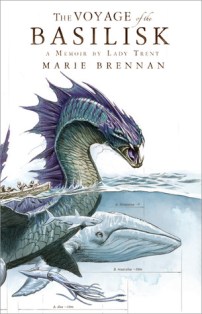
Book Review: Voyage of the Basilisk by Marie Brennan

Voyage of the Basilisk by Marie Brennan

Title: Voyage of the Basilisk

Author: Marie Brennan

Series: Memoir of Lady Trent #3

Genre: Fantasy

Rating: 4/5 stars

The Overview: Devoted readers of Lady Trent’s earlier memoirs, A Natural History of Dragons and The Tropic of Serpents, may believe themselves already acquainted with the particulars of her historic voyage aboard the Royal Survey Ship Basilisk, but the true story of that illuminating, harrowing, and scandalous journey has never been revealed—until now. Six years after her perilous exploits in Eriga, Isabella embarks on her most ambitious expedition yet: a two-year trip around the world to study all manner of dragons in every place they might be found. From feathered serpents sunning themselves in the ruins of a fallen civilization to the mighty sea serpents of the tropics, these creatures are a source of both endless fascination and frequent peril. Accompanying her is not only her young son, Jake, but a chivalrous foreign archaeologist whose interests converge with Isabella’s in ways both professional and personal. Science is, of course, the primary objective of the voyage, but Isabella’s life is rarely so simple. She must cope with storms, shipwrecks, intrigue, and warfare, even as she makes a discovery that offers a revolutionary new insight into the ancient history of dragons. -Goodreads

The Review:

I’m happy to say that Voyage of the Basilisk was a combination of everything I’ve been hoping to see since the beginning of the series. The foremost of which being the heavy focus on dragons (and not all the other crap she included in the first book… although a lot of that is now becoming relevant, so I’m kind of eating my words). I especially appreciated the infusion of fantasy, naturalism, and archaeology into this adventure.

I feel like I’m living vicariously through the main character, and am loving the chance to explore new territories, study dragons, and come up with new theories on how they impact the world. If I could have any fantasy job, dragon naturalism would be near the top of the list. Part of the reason this was my favorite installment to date is because it let me appreciate the breadth of Brennan’s dragon creation. I think she did an excellent job of incorporating a wide variety of species while keeping in mind what’s biologically feasible for each territory. VotB also hinted at a cool mystery involving ancient dragons (which just might be the overall arc of the story), which shows a depth of world building I also hadn’t truly appreciated. All the things have me super excited to pick up the next book.

I still have a slight hold-up about the main character – I like so many things about her, but she still has a tendency to make hair-brained decisions. Even though Brennan did an excellent job addressing it in this volume, it still required a bit of that eye-rolling acceptance near the end. At least the character is consistent, I guess. The best advice I can give is: just go with it.

Overall, there are moments in this series I’ll love forever, and those memorable moments seem to happen more and more with each book. If you are as obsessed with dragons as I am (and are patient enough to wait for the payoff), this is an excellent series for you. I highly recommend the audio – Kate Reading is the queen of narration.

Other books you might like:

by Niki Hawkes

Image

Book Reviews: Magic Bleeds [4] & Questionable Client [.5] by Ilona Andrews

Magic Bleeds by Ilona Andrews

Title: Magic Bleeds

Author: Ilona Andrews

Series: Kate Daniels #4

Genre: Urban Fantasy

Rating: 4/5 stars

The Overview: Kate Daniels works for the Order of Knights of Merciful Aid, officially, as a liaison with the mercenary guild. Unofficially, she cleans up the paranormal problems no one else wants to handle—especially if they involve Atlanta’s shapeshifting community. When she’s called in to investigate a fight at the Steel Horse, a bar on the border between the territories of the shapeshifters and the necromancers, Kate quickly discovers there’s a new player in town. One who’s been around for thousands of years—and rode to war at the side of Kate’s father. This foe may be too much even for Kate and Curran, the Beast Lord, to handle. Because this time Kate will be taking on family…  -Goodreads

The Review:

It would have been difficult for any book to follow Magic Strikes (one of my new favorite books EVER.), but I thought Magic Bleeds gave it a good effort. Picking up right where the last one left off, the authors did a great job progressing the overall arc of the series. It didn’t have quite as much humor or romantic tension as the books before it, but made up for it with an extra dose of mystery and action. I admit I missed a bit of that passionate spark between the two main characters, but what’s a good literary relationship without a fallout here and there? At least the mystery was engaging. The authors integrate cool mythological beings from all over the globe and it was really neat to see manifestations from different cultures. Overall, Magic Bleeds was still a great installment in a series that shaping up to be a favorite. I can’t wait to see what happens next! :-)

A Questionable Client by Ilona Andrews

Book Info: A Questionable Client [Kate Daniels #0.5]

Rating: 4.5/5 stars

I had so many issues with the first book of the Kate Daniels series, I almost didn’t continue on. That would have been a shame because I’ve enjoyed every subsequent novel and short story since. Had I started with A Questionable Client, I likely would’ve been a little more enthusiastic for the series. Heck, I think even if you’ve read the series, you’d probably enjoy this snippet. It was about how Kate and Saiman first met and I actually thought it gave Kate a lot of depth of character, showing how she became so proficient in mythological lore. In fact, I recommend all of the short stories that go along with this series – I’m only through about half of them, but so far they’ve really helped turn it into a full experience.

 by Niki Hawkes

Image

Book Review: Foreigner by C.J. Cherryh

Foreigner by C. J. Cherryh

Title: Foreigner

Author: C.J. Cherryh

Series: Foreigner #1

Genre: Science Fiction

Rating: 1.5/5 stars

The Overview: The first book in C.J. Cherryh’s eponymous series, Foreigner begins an epic tale of the survivors of a lost spacecraft who crash-land on a planet inhabited by a hostile, sentient alien race.

From its beginnings as a human-alien story of first contact, the Foreigner series has become a true science fiction odyssey, following a civilization from the age of steam through early space flight to confrontations with other alien species in distant sectors of space. It is the masterwork of a truly remarkable author. -Goodreads

The Review:

From the GR overview: above “begins an epic tale” is likely the most misleading one I’ve ever read. It gives the impression that something actually happens in the first book. I technically should be discussing Foreigner in a DNF Q&A because I stopped reading with only two chapters to go. I figured since I hit the 95% mark, I feel justified giving it a normal review.

I did not like it.

Issue #1: it had three beginnings.

Cherryh began her story, jumped through in time, began another story, then jumped through time again to start what was actually the bulk of the book. This was an issue for a couple of reasons, the foremost of which was that it took so much concentration and effort to remember all the characters introduced in the two “prologues”, that by the time the main story kicked in, my give-a-shit was busted. I didn’t really focus for the first few chapters of the main story because I kept expecting it to jump ahead again. Instead, it proceeded to drag on for another 300+ pages. I think what upsets me the most is how good the first two” starts” were and how much potential it had (and wasted).

Issue #2: the main character was very unlikable.

And not in an anti-hero “I’m an ass hole and I don’t care who knows it” kind of way, but in an entitled, “spoiled little rich boy” kind of way. Most of his contributions involved excessive whining about the lack of good accommodations and how much he wanted his mail. It was insufferable, and I can’t think of anything I actually liked about him. Harsh but true.

Issue 3: the entire story took place on the periphery of the action.

I don’t want dozens and dozens of pages of speculation on what happened. I want to EXPERIENCE it myself through the character. If there’s nothing to engage your character, apparently the solution is to infuse political speculation of no consequence. The character basically just sat there either thinking about politics, how bored he was, or, God help me, his lost mail. The general rule of thumb is, if your character is bored, your reader is board. And despite my aversion to politics in real life, I actually love reading them in books – especially between humans and interesting alien species. This book should have been an amazing cluster of intrigue, but there was very little actual political maneuvering. Just a bunch of theory and historical information (yawn). The only redeeming quality was the alien beings themselves – wicked cool (cover image).


Overall, there was so little plot advancement that Foreigner could have easily been summed up in about 50 pages or less. I’m very disappointed. I think hopes of what the story could be was what kept me reading, but I lost all gusto when I realized it just wasn’t going to get there. I’ve been collecting hardcovers for this 18 book saga for years and was looking forward to immersing myself in them and now I’m not sure what to do with them. I might go back and finish Foreigner to continue on one day, but not for a long, long while.

Other books you might like:

by Niki Hawkes