Image

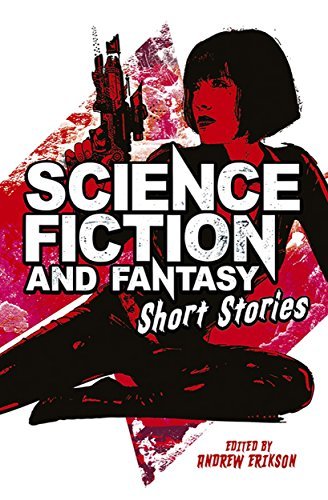
Book Review: Science Fiction and Fantasy Short Stories by Andrew Erikson (ed.)

Title: Science Fiction and Fantasy Short Stories

Author: Andrew Erikson (editor)

Series: N/A

Genre: Science Fiction

Rating: 2.5/5 stars

The Overview: Science fiction and fantasy have gone hand-in-hand since their emergence at the end of the 19th century. Containing the best short stories of the masters of the two genres, this collection brings together the outstanding imaginations of writers such as H. G. Wells, George Griffith, Robert E. Howard and William Morris. Providing both an escape from the troubles of the real world and unique insight, these tales provide an experience that can’t be replicated anywhere else.Goodreads

Dave’s Review:

This compilation is an journey through the early history of science fiction and fantasy, but I found the quality to be uneven. Some stories, particularly the H.G. Wells and Ambrose Bierce selections, remain interesting because of their ideas and the historical context in which they were written. Others are little more than pulpy adventures that feel dated today. I appreciated seeing how authors from the late nineteenth and early twentieth centuries imagined technology, space travel, and alternate realities, but too many of the stories were overly wordy, meandering, or simply failed to go anywhere particularly interesting. There are some worthwhile curiosities here, but overall I found the collection more interesting historically than enjoyable as a reading experience today.

As usual with short story collections, I noted my thoughts in a couple of sentences after reading each one, and have compiled them below.

Under the Knife by H.G. Wells. A story about a man undergoing an operation, yet is able to perceive what is happening on both a small scale and large scale via an outer body experience. Interesting for a story written in the 19th century. No doubt it was terrifying going into an operation back then, with a very high mortality rate, especially for anything major.

The Door in the Wall by H.G. Wells. This one is about a door to some sort of alternate reality where life is simple and peaceful. It definitely seems to be a metaphor for different paths in life and making decisions.

Polaris of the Snows by Charles B. Stilson. I was not familiar with the author prior to reading this story. It is a fun, pulpy adventure story that takes place in the Arctic – perhaps somewhat of a polar Tarzan. This was nothing special, just a fun read.

The Artist of the Beautiful by Nathaniel Hawthorne. I have not read Hawthorne since The Scarlet Letter in high school. This story had promise at the beginning, but ultimately did not go in the direction that I thought it might. However, that is probably not unusual for speculative fiction from so long ago. It was also overly wordy and meandering in a few places, but likely just the style of the author/times.

The Darwinian Schooner by W.L. Alden. An interesting idea of a story about a schooner found at sea, but ultimately I felt that it never went anywhere very satisfying. There was potential for a deeper story. Modern authors likely would have taken this concept much further.

A Visit to the Moon by George Griffith. I cannot say that this was a particularly good story, but it was an interesting read due to its age. This was written in 1900, the same time as H.G. Wells’ serialized novel on the same topic. Some of the details seem quite ridiculous today, but it is fascinating to see how some authors envisioned such a trip the better part of a century prior to when it occurred in reality.

Moxon’s Master by Ambrose Bierce. This starts out with “do you really believe that a machine thinks?” No doubt this was a wild statement in the late 1800s, but with AI prevalent everywhere today, it hardly raises an eyebrow. However, this was an interesting relic of a bygone era, complete with outdated perceptions of technology. And the ending, well, still very much relevant in our world today.

Rats in the Belfry by John York Cabot. An eccentric man builds a bizarre mansion and then discovers a portal. This is perhaps a simple precursor to other similar works that have since presented much more expansive ideas based on this concept. Still, this brief story was worth the small investment.

On the Martian Way by Harry Gore Bishop. I was surprised to discover afterward that this was first published in 1907, before the Titanic. I would have guessed that it took some inspiration from that event. Overall it is an average story, with some interesting insight into what we would now say is a pretty archaic view on how “shipping” routes between colonies on different planets might look.

Within an Ace of the End of the World by Robert Barr. This is a story where a world food shortage occurs at the dawn of the twentieth century. It is discovered that food can be manufactured from nitrogen in the air, but of course that then causes other problems. It was written in 1900, and is a bit bland, but it is an early attempt at tackling certain topics which are still pretty relevant today.

The Phoenix on the Sword by Robert E. Howard. A Conan story. I have read a couple of Conan novels long ago. I am not a huge fan. This is more or less what I expected, but at least in short form, it is less of a commitment. It is mildly entertaining, but there is zero depth and it suffers from some very dated tropes that feel a little uncomfortable today.

The Tower of the Elephant by Robert E. Howard. Another Conan story, this one is about a young Conan attempting to steal an artifact from a guarded tower. Again, it is purely an adventure story from another era. It is a good bit of fun with the right expectations, but it lacks any depth. This one is probably slightly more memorable than the previous Conan story in this collection.

The Shadow Kingdom by Robert E. Howard. This predates the Conan stories, and is apparently regarded as a highly influential work, considered to be one of the very first truly gritty sword and sorcery story. Be that as it may, I did not find the story particularly interesting or enjoyable to read. It feels pretentious and needlessly excessive. I guess I can at least say that I have read it now?

The Sea-Witch by Nictzin Dyalhis. I was completely unfamiliar with this author, and perhaps if would have been best left that way. This was an overly long and largely uninteresting story about, well, a witch? It is Viking-inspired, but quite pulpy and I got very little out of it for the time I invested in reading it.

The Dancer in the Crystal by Francis Flagg. This story imagines a scenario where electricity becomes nullified. Despite the strong premise, the story itself is a little underwhelming. Written in 1929 and taking place in the 1950s, the effect of the complete loss of electricity in the story is actually nowhere near as catastrophic as it would be were this to occur in our world today.

The Regent of the North by Kenneth Morris. Cool, a Viking story! Except that I found it to be very mundane. It felt like reading a history book with elegant prose. This style of short story is just so different from what tends to be popular today.

The Folk of the Mountain Door by William Morris. A Nordic tale that was supposedly an influence on early twentieth century fantasy authors. That may be the case, but I did not enjoy reading it. The prose is strong, but archaic, and the text has far too many poems/songs for my liking. I also found the story itself to be pretty unmemorable.

Image

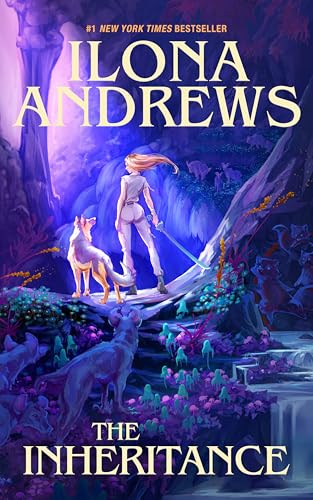
Book Review: Inheritance by Ilona Andrews

Title: Inheritance

Author: Ilona Andrews

Series: Breach Wars #1

Genre: Fantasy

Rating: 3.5/5 stars

The Overview: We are at war. The interdimensional invasion brought us unimaginable suffering, but it also awoke talents slumbering deep within us, a means to repel and destroy our enemy. Every day new gates open, leading to breaches filled with monsters and valuable resources. If you are a Talent, your country needs you. The world needs you. Be the hero you were born to be. Adaline is a Talent. Ten years ago, she had a happy marriage and a job she loved. The invasion shattered both. Now she works for the government, searching the breaches for magic metals and medicine to help Earth repel an interdimensional enemy. Two kids, one cat, bills, benefits, mortgage and school tuition…Risking her life became routine. She had gone into the dimensional gates hundreds of times. She was always well protected. This time everything goes wrong. Now Ada is trapped in the labyrinth of alien caves unlike any other. Her only companion is a scared German Shepherd named Bear. Together they must uncover the breach’s secrets and escape, because Ada promised her children that she will come home. The future of humanity depends on it.Goodreads

Niki’s Review:

Inheritance started out strong and for the most part remained a decent read the entire way through.

The beginning chapters of this surprised me in so many ways. I’ve come to expect certain things from these authors and the genre in general, so to have the story take a direction I wasn’t anticipating was particularly exciting. I suppose the stuff that happened wasn’t revolutionary, but it caught me off-guard enough that I rode the high of it through most of the book.

I can’t say that the entire thing knocked my socks off, though. It was fun – a typical IA read with interesting characters, great world-building, and an awesome animal companion. But I think I lost engagement because the book tried to do too many things. It contained an overwhelming amount of expansive world-building, with lots of very creative ideas packed into a small page count. There were a lot of “explain to the reader” passages as they conveyed the many cool things about this world and its magic systems. The story definitely needed to be longer to absorb that much detail. As it was, it got a little lost in the weeds for my tastes and left a lot less time for the actual plot progressing elements. The back half of the book felt even more crammed, which is no doubt why I finished it feeling a bit dissatisfied.

That said, everything they introduced was super interesting: cave-like portals, alien species, a monster-driven apocalypse, humans with a wide variety of special abilities, and did I mention the dog? It’s the kind of creativity that makes me love reading, and I’m definitely planning to pick up the concluding book when it comes out. As the series is planned as a duology, it might be a good place to taste test the authors if you’ve never tried them, as it’s a good approximation of what you can expect from their stories (if albeit a little compact).

IA are auto-buy, drop everything and read immediately authors for me, and this one definitely delivered on great atmosphere and a cool concept. If like me you thought the story was a bit too crammed in the back half but loved the world-building, I highly recommend their Hidden Legacy series as something more robust but with a lot of the same elements. Don’t let the covers scare you off. There is a love story in the books, but it’s not a full-blown romance. Think more along the lines of Mercy Thompson and Rachel Morgan.

Thank you to my Patrons: Dave, Katrin, Frank, Jen, Karen, Sonja, Staci, Kat, Betsy, Eliss, Mike, Elizabeth, Bee, Poochtee, Kinsey, Alysa, Derek, Kelly, Grace, Carmen, and Leticia! <3

Other books you might like:

by Niki Hawkes
Image

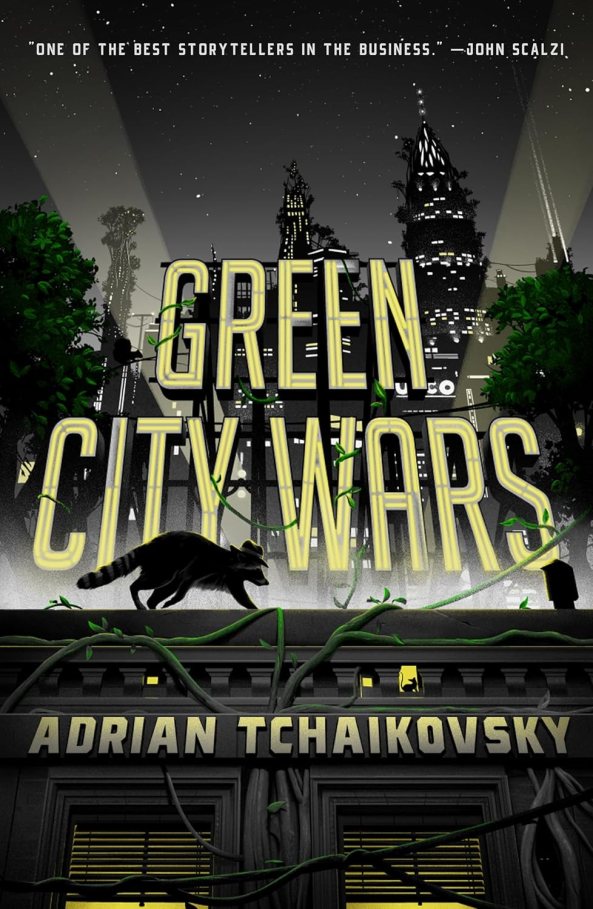
Book Review: Green City Wars by Adrian Tchaikovsky

Title: Green City Wars

Author: Adrian Tchaikovsky

Series: N/A

Genre: Fantasy

The Overview: Philip Marlowe meets Redwall in this superior adult noir tale, where all the characters are animals, fighting for survival in the city underneath the humans. In the solar cities of the future, the humans relax in the sun and the animals work in the shadows. Genetically engineered Little Helpers, serving humanity—unseen, unheard. Meet Skotch. Racoon, P.I.—Yours for a few buttons as long as the job isn’t too illegal, whatever that means. A mouse has gone missing. Normally this wouldn’t raise any hackles, nor any alarms, but this mouse has something that everyone seems to want, though nobody appears particularly eager to say what that something is. The fee is good—perhaps too good. Certainly not something Skotch can easily turn down. If only Skotch can work out where the mouse is hiding, what he’s hiding, and why his secrets are upsetting a lot of animals caught up in the Green City wars.Goodreads


Niki’s Review [2/5 stars]:

A mystery/crime noir Tchaikovsky fantasy novel that channels the Redwall series by Brian Jacques?! Freaking sign me up!

But alas, this is my second least favorite Tchaikovsky to date.

I had such high hopes for this book, but experienced a lot of issues with it. It was a very basic plot that relied on the main character meeting a series of creatures in his investigation to find this important mouse. I struggled with the repetitive nature (pun) of it as well as the slow pacing. And other than the fact that the creatures he met ranged from a loquacious pigeon to an anarchist toad (which sounds way more interesting than what was actually presented) the interactions all went the same and made up the vast majority of the book.

Additionally, Tchaikovsky withheld important information from the reader for far too long. I think it was meant to provide a motive to keep reading, extending the suspense of it all, but I found it frustrating to the point where I started to not care if I ever found out what the great big secret was. And actually, once it was finally revealed, I think knowing the secret the entire book could’ve gone a long way towards making it more engaging – because we’d know the stakes! We could get into the gritty politics of it all and actually know what all these different random animal players were hoping to achieve with their ambiguous actions. As it was, it kept me at a complete arms-distance the entire time, and I truly lost investment. Needless to say, I found it a major struggle to get through, and had it been anything other than a Tchaikovsky, I would’ve DNFed at about the halfway point.

Now don’t get me wrong, it wasn’t ALL bad. It is, after all, a Tchaikovsky and his baseline in storytelling is quite high. I thought the tone and the atmosphere of the story was particularly good. It delivered on the promise of a crime novel and had a very detective-y feel. The style of writing and voice also worked really well for the story, told in second-person, present-tense. The profiles of the characters, especially the MC, Skotch, were loads of fun, even if I wish more had been done them. The world-building and the concept for the story were unique – I always appreciate his take on futuristic, slightly dystopic narratives. And the entire premise for the story was wildly creative, which is something you can always count on from this author.

So overall, even though the book had a lot of really good components, I struggled with the execution. I consider myself a colossal Tchaikovsky fan, committed to reading everything he has written (I think I’m just about halfway through all of his works, but haven’t done an official count, so don’t quote me on that), so it pains me to review one of his books poorly. But this one just did not work for me. In general I’d say I’m struggling with his most recent releases, not having anything really knock my socks off in a few years. And I can’t help but wonder if the sheer number of projects he’s taking on is affecting his ability to make each one feel robust and cared for. I’m hoping to find another soon that hit those same amazing notes as his earlier works. I’ll be sure to share if I do. :)

Thank you to my Patrons: Dave, Katrin, Frank, Jen, Karen, Sonja, Staci, Kat, Betsy, Eliss, Mike, Elizabeth, Bee, Poochtee, Kinsey, Alysa, Derek, Kelly, Grace, Carmen, and Leticia! <3


Dave’s Review [2/5 stars]:

The concept behind Green City Wars immediately caught my attention. The combination of its unusual setting, strange characters, and distinctive style should make for an entertaining story, and there are definitely moments where Tchaikovsky’s imagination shines through. A noir detective story with uplifted anthropomorphic characters from a proven author? How could this not be a win? Unfortunately, I found the actual experience of reading it much less interesting than the premise suggested.

The biggest problem for me was the repetition. The story repeatedly returns to similar situations and ideas, and after a while, what should have been exciting began to feel tedious. There is plenty happening, but I often found myself bored despite the fact that, on paper, this should be a pretty entertaining story. The novel feels like it needed another round of editing and revision to tighten the narrative and eliminate some of the repetition. The material might even have been better suited for a novella rather than a full-length novel.

Skotch is the main protagonist of the story, a private investigator who is also a genetically modified raccoon. He is interesting, distinctive, and certainly my favorite character in the book. If not for the fact that he is a raccoon, I would probably imagine him as Humphrey Bogart. Unfortunately, most of the other characters failed to make nearly as much of an impression. I never became particularly invested in them, which made the more repetitive sections of the story even more of a slog at times.

I listened to the audiobook for this one, and the narrator does a strong job, particularly with bringing the various characters and the unusual world to life. Unfortunately, even a good performance could not redeem a story that I found increasingly tedious.

There is certainly a good book buried somewhere in Green City Wars. The concept and style are both interesting, and Skotch is a strong character, but the repetition and need for further editing ultimately made this a disappointing read.


Other books you might like:

Image

Novella Review: To Blackfyre Keep by Anthony Ryan

Title: To Blackfyre Keep

Author: Anthony Ryan

Series: Seven Swords #4

Genre: Fantasy

Rating: 3.5/5 stars

The Overview: Guyime – Demon Cursed wielder of the nameless blade – follows the trail of the fabled seven swords into the troubled northlands, a realm where he was once called king… and ravager. Magically guided to enlist in the retinue of a lovesick knight, Guyime and his companions journey to the haunted ruin of Blackfyre Keep, a castle legend tells cannot be held. But a far deadlier threat than mere ghosts awaits. An ancient evil has been conjured and to defeat it Guyime may be forced to become the monster he used to be—the Ravager reborn. Goodreads

Niki’s Review:

Another entertaining installment! We’re at the point in the series now where momentum is starting to build and patterns are emerging – I’m thoroughly enjoying every step.

My favorite thing about the series is the incredibly expansive world-building. These rich settings have such depth, and all the books so far have made me feel like I’ve consumed a full-length series rather than a couple of meager novellas. It’s amazing to me that he’s able to pack so much into such a small page count. I’ve compared the first book to the atmosphere and expansiveness that I felt in my read of the first few Malazan books, and I still stand by that comparison. It has that X factor. And as world-building draws me to stories more than anything else, you can see why I’m enamored (even if my rating for this specific book is a bit conservative).

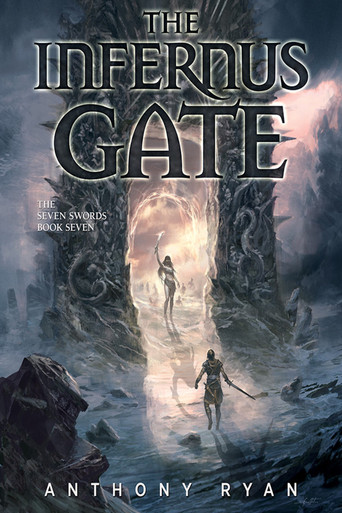
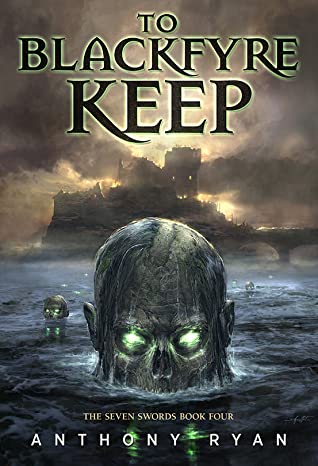
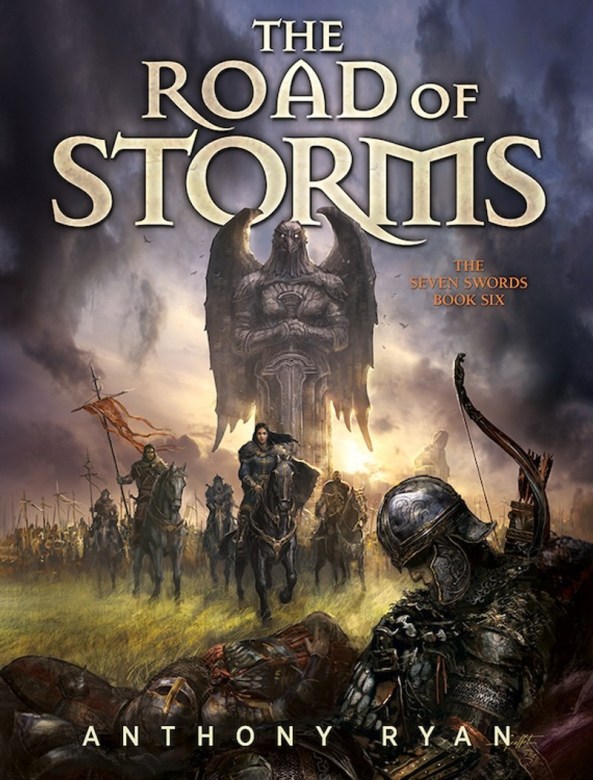
These books are more than the sum of their parts, and I’m there for all of it. This one in particular told a story I feel I’ve read before, missing a bit of the novelty from previous books. Also, as rad as I think the cover is, it does kind of let the cat out of the bag on this “great big mystery” of what’s going on around this keep. I read mostly for the discovery process, so knowing what was coming before it was revealed definitely affected my enjoyment (and therefore my rating) a bit. Even so, this is a highly recommendable little snack of a series, and I can’t wait to find out what happens next!

Thank you to my Patrons: Dave, Katrin, Frank, Jen, Karen, Sonja, Staci, Kat, Betsy, Eliss, Mike, Elizabeth, Bee, Poochtee, Kinsey, Alysa, Derek, Kelly, Grace, Carmen, and Leticia! <3

Other books you might like:

by Niki Hawkes
Image

Book Review: Among Others by Jo Walton

Title: Among Others

Author: Jo Walton

Series: N/A

Genre: Fantasy

Rating: 2/5 stars

The Overview: Startling, unusual, and yet irresistibly readable, Among Others is at once the compelling story of a young woman struggling to escape a troubled childhood, a brilliant diary of first encounters with the great novels of modern fantasy and science fiction, and a spellbinding tale of escape from ancient enchantment. Raised by a half-mad mother who dabbled in magic, Morwenna Phelps found refuge in two worlds. As a child growing up in Wales, she and her twin sister played among the spirits who made their homes in industrial ruins, but her mind found freedom and promise in the science fiction novels that were her closest companions. When her mother tries to bend the spirits to dark ends with deadly results, Mori is sent away and must try to come to terms with what has happened without falling prey to the darkness.Goodreads

Dave’s Review:

Among Others is one of those books that sounds great on paper, and seems perfect for anyone who spent time reading classic science fiction and fantasy during their younger years – which certainly describes me. However, if you are actually looking for any sort of narrative to go along with that nostalgia, you will probably need to look elsewhere.

The novel follows Morwenna (Mori), a teenage girl attending a British boarding school. It takes place over the course of about a year, 1979, and is presented in the format of a diary written by Mori herself. The fantasy/magical elements are very subtle here, while the emotional core centers on Mori’s immersion in books as a coping mechanism for her childhood trauma. She goes extensively into the books that she is reading – and there are a lot of them over the course of the year. For me, this was the most fun element of the story, but unfortunately, they are not very well integrated into the narrative, often serving as more of a diversion from the lack of much of any plot than anything. I enjoyed the references to many authors and books that I have either read, or own and are waiting to be read, but anyone without much background in the classics may find all of the unfamiliar name-dropping to be tedious and repetitive.

Mori herself is an interesting and sympathetic narrator, but her arc feels flat over the course of the book. There is a conflict with her mother that is mostly internalized, and some dark things in her past which sound more interesting than anything that occurs over the course of the book, but this is alluded to only sparingly. There are also some magical elements that are so subdued and ambiguous that they seem almost unimportant. I also found the conclusion of the book to be very anticlimactic. Some of this may be a result of the diary format itself, which in general tends to be a reflective way of telling a story rather than immersing the reader in actions of the present.

The book contains magical realism elements and is written in a lyrical yet accessible style that will probably appeal to fans of Susanna Clarke or Ursula Le Guin (in fact, Le Guin wrote the introduction to my edition of the book). However, I find both of those authors to be superior to Walton, or at least to what we get in this book, which is the only Walton that I have read. The endless lists of books and name-dropping are more akin to the likes of Ready Player One, and although the writing style of Among Others is better, Cline uses them to tell a riveting adventure story, whereas Walton makes them too much the focus of the bare-bones story.

Sadly, this book did not work for me at all. It did win both the Hugo and Nebula awards, and it is apparent why it has some avid admirers, but the author’s approach just did not work for me. The classic science fiction and fantasy book references kept me going through the novel’s relatively short length, but I was relieved to be moving on to something else when I reached the end. Ultimately, Among Others feels more like a celebration of the genre rather than a compelling novel in its own right.

Image

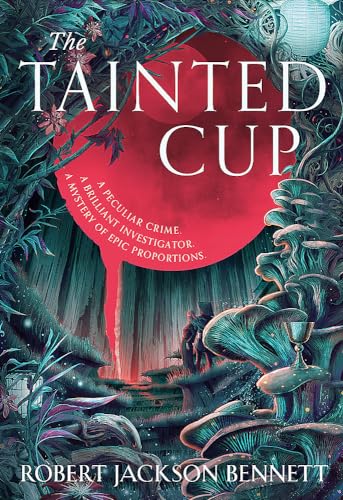
Book Review: The Tainted Cup by Robert Jackson Bennett

Title: The Tainted Cup

Author: Robert Jackson Bennett

Series: Shadow of the Leviathan #1

Genre: Fantasy

The Overview: In Daretana’s greatest mansion, a high imperial officer lies dead—killed, to all appearances, when a tree erupted from his body. Even here at the Empire’s borders, where contagions abound and the blood of the leviathans works strange magical changes, it’s a death both terrifying and impossible. Assigned to investigate is Ana Dolabra, a detective whose reputation for brilliance is matched only by her eccentricities. Rumor has it that she wears a blindfold at all times, and that she can solve impossible cases without even stepping outside the walls of her home. At her side is her new assistant, Dinios Kol, magically altered in ways that make him the perfect aide to Ana’s brilliance. Din is at turns scandalized, perplexed, and utterly infuriated by his new superior—but as the case unfolds and he watches Ana’s mind leap from one startling deduction to the next, he must admit that she is, indeed, the Empire’s greatest detective. As the two close in on a mastermind and uncover a scheme that threatens the Empire itself, Din realizes he’s barely begun to assemble the puzzle that is Ana Dolabra—and wonders how long he’ll be able to keep his own secrets safe from her piercing intellect.Goodreads

Niki’s Review [4.5/5 stars]:

A few years ago I read Foundryside by this author and absolutely loved it. Then this book came out in 2024 and people have been absolutely raving about it ever since. Needless to say I went into The Tainted Cup with ridiculously high expectations. And you know what? It didn’t disappoint.

World-building is my favorite component to SFF books. It’s the category that can often make or break my rating scale. I love it when authors can dazzle me, and this is exactly what happened with Tainted Cup. The basic magic system around the cool, engineered plantlife was great, enough to sustain entire series from other authors. Then you add in some subtle magical talents, which definitely made the characters more interesting. But wait, more?! Nothing big, just a freaking leviathan… it was superb. Between this and Foundryside, I’ve come to love this author for his wild creativity and great magic systems. If you’re a fan of Sanderson’s world-building, definitely give Bennett a try.

I also loved the characters. Which is weird because I don’t think I had much of an emotional connection to them. They were novelties – highly interesting profiles that I can’t wait to learn more about in future books. I tend to really like flawed, enigma characters because they often have some of the better growth arcs. The quick wit and banter between the two main characters was easily my favorite part of the book. The back and forth was hysterical and made both characters immediately more endearing. Also, Ana might be my spirit animal.

This is a fantasy/mystery hybrid and I think it will appeal to readers of both genres. Lots of fantasy books include mysteries, but not many feature them quite to this degree. It unfolded with a very satisfying and quick pace, and there was enough substance for me to try to form my own theories. I think the punchline for the mystery, the “big reveal” if you will, could’ve been a touch stronger and a mite less straight-forward, which is my only slight letdown from the book. But it more than made up for that with all of the other amazing components.

So great world-building, interesting characters, lots of humor, a quick plot, and a fun mystery to solve – this book is solid! I can’t wait for the next one. :D

Thank you to my Patrons: Dave, Katrin, Frank, Jen, Karen, Sonja, Staci, Kat, Betsy, Eliss, Mike, Elizabeth, Bee, Poochtee, Kinsey, Alysa, Derek, Kelly, Grace, Carmen, and Leticia! <3

Dave’s Review [4.5/5 stars]:

The Tainted Cup initially found its way onto my radar when it won the Hugo Award last year. I knew little about it, and had never read anything by Robert Jackson Bennett prior to this. It is quite fortunate that the book came to my attention, because it is one of the best fantasy novels that I have read in some time. It is unique in that it is a fantasy novel very much in the style of a Sherlock Holmes or Hercule Poirot detective story, while also showcasing the imaginative worldbuilding that we come to expect in top-tier modern fantasy.

The mystery itself is compelling and near perfectly paced. The author drops clues mixed with twists and revelations throughout. The central conspiracy unfolded in a way that always kept me guessing and wanting to read just a bit further. I am unsure whether the author gives the reader enough clues to solve the mystery before the detective does, as I was kept guessing until the end, but that in no way diminished my appreciated for the book.

Much of the book’s charm and humor comes from the two main characters. Ana, the lead investigator, is unforgettable. She is sharp, eccentric, and intimidating, and we never quite know what she is thinking, as she is not the POV character of the story. Ana is very much the Sherlock Holmes of The Tainted Cup. Instead, we see the story through her assistant, Din. He is methodical and observant, our eyes in the narrative. He does not always understand Ana’s unconventional methods (as neither do we), but he trusts in her abilities and intentions. Their relationship evolves naturally over the course of the investigation, and their dynamic of both mutual respect and dry humor is an incredibly endearing accompaniment to the mystery itself.

The worldbuilding is another standout in this book. Bennett details a civilization with some bizarre yet interesting biological augmentations that seamlessly blend into the political machinations of the story. There is also an ever-present threat of massive leviathans, which, if I am honest, did not factor into the story as much as I might have expected. Perhaps this will be a more prominent element in subsequent books, as this is the first of a series. The setting, though, is pretty original, and serves the story perfectly.

Sure, there are some other mystery or detective stories in science fiction and fantasy, but at the moment, I am failing to recall any that I have read. That may be why this one stands out as quite unique in my mind. I would probably most liken this to some of the works of Brandon Sanderson, as the worldbuilding and writing style most remind me of his. This is a great start to a series that has a lot of promise. I plan to continue with the next book very soon, and also want to explore some of Bennett’s earlier novels as well. 4.5 stars.

Other books you might like: