Image

Book Review: The Selection Stories by Kiera Cass

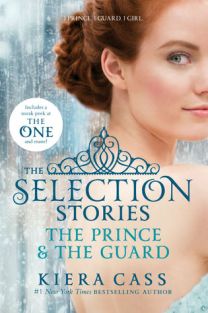
The selection storiesTitle: The Selection Stories: The Prince & The Guard

Author: Kiera Cass

Series: The Selection Novellas

Genre: Teen Dystopian (sort of)

Rating: 4/5 stars

The Overview: The Prince and The Guard both offer captivating views into the hearts and minds of the two men fighting to win America Singer’s love. Before America arrived at the palace to compete in the Selection, there was another girl in Prince Maxon’s life. The Prince opens the week before the Selection begins and follows Maxon through the first day of the competition. Raised as a Six, Aspen Leger never dreamed that he would find himself living in the palace as a member of the royal guard. In The Guard, readers get an inside look at Aspen’s life within the palace walls—and the truth about a guard’s world that America will never know.
The selection stories 2

The Review: 

Reading these novellas was the perfect way to amp myself up for The One – the conclusion to the The Selection trilogy. These short stories show a bit of behind the scenes action surrounding the two love interests within the trilogy. The Prince is from Maxom’s perspective that takes place within the timeline of The Selection (book 1), while The Guard is from Aspen’s perspective and takes place alongside The Elite (book 2).  As it had been over a year since I read books 1&2, these novellas were the perfect way to refresh my memory before diving into the conclusion.

My favorite story was The Prince. Reading from Maxom’s POV was totally delightful, and I would especially love it if an entire book was written from his perspective. It was neat getting an inside look to the selection process and experiencing some of the mixed emotions Maxom felt while entering into it. I always liked him, but this novella made me love him even more. While The Prince is not essential to the main story, I still recommend it highly, as I think most Selection fans will enjoy it.

The Guard was an interesting story, but it wasn’t anything profound. You see, in my mind, Maxom is so right for America that I haven’t ever entertained Aspen as a real possibility. I often find scenes America shares with him frustrating, and just don’t agree with many of his decisions. That said, however, it was great to read about his interactions with the other people of the castle and to see what a positive influence he had on all of them – specifically America’s maids. While I recommend The Prince for purely entertainment purposes, I recommend The Guard for certain plot points that will help make The One (the final book) more enjoyable.

What’s next? I am going to hole myself up in a room for a day and completely devour The One. I want to savor it, because it’s the trilogy ending I’ve been most anticipating for the past year, but I know it’s not going to take me much longer than that to read. If you’re like me and are sad to see this series come to an end, keep hope, as Cass is releasing the novella, The Queen (detailing Queen Amberly’s own selection journey) which will be released in early December. I, for one, am stoked to get my hands on that, even though it’s just another novella. Heck, I love the concept behind the story so much I’d be willing to read books about all of the selections within this world – keep them coming Kiera!

If you haven’t read The Selection and want to, now’s your chance – our YA Escape Reality Book Club (which anybody can join, provided they love YA novels), has chosen The Selection for May’s official book, and I can’t wait to talk about it!

Otherbooks you might like:

by Niki Hawkes

Image

Book Review: City of Dragons by Robin Hobb

City of dragonsTitle: City of Dragons
Author: Robin Hobb

Series: Rain Wild Chronicles #3

Genre: Fantasy

Rating: 5/5 stars!

The Overview: Once, dragons ruled the Rain Wilds, tended by privileged human servants known as Elderlings. But a series of cataclysmic eruptions nearly drove these magnificent creatures to extinction. Born weak and deformed, the last of their kind had one hope for survival: to return to their ancient city of Kelsingra. Accompanied by a disparate crew of untested young keepers, the dragons embarked on a harsh journey into the unknown along the toxic Rain Wild River. Battling starvation, a hostile climate, and treacherous enemies, dragons and humans began to forge magical connections, bonds that have wrought astonishing transformations for them all. And though Kelsingra is finally near, their odyssey has only begun.

Because of the swollen waters of the Rain Wild River, the lost city can be reached only by flight—a test of endurance and skill beyond the stunted dragons’ strength. Venturing across the swift-running river in tiny boats, the dragon scholar Alise and a handful of keepers discover a world far different from anything they have ever known or imagined. Immense, ornate structures of black stone veined with silver and lifelike stone statues line the silent, eerily empty streets. Yet what are the whispers they hear, the shadows of voices and bursts of light that flutter and are gone? And why do they feel as if eyes are watching them? The dragons must plumb the depths of their ancestral memories to help them take flight and unlock the secrets buried in Kelsingra. But enemies driven by greed and dark desires are approaching. Time is running out, not only for the dragons but for their human keepers as well.

City of dragons 2

The Review:

I talk about Robin Hobb as often as I can! Her books contain everything I love about fantasy – great characters, epic world building, engaging conflict, effortless writing, and dragons! While Kim Harrison is my go-to author for urban fantasy, Robin Hobb is definitely my go-to for high fantasy. I can always count on Hobb to deliver a meaningful, entertaining story. I’ve been slowly working my way through all of her books for the last five years. The trouble is, I’m almost caught up and that horrifies me. All I’m saying is, thank goodness she has a new series coming out in August (The Fitz and the Fool).

City of Dragons is the point when readers start discovering answers to questions that have been built over the entire saga. What’s more, the answers to most of those questions revolve around dragons! And fabulous dragons, at that – they have distinct personalities, always behaving exactly how I think dragon should. Even when the story jumps into a dragon’s POV, you can tell there’s nothing human about them – it’s excellent! The good news is, these are some of the best dragon books out there (in my opinion), the bad news is, I don’t often recommend them for the dragon appeal because dragons don’t play a huge role until later in the saga (though they are still integral to the plot). They’re worth reading, though, because part of the magic is the momentum–building throughout several trilogies, which makes the bits I’m reading now so much feel absolutely epic!

The dragons are great, there’s no doubt about that, but the human characters are what pull me in emotionally and make Hobb’s books so absorbing. Each characters has such strong, compelling conflicts that it’s impossible not to become involved with their individual stories. I’m particularly happy in this novel that we got a chance to read more about Malta and Selden – characters I don’t think we’ve seen since the Liveship trilogy. Good storytelling for me is seeing characters tackle challenges and overcome them, and Hobb’s books have that in abundance. While the most evoking challenges take place on a personal level, the external conflicts in this series are just as strong. Hobb is so conscious of what’s happening in this world on a global scale that it makes everything so much more integrated and realistic. When things that are happening to the characters affect cities half a continent away, it adds a level of complexity and dynamics to the story that helps bring it to life.

It’s no secret Hobb is one of my favorite authors, and I hope I was able to convey a smidgen of why that is through my gushing. These books are excellent, but they definitely have a slower pacing compared to some other fantasy novels on the market (although never boring). If that doesn’t bother you then trust me, you’re in for something amazing!

Other books you might like:

by Niki Hawkes

Image

Writing Diaries: Writing Satisfying Endings

Writing diaries

The Writer’s Ramble Edition!

Writer’s Ramble is a monthly multi-blog feature put together by members of my writing group (fantastically known as “Word Vomit”). Every month, we all share our thoughts on a specific writing topic and combine them all in a one-stop hub of information on our Writers’ Ramble website. I am stoked to be among such talented and insightful writers, and have learned a ton about the craft of writing in the short time I’ve been with them. All I’m saying is, if you find the topic of the month enticing, head over to www.writersramble.com  for even more advice from these amazing writers and leave with a brain full of writing awesomeness.

How To Write Satisfying Endings

A lot more goes into writing a great ending then most people realize. There are so many elements to consider, everything from conflict resolutions to character growth, and they all have to weave their way to a single, satisfying ending. In this post, I’ll present my four essential elements of story endings and speculate on why some strategies work better than others when concluding a story.

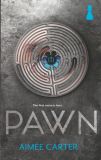
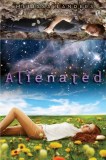
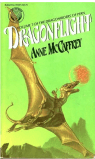
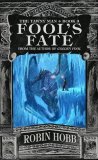
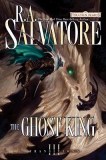
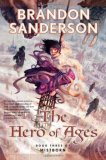
Pictured below are the books that contain my all time favorite endings:


As a reader, I reveled in these endings for months, talking about them as often as I could; and that’s what great endings do – they make you want to share the experience with other readers. I knew I’d love them, but couldn’t really pinpoint why. Now, analyzing them from a writer’s perspective, it’s clear to me that each of these books have a handful of common attributes – ones that I feel are essential elements in crafting a good ending:

1. Momentum

I’ve always preferred endings that result from the culmination of many events. The sort of story progression that starts to build momentum near the middle of the book before careening towards the end – taking the reader along for the ride in the process. It’s all leading up to that moment where everything falls into place – the conflicts reach a climax, the hero fulfills his destiny, and things work out the way they’re supposed to. You know the ones I’m talking about, the books that keep you up until 3 AM on work nights because you just can’t bring yourself to put them down? It all comes down to good momentum. Granted, you can have all of those things without good momentum, but the books that really stick with me all have that hold-your-breath/can’t-put-it-down excitement that make the journey so much more satisfying.

2. Emotional Investment

That’s right, relatability of the main characters throughout a novel plays a huge role in how I feel about the ending. While this attribute seems a given, it is amazing to me how many authors don’t take the time to get the readers emotionally invested in their protagonists. How you build your conflicts around the characters and how they progress an developed through each trial are probably the most important elements of storytelling. If a novel lacks those essential conflicts and development, it’s almost impossible to get me worked up about an ending… even an unbearably sad one. Meanwhile authors who can make me truly care about the character and their conflicts have the power to turn me into a sobbing mess.

3. Feeling “Right”

Any of you who have heard the mixed reviews for the ending of “Allegiant” by Veronica Roth know how subjective a “good” ending can be. A lot of it comes down to the individual tastes and expectations of the reader. I’m one of the people dissatisfied with the ending of the Divergent trilogy and, as I’ve finally managed to figure out why, I’ll explain my reasoning [without spoilers].

Although it’s nearly impossible to please everyone, and ending that makes sense within the framework of the story will generally satisfy most people. In my opinion, Allegiant’s ending wasn’t the logical result of the culmination of events that had preceded it. The momentum leading up to the ending, and in fact the conflicts themselves had the potential to be profound, but instead felt contrived and random.

That’s not to say it a great ending needs to be predictable, it just needs to make sense. I would go so far as to say that unpredictable endings are the best, provided the reader can look back and see a logical progression of how it got there. Essentially, just make sure your ending makes sense in hindsight. Good or bad, an ending has to feel “right” to the reader.

4. Resolution

All of the books I love for their endings have clear conflict resolutions and completed story arcs. The resolutions don’t have to be happy ones, but I will admit I like them better when they are, and I don’t think I’m alone. Marg McAlister Writing 4 Success said it best:

“Most readers treat a novel as an escape from the real world. In the real world, things go wrong; sometimes consequences are dire. A book, however, offers an opportunity to spend a few hours in a happier place, where (mostly) things work out in the end. Authors should keep this in mind.”

Note that McAlister didn’t say specifically not to kill off characters, she just said things needed to work themselves out. If characters need to die to make that happen, be very conscious when that their deaths aren’t for nothing (or worse, for shock value… Mockingjay, I’m talking to you). I understand that sometimes a story calls for a heart-wrenching ending, I’m just not someone who enjoys reading them often. A book that makes me cry because I’m happy always sticks with me longer than one that makes me cry because I’m sad. It’s okay to write a story where things don’t work out for the best, but you might lose a bit of audience appeal, removing that instant urge to recommend it to other people.

Combining the Attributes

Whether you’re writing a stand-alone novel or a twenty book series, focus on building that great momentum, investing the reader in your characters, and resolving your conflicts – letting all of these things influence what the “right” ending should be. In my opinion, having a good ending is almost more important than having a good beginning. The best advertising you can get for your book is word-of-mouth, and a great ending will get people talking!

Extras:

So how does YOUR ending stack up? Jennifer Bosworth in an article featured on the official NaNoRiMo Blog provides a few great questions to ask yourself during revision:

  • Have I set up the ending of this story, or does it come out of nowhere? Have I been too obvious about my set-up, making the ending predictable?
  • Have my main characters arced? Have they completed a transformative journey? 
  • Does my ending support the theme of the book?

I’ve added a few more:

  • Does your ending have a good lead-up (in other words, does it have sufficient momentum?)
  • Have the main conflicts been resolved?
  • Have the characters ended up where you feel they should?

Knowing a little bit about what the expectations for a good ending can go a long way in helping you shape your story. I hope you found my breakdown helpful.

Don’t forget to check out advice from our other contributors (here) – you never know what bit of information will spark a solution for your own writing. The more you know, the closer you are to becoming a successful writer!

by Niki Hawkes

Image

Book Review: After the End by Amy Plum

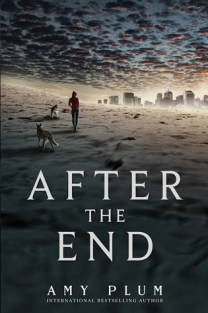
After the endTitle: After the End

Author: Amy Plum

Series: After the End #1

Genre: Teen Fantasy

Rating: 3.5/5 stars

The Overview: She’s searching for answers to her past. They’re hunting her to save their future. World War III has left the world ravaged by nuclear radiation. A lucky few escaped to the Alaskan wilderness. They’ve survived for the last thirty years by living off the land, being one with nature, and hiding from whoever else might still be out there. At least, this is what Juneau has been told her entire life. When Juneau returns from a hunting trip to discover that everyone in her clan has vanished, she sets off to find them. Leaving the boundaries of their land for the very first time, she learns something horrifying: There never was a war. Cities were never destroyed. The world is intact. Everything was a lie. Now Juneau is adrift in a modern-day world she never knew existed. But while she’s trying to find a way to rescue her friends and family, someone else is looking for her. Someone who knows the extraordinary truth about the secrets of her past.

 The Review:

Those of you who follow my blog regularly might remember that I went on a digital arc requesting spree back in January – a rather greedy decision that I’m still paying for in May. After the End was one of those titles I probably shouldn’tt have asked for, considering I hadn’t yet read anything by the author. However, I’m glad I did because it drew me in on the first page and didn’t let up until the end.

The dual POV was easily my favorite part of the book, as both Juneau and Miles brought their own flavor to the story. Juneau’s plight was interesting, and I felt intellectually drawn to her throughout the story, but Miles was the character that sold it for me. He was just so funny and I found myself thinking “just one more chapter” to see what would happen with him next. I would go so far as to say he’s one of my favorite characters read about so far this year. He was earnest and vibrant, and I love how distinct his voice was from Juneau’s.

Another thing I really liked about the story is that it took place practically in my own backyard. Not to say that the setting was in Southern Utah, but Plum described places I’ve been and highways I’ve traveled, and it made the story have an extra element of fun because I could picture them perfectly! I’ve also always been incredibly fascinated in Alaskan culture (Eskimos!), and although Juneau’s clan wasn’t indigenous, her people lived off the land and had a great connection with nature… something I’ve always admired but could never bring myself to do (maybe if the yurts had electrical outlets?). Anyway, that bond with nature provided the basis for a cool magic system, and I look forward to exploring it further with Juneau in the second book.

The only thing I didn’t enjoy about this book was the ending… the story stops in kind of an odd spot and I didn’t find it particularly climactic. As this is a series, the ending isn’t a deal breaker, but I can think of the few things that would have made it stronger. I will leave it at that to avoid spoilers. :-)

Overall, I may not have read anything else by Plum before, but I am strongly considering picking up her other series now because of how much I liked the writing style and the voice of her characters. The writing had this great effortless feel, and was a lot of fun to read. If you’re in the mood for an entertaining story that’s not quite like anything else, this would be a great pick!

Other books you might like:

by Niki Hawkes

Image

DNF Review: The Eighth Day by Dianne K. Salerni

The eighth dayTitle: The Eighth Day

Author: Dianne K. Salerni

Series: The Eighth Day #1

Genre: Teen Fantasy… maybe.

Rating: DNF

The Overview: In this riveting fantasy adventure, thirteen-year-old Jax Aubrey discovers a secret eighth day with roots tracing back to Arthurian legend. Fans of Percy Jackson will devour this first book in a new series that combines exciting magic and pulse-pounding suspense. When Jax wakes up to a world without any people in it, he assumes it’s the zombie apocalypse. But when he runs into his eighteen-year-old guardian, Riley Pendare, he learns that he’s really in the eighth day—an extra day sandwiched between Wednesday and Thursday. Some people—like Jax and Riley—are Transitioners, able to live in all eight days, while others, including Evangeline, the elusive teenage girl who’s been hiding in the house next door, exist only on this special day. And there’s a reason Evangeline’s hiding. She is a descendant of the powerful wizard Merlin, and there is a group of people who wish to use her in order to destroy the normal seven-day world and all who live in it. Torn between protecting his new friend and saving the entire human race from complete destruction, Jax is faced with an impossible choice. Even with an eighth day, time is running out.

The eighth day 2

The Review:

I try not to post DNF reviews unless I think something in my reading experience might make a difference for someone else (either a positive or negative influence… pretty much whatever helps the reader out the most). In this case, I actually think a lot of people are going to enjoy this book despite my personal objections. It had an original concept, entertaining writing, and interesting characters – there were just a few things that kept me from fully appreciating it.

It started out with a really cool concept and a mildly futuristic, technological feel. The idea that time stands still for an eighth day of the week – which only a few people get to experience – was evoking, and I found myself engaged in the story right from the start. However, somewhere around 1/4 of the way through the book, the story suddenly shifted from that mildly futuristic feel to suddenly revolving around Arthurian lore… it was really bizarre. Up until that point, there was zero indication that this was where the story was heading. A few drop-in references of King Arthur and Merlin earlier on would’ve gone a long way in marrying these two very different plot ideas together (thereby preventing me from feeling totally blindsided).

I realize if I had read the overview more carefully before requesting this book, I probably could have saved myself a lot of time, as I don’t particularly enjoy reading anything Arthurian. That said, what the author did with the lore had an interesting twist, and I might have stuck with it if not for my biggest issue with the book. You see, by the time I stopped reading – about halfway through the book, the main arc (as in, the purpose of the story) was only just starting to be hinted at. Up until that point, the book had good elements, but no clear direction. I don’t ask much: just a general inkling of who the bad guy is and what danger that bad guy holds for the characters (heck, in this novel I would’ve settled for just one). I think it would’ve been really easy to incorporate early on, and might even have fixed the blindsided effect I mentioned earlier. In any case, I just got tired of waiting to find out what the book was about. As a general rule, the sooner you can bring in your main conflict, the better. I felt this book lacked a lot of organization and focus.

If you couldn’t tell, The Eighth Day didn’t work for me. Aside from the fact that I don’t care for Arthurian lore (a preference issue that probably won’t affect most readers), there were many things that sucked my enjoyment out of what could have been a really cool book – after all, it had interesting characters, a cool basic concept, and Salneri had a great writing voice… for me too many other elements fell short. The beauty of this review is that I don’t think my issues will bother many other readers. If you like Arthurian lore and don’t mind waiting until the second half of the book for the story to really start, give this one go… but don’t say I didn’t warn you. ;)

Other books you might like (better):

by Niki Hawkes

Image

Book Review: Rush by Eve Silver

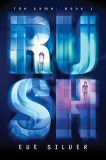
RushTitle: Rush

Author: Eve Silver

Series: The Game #1

Genre: Teen Fantasy

Rating: 3/5 stars

The Overview: When Miki Jones is pulled from her life, pulled through time and space into some kind of game—her carefully controlled life spirals into chaos. In the game, she and a team of other teens are sent on missions to eliminate the Drau, terrifying and beautiful alien creatures. There are no practice runs, no training, and no way out. Miki has only the guidance of secretive but maddeningly attractive team leader Jackson Tate, who says the game isn’t really a game, that what Miki and her new teammates do now determines their survival, and the survival of every other person on this planet. She laughs. He doesn’t. And then the game takes a deadly and terrifying turn.

Rush 2

The Review:

Based on the premise of Rush – involving live-action video game battles against invading aliens – I’m actually surprised I hadn’t picked it up before now. I love competitions (I know, you guys are sick of hearing that) and have always wondered what it would be like if the contents of video games were reality. Now, if I were to pick one to bring to life, it probably wouldn’t be a scary shoot-em-up alien game because I’m a wimp, but watching others live it was super intense and exciting!

The sequences that took place in the “game” were my favorite parts of the book. It set a cool atmosphere right from the start, and the way Silver presented it really drew me me into the story. I like the framework behind how everything worked and the rules within the game. It sounded like fun… you know, provided you weren’t actually living it. I enjoyed watching Miki, an ordinary girl, draw on strength she didn’t even know she had in order to adapt and survive. I will say, as much as I enjoyed the action sequences in Rush, I have a strong suspicion the bits found in Push will be even more fascinating. I won’t ruin the plot or anything, but suffice to say Silver set things up strongly for her sequel.

One thing I’m looking forward to in the sequel is going in with more information right up front – which is something that could’ve made Rush a lot stronger. I know you need an element of discovery to keep your readers engaged, but the back-and-forth Q&A in Rush seemed like it went on forever (when you get to the last couple chapters of the book and your main character is still trying to get basic answers – who, what, when, where, why – there might be a problem). I actually think including that information early on and cutting some of the lengthy Q&A sections would have added a great deal to the plot, and perhaps solved some of my dissatisfaction with the reality sequences…

While half of the novel takes place in the game, the rest takes place in reality where teenage drama and romance unfold. I have to say, the teenage drama part was okay, but I didn’t enjoy the love story as much as I thought I would. I hate to admit that I think the problem was an instalove – the sort with no compelling reason why the main character would be drawn to a guy… unless her only criteria was “he was hot.” After the fifth or sixth time she called him an asshole (and meant it), I just couldn’t wrap my brain around why she all of a sudden thought “Ooooooh, I really want to date this guy!”

Now, of course as with any teen drama, the boy she liked was not as awful as the façade he showed the world, blah blah blah, but that doesn’t change his behavior towards Miki, and I didn’t buy in to her sudden fawning, even knowing how these things usually go. Maybe if I was more convinced of their relationship at first, the reality scenes wouldn’t have drug out quite so much, but it is what it is. There is a silver lining though – even though I couldn’t understand the initial attraction, I can definitely see what’s holding the relationship together, so I might be able to enjoy the romance in the second book a lot better.

My rant about the insalove aside (which I swear I’ve never cared about before… I guess the blogosphere is rubbing off on me), the way it was done actually fit in well with the framework of the story, and I can see why Silver presented it that way. All of the story elements worked well together and it was nice to see how one thing built off of another.

Overall, despite a bit of dissatisfaction with the love story, the action scenes were enough to make Rush an enjoyable read. The author left things off in a way that makes me doubly excited to pick up the second book, so there’s hope any issue I had will disappear in the next installment. I’m sure I could find people to recommend this too – it had enough strong points and all the negatives were preferential. It’s definitely different… I think it would be perfect for someone who likes action in books, but doesn’t want all the depressing baggage that comes along with full-blown dystopians/post-apocalyptics.

Other books you might like:

by Niki Hawkes