Image

Book Review: Pariah by Anthony Ryan

Title: Pariah

Author: Anthony Ryan

Series: Covenant of Steel #1

Genre: Fantasy

Rating: 2/5 stars

The Overview: Born into the troubled kingdom of Albermaine, Alwyn Scribe is raised as an outlaw. Quick of wit and deft with a blade, Alwyn is content with the freedom of the woods and the comradeship of his fellow thieves. But an act of betrayal sets him on a new path – one of blood and vengeance, which eventually leads him to a soldier’s life in the king’s army. Fighting under the command of Lady Evadine Courlain, a noblewoman beset by visions of a demonic apocalypse, Alwyn must survive war and the deadly intrigues of the nobility if he hopes to claim his vengeance. But as dark forces, both human and arcane, gather to oppose Evadine’s rise, Alwyn faces a choice: can he be a warrior, or will he always be an outlaw? -Goodreads

The Review:

Pariah was my most-anticipated fantasy release of 2021. I was so excited… and I wished I’d liked it more.

A couple of things sort of sapped my enjoyment of this book. Things that may not bother others as much as they did me. For starters, the plot felt like it reset itself a couple of times throughout. Just as I was getting settled in with the characters and the situation, it would flip on its head and I’d have to start over again. Momentum in books is a huge component for me, and I didn’t feel as though this one carried any. It kept me feeling distant from the characters and apathetic about the plot. After all, what’s the point in getting attached to a story if we’re just going to flip directions again!

Even if the plot had maintained a trajectory and built on itself better, I still probably wouldn’t have liked the main character. I have come to realize that I crave characters who are catalysts of their own destiny. People who make things happen for themselves and who aren’t content to constantly drift back and forth on the whims of everyone around them. Now, granted, this is a story about an outcast, who understandably has a hell of a time getting anywhere with all of the obstacles in front of him. But to me, that prospect of a challenge can be even more exciting! I saw plenty of opportunities where the main character could’ve made things happen. Opportunities that wouldn’t have changed the story drastically, but would’ve upped my enjoyment considerably. Alas, that’s just not the character Ryan was shooting for, and it left me wanting.

To be fair, this next complaint is just a personal preference thing, and objectively I don’t hold it against the novel. But I cannot stand stories focused heavily on religious zealotry (a little is fine. Here it completely dominated the plot). Compound that with a passive character extremely susceptible to those ulterior machinations, and I found myself at the end of my patience very early on.

But I stuck with it, even though it was almost a DNF at only 50 pages to go. I finally realized I wasn’t interested in seeing what happened to the characters, I disliked the subject matter, and I was most likely going to pass on picking up the second book. It was hard to keep going. But I love this author for so many things that I made myself see it through to the end. There was some great stuff there for those who’ll like the book more than me, but I couldn’t bring myself to care.

This is very weird. I’ve been boasting Draconius Memoria as my all-time favorite fantasy series ever. Like, compared to literally every other series I’ve read, DM comes out on top. #1. The very best. The one I won’t shut up about.

So not enjoying Pariah makes me feel like I’m going to get kicked out of the Anthony Ryan fan club. I hope not. I still wildly appreciate this author, and I will continue to be excited about new books he has coming out… just maybe not Pariah’s sequel, Martyr, due out next year.

Recommendations: okay, so I didn’t love this one, but I still think it a book others will really dig. If you liked Ryan’s slow-burn character-driven novel like Blood Song and don’t have the same reading quirks I do about character roles, plot structures, and religious zealotry, then you’ll probably enjoy this a lot more than I did. Also, don’t read what the book is about before diving in. The overview does what I hate most and gives major spoilers for things well into the book.

Other books you might like:

by Niki Hawkes
Image

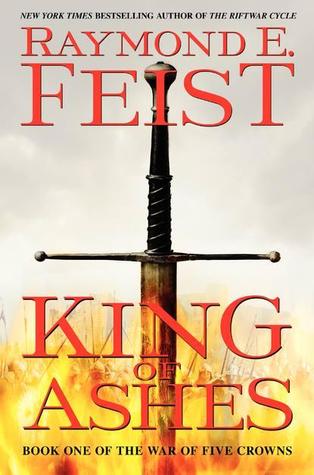
DNF Q&A: King of Ashes by Raymond E. Feist

Title: King of Ashes

Author: Raymond E. Feist

Series: Firemane #1

Genre: Fantasy

Rating: DNF

The Overview: For centuries, the five greatest kingdoms of North and South Tembria, twin continents on the world of Garn, have coexisted in peace. But the balance of power is destroyed when four of the kingdoms violate an ancient covenant and betray the fifth: Ithrace, the Kingdom of Flames, ruled by Steveren Langene, known as “the Firemane” for his brilliant red hair. As war engulfs the world, Ithrace is destroyed and the Greater Realms of Tembria are thrust into a dangerous struggle for supremacy.
As a Free Lord, Baron Daylon Dumarch owes allegiance to no king. When an abandoned infant is found hidden in Daylon’s pavilion, he realizes that the child must be the missing heir of the slain Steveren. The boy is valuable—and vulnerable. A cunning and patient man, Daylon decides to keep the baby’s existence secret, and sends him to be raised on the Island of Coaltachin, home of the so-called Kingdom of Night, where the powerful and lethal Nocusara, the “Hidden Warriors,” legendary assassins and spies, are trained… (It goes on forever…)
-Goodreads

The Review:

When trying to make a decision on whether or not to read something, it can often be much more helpful to look at the low star ratings than the high ones. To that end I’m going to be including more DNF reviews in my lineup. I have a Q&A format here that I adapted from Nikki at http://www.therewerebooksinvolved.com (with permission…although it might be moot because she’s not blogging anymore), and I think it’s a great way to discuss the book constructively. Here goes:

Did you really give King of Ashes a chance?

Admittedly, I didn’t give it as much as I could have. I did make it to about 30% before tossing it aside, while acknowledging that this is one of those rare cases where it could actually have gotten better. It didn’t, according to what I gleaned from my book club meeting, but I was so fed up, it was a risk I was willing to take.

Have you enjoyed other books in the same genre?

Yes. I’m considering this a more modern fantasy even though it’s written by a classic author, and most of my favorite works come from this genre.

It’s perfect in line with what I’d like to read.

Did you have certain expectations before starting it?

Surprisingly, I went in with low expectations even though I’ve loved a few early works from this author (he’s a family favorite). But his later Riftwar books proved very unsatisfying, so I was wary of starting this one. Truth be told, had it not been a book club selection, I’m not sure I would’ve have ever made time to pick it up.

What ultimately made you stop reading?

Omg. The execution of the story. The basic idea behind the book was actually super interesting. Something I would’ve wanted to read in any other context. The prologue even had me giddy with anticipation, thinking, “this is going to be good.”

The first thing that threw me off was how the writing was very much at an arm’s distance from the story. Take a conversation between two characters as an example: instead of immersing you in the scene with back and forth dialogue, Feist would take you one step back and describe the conversation happening. Using each point brought up to launch into a couple page description of whatever info needing to be dumped at that point before closing the conversation with one or two lines. I noticed this also with setting. He went off on a ten page diatribe about this market setting instead of having his characters interact with it and dropping in details that way. I’ve no idea if this is a habit he had in his early works because it has been some time since I read them, but now I’m afraid to reread because I know I’m going to notice it now and it will irritate me. I highly doubt it was this passive, though.

The thing that ultimately made me put it down was the book’s very odd fixation on sex. I think it’s important to clarify that I don’t care one way or another if there’s sexual content in fantasy novels. Some authors can even use it to enhance character and provide comic relief (Abercrombie). But the very least I ask is that reading it doesn’t feel like I’m reading the sexual fantasies of a 16 year old, and that those fantasies are completely dominating the story. It was so bad. The characters were constantly thinking about and talking about sex, and when they weren’t, the narration picked it up describing why sex wasn’t allowed in the school or why so and so slept with so and so and it wasn’t until I got to the training brothel (because when you have a guild of spies, that’s the only thing women are good for, right?) I finally threw it down in frustration. This is not what I signed up for. And if you’re going to include sexual content in your books ad nausium, at least make it good sex! Holy shit.

Is there anything you liked about the King of Ashes?

The prologue. And the idea behind the story. He lost me completely on the execution.

Would you read anything else by the author?

I’ve read literally everything he has published (20+ novels) minus one co-written trilogy and a random stand-alone. I think the buck stops here though. I may read that outstanding trilogy eventually, but I’m in no hurry.

So you DNFed the book. Would you still recommend it?

No. Normally my constructive analysis allows me to figure out who might be a more appropriate audience for a given title. Or at the very least, I concede that it might be just me who didn’t like it. In this case, I know it bothered me more than most, but I still wouldn’t hand it to anyone and would actively discourage someone from reading it. It was that bad.

by Niki Hawkes

Image

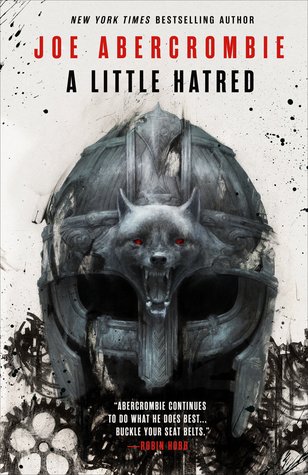
Book Review: A Little Hatred by Joe Abercrombie

Title: A Little Hatred

Author: Joe Abercrombie

Series: First Law World #8

Genre: Fantasy

Rating: 4.5/5 stars

The Overview: The chimneys of industry rise over Adua and the world seethes with new opportunities. But old scores run deep as ever. On the blood-soaked borders of Angland, Leo dan Brock struggles to win fame on the battlefield, and defeat the marauding armies of Stour Nightfall. He hopes for help from the crown. But King Jezal’s son, the feckless Prince Orso, is a man who specializes in disappointments. Savine dan Glokta – socialite, investor, and daughter of the most feared man in the Union – plans to claw her way to the top of the slag-heap of society by any means necessary. But the slums boil over with a rage that all the money in the world cannot control. The age of the machine dawns, but the age of magic refuses to die. With the help of the mad hillwoman Isern-i-Phail, Rikke struggles to control the blessing, or the curse, of the Long Eye. Glimpsing the future is one thing, but with the guiding hand of the First of the Magi still pulling the strings, changing it will be quite another… -Goodreads

The Review:

Warning: you’re about to witness and Abercrombie fangirl moment.

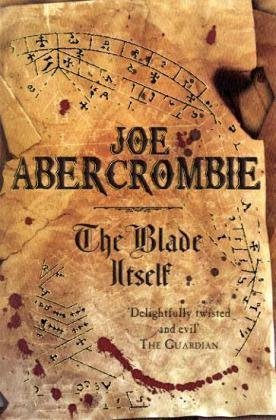
Aside from The Blade Itself, which I liked but wasn’t blown away by, my appreciation for this author has continued to grow with each passing installment. I think Abercrombie is only getting better with time – his writing has solidified into a distinct, immediately recognizable voice, and he seems to be really embracing the wickedly funny things that come along with being human, and is doing so to my unabashed amusement.

He’s such a brilliant study in character development. It’s not just that his characters are among the best in the genre, but also how he weaves the most unassuming drop-in details about their mannerisms into every iota of text. Constantly poking at each character’s deficiencies, it’s this constant reminder that they’re just people getting along as well as they can that makes them feel so alive. Their character profiles are so strong, even if I lose concentration and miss dialogue/thought tags, I can almost always figure out who’s POV we’re in just from the way things are written. It’s absolutely brilliant.

As a sort of next-gen continuation, A Little Hatred was everything I’d hoped it would be. Unlike with many other authors, I never worry about liking new characters as well as the last – they’re always good, which makes the possibilities of the First Law world endless. I delighted in all of the new faces (as scarred and misshapen as some of them may be) and felt that giddy excitement that I’d get to see what happened in this world next. I’m such a grouch these days. Coming back to a series that makes me feel as excited for a new book as I did back when I was a young bookseller is something to be cherished. I savored every page, felt completely engaged the entire novel, and am eager to pick up the next book.

Ranked against any other book I’ve read, Abercrombie books are solid 5-star reads. When comparing A Little Hatred to other books in the series, I’d say it’s near the top but not quite my favorite. So it gets a 5-stars on Goodreads and every endorsement I can offer, but a 4.5 for my personal records to indicate it’s not my favorite of the series.

Recommendations: this series takes a little time to get going. I read the first one twice before finally continuing and wasn’t sold from the beginning. It has now evolved into one of the funniest, most gut-wrenching, amazing things I’ve ever read, and I can’t wait to read more. Pick him up ASAP. Preferably via audio – Steven Pacey completes the experience.

Other books you might like:

by Niki Hawkes

Image

Book Review: Empire’s Ruin by Brian Staveley

Title: Empire’s Ruin

Author: Brian Staveley

Series: Ashes of the Unhewn Throne #1

Genre: Fantasy

Rating: 4.5/5stars

The Overview: The Annurian Empire is disintegrating. The advantages it used for millennia have fallen to ruin. The ranks of the Kettral have been decimated from within, and the kenta gates, granting instantaneous travel across the vast lands of the empire, can no longer be used. In order to save the empire, one of the surviving Kettral must voyage beyond the edge of the known world through a land that warps and poisons all living things to find the nesting ground of the giant war hawks. Meanwhile, a monk turned con-artist may hold the secret to the kenta gates. But time is running out. Deep within the southern reaches of the empire and ancient god-like race has begun to stir. What they discover will change them and the Annurian Empire forever. If they can survive. -Goodreads

The Review:

Ever finish an amazing series feeling like there should be more? Know the pure elation at discovering there actually will be more?! That’s how I felt when learning Staveley was continuing in the Annurian Empire.

I left the Unhewn Throne Trilogy happy that I’d read it but found myself ever so slightly dissatisfied with how a few things played out. Empire’s Ruin, continuing the same timeline albeit through different POVs, alleviated all of the uneasy feelings I’d had. I was worried about diving in without a reread, but the story stands solidly enough on its own that I only needed to remember a couple of characters (I recalled two of the three), and major climactic events. Other than that, it jumped right in to a new set of exotic adventures!

The fun world-building is the first thing I highlight when talking about Staveley’s works. His setting is a deadly jungle reminiscent of the Amazon filled with jaguars, snakes, alligators, and pretty much every other man-eating threat the author could think of. He does an amazing job at immersing you in the setting and having the environment play an active role in the story.

The Emperor’s Blade, the first book of the Unhewn Throne, still claims a spot in my very conservative list of all-time favorites. It had the perfect balance of characters, setting, and world-building, but stood out to me for its training sequences. I love when characters learn skills in books, and was wondering if I’d enjoy this continuation as much without that element. As it turns out, the author must share my appreciation for those components because he included more in Empire’s Ruin! Not quite to the same degree, but it did satisfy my craving.

Comparatively, the only thing that kept my rating from solid five star was that the story progression between the three POVs was not very well distributed, especially in the back half of the book. Granted, he focused most of his efforts on the most interesting thread, which was stellar, but did not advance the plots for the other two quickly enough for my satisfaction. I usually don’t notice pacing issues in multiple POV fantasy novels like this (other than in Feast of Crows… don’t get me started), but it struck me that several sittings later and the characters two of the plots were still sitting around arguing about the same things instead of actually doing the things. Had Gwenna’s POV been removed completely I think I would’ve been saying I liked the story but he could’ve done so much more with it. Especially the arena stuff (yes, there’s an arena… the idea was initially so compelling, but not much happened with it). I’m hoping we’ll get more in the next book so it doesn’t feel like those were just filler sections.

Recommendations: overall, Empire’s Ruin was an awesome continuation after the Unhewn Throne Trilogy, but make sure to read that one first unless you don’t care about major spoilers (I don’t know how people can be okay with spoilers, but it’s more common than I realized… freaks. ;P). This is an excellent fantasy adventure series perfect for those who like a lot of action, cool settings, and multiple POV stories.

Other books you might like:

by Niki Hawkes

Image

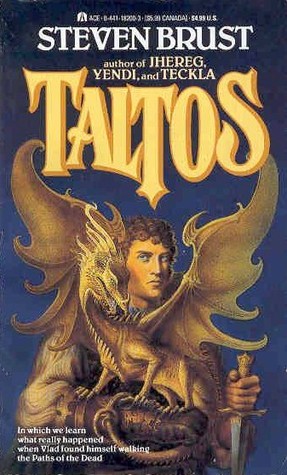
Book Review: Taltos by Steven Brust

Title: Taltos

Author: Steven Brust

Series: Vlad Taltos (#1 chronologically / #4 traditionally)

Genre: Fantasy

Rating: 3/5 stars

The Overview: Journey to the land of the dead. All expenses paid!

Not my idea of an ideal vacation, but this was work. After all, even an assassin has to earn a living.

The trouble is, everyone knows that a living human cannot walk the Paths of the Dead, and return, alive, to the land of men.

But being an Easterner is not exactly like being human, by Dragaeran standards anyway. Thus, the rule doesn’t apply to me… I hope. -Goodreads

The Review:

Intro: Vlad Taltos is a lot of fun. One of the most unique series I’ve ever read, it’s a great mix of high fantasy elements with an accessible urban fantasy writing style. Each book also has a fairly well-contained mystery, so it kind of reads like a detective novel. Overall, it’s a great hodge-podge of ideas that somehow all work together. The author claims you can read them in any order. I personally can’t stand that lack of organization, so a few of us over at Fantasy Buddy Reads are going the chronological route…

…and Taltos (technically book #4) is first in the lineup.

Ten years ago I read the first three (according to the publisher) Vlad Taltos novels and loved my experience with them. Taltos started out with a bang! Reminding me why I enjoyed the books so much. It had a lot of flashbacks, which were deftly woven into the story to enhance what was going on in the present-day sections. I loved reading about how Vlad came to be the quirky businessman he is. However that strong pacing and careful weaving started to fade near the middle of the book.

At one point in the story, I had to check in with my fellow buddy readers because I no longer knew what the heck the characters were trying to accomplish in the present-day sections. There were a lot of scenes where the author wasn’t clear in his description on what had happened, and the ambiguity made a few of us backtrack thinking we’d missed something. Nope. It was just vague.

As the story neared the end, the flashbacks were a constant interruption to the story (we’re talking every couple of pages) which effectively killed any momentum it had, eventually making me apathetic to the entire thing. I finished it. Barely. But had I not enjoyed the first half so much and had I not read and liked a few others in the series, I might have called it quits there. Yikes.

Series status: we’re moving on to Dragon (chronologically book #2) next, and I’m hoping it’s better.

Recommendations: while I’d almost always recommend the most organized route of reading (i.e. chronologically), I’d say the way the publishers have arranged it (with Jhereg as book #1) is a much stronger introduction to this series. With that route, I remember feeling a bit lost at the many people and events referenced that clearly had more solid backstories somewhere, but at them moment I think that’s preferable to the poor execution of the second half of Taltos. We’ll see if that opinion changes as we continue.

Other books you might like:

by Niki Hawkes
Image

Book Review: Neverwinter by R.A. Salvatore

Title: Neverwinter

Author: R.A. Salvatore

Series: Neverwinter #2, Legend of Drizzt #21

Genre: Fantasy

Rating: 3/5 stars

The Overview: SPOILERS: with the last of his trusted companions having fallen, Drizzt is alone–and free–for the first time in almost a hundred years. Guilt mingles with relief, leaving Drizzt uniquely vulnerable to the persuasions of his newest companion–Dahlia, a darkly alluring elf and the only other member of their party to survive the cataclysm at Mount Hotenow. But traveling with Dahlia is challenging in more ways than one. As the two companions seek revenge on the one responsible for leveling Neverwinter–and nearly Luskan as well–Drizzt finds his usual moral certainty swept away by her unconventional views. Forced to see the dark deeds that the common man may be driven to by circumstance, Drizzt begins to find himself on the wrong side of the law in an effort to protect those the law has failed. Making new enemies, as his old enemies acquire deadly allies, Drizzt and Dahlia quickly find themselves embroiled in battle–a state he’s coming to enjoy a little too much. -Goodreads

The Review:

It feels good to be back with Drizzt.

I set the series aside almost five years ago. Coming off a major high from the brilliance that was The Ghost King, I found myself struggling to get into Gauntlgrym. It was a decent Drizzt novel, but I don’t think I was ready to embark on a new chapter in Drizzt’s world quite yet. So I tabled it, knowing I’d get back to it eventually. What I hadn’t expected was how prolific Salvatore would continue to be in this series – I find myself now at least ten books behind the latest publication. So between series FOMO and a stellar review I read for the most recent release, I found myself eager to dive back in. Even more so since recently reading Child of a Mad God and marveling at how beautifully that was written. It was time.

But I have to admit it was a struggle at first.

I’ve waited all this time to get back with Drizzt and was disappointed that the first third of Neverwinter only had a couple of short scenes with him. It was more focused on villain POVs which, even though Salvatore does them well, I often lose patience with. These types of ongoing stories have a tendency to follow the pattern of: meet a villain, fight the villain, kill the villain, then meet a bigger/badder villain, fight and kill it, etc. So when reading endless passages about bad guys, I can’t help but feel uninvested. After all, their fates might already be sealed to perish at the end of a scimitar… every now and then I get surprised, but for the time being, those sections were a struggle to get through.

Somewhere around the middle, things started picking up. There were a couple more of those amazing introspective Drizzt interludes (my favorite component of this whole saga), and the focus shifted more to what he and his companions were doing. It frankly saved a potential DNF.

And then, Salvatore dropped a bomb. And, sir, you now have my full attention.

Yes! This is what I needed. To be surprised. To remember why I loved these novels in the first place. And now I end Neverwinter with a spring in my step – ready to pick up the next book sooner than later.

Overall, this book had a couple of great moments, but it was definitely not the strongest I’ve read from the author. There’s a lot of setup for what looks to be the next era in Drizzt’s life, which takes some time to develop.

Recommendations: Drizzt might seem an intimidating series to start, but it’s unique in that each progressive set of 3 and 4 novels are really self-contained and satisfying, so you can stop at any given point if you feel you’ve had enough and still have that sense of reading a completed story. I’d recommend starting with the Dark Elf Trilogy – one of my favorites and one of the few I’ve reread more than once (a strong endorsement, as I’m not a rereader – I’ve too many amazing titles to get to!).

Other books you might like:

by Niki Hawkes