Image

Tackling the TBR [34]: May 2018

tackling the TBR

It’s once again time for my favorite feature: Tackling the TBR! There’s nothing I love more than picking out which books to read next, and this slightly organized method of reading has really amped my enjoyment to the next level. Bring on the mantras!

Read the best books first.
&
Life is too short to read books you’re not enjoying.

However you put together your TBR for the next month, the goal is to reduce the amount of obligation in reading and increase the fun.


Here’s a look at how the system works:

1. Identify the titles that take top priority in your TBR.
2. Combine them all in your own Tackling the TBR post.
3. Throughout the month pick from that pile as the mood strikes you.

Here’s what mine looks like:

May 2018 TBR Tackler Shelf:

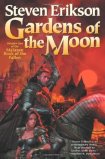
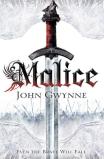
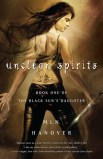
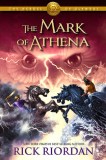
Last month I finished 9/10 books on my list!!! I’m not quite as optimistic about May, but that’s okay because I’m thrilled with my lineup. Half of these titles are scheduled Buddy Reads over at my Goodreads group and I’ll admit to feeling a little “overbooked” (bwahaha) even thought they’re BRs I’ve been looking forward to. Garden of Stones is the official book club pick for the group and I decided I wanted to get back into participating. Reading outside my set TBR is sometimes difficult for my OCD, but it seems worth it because I’ve found so many amazing reads that I probably would’ve have picked up otherwise if not for a book club (specfic, anyway. You won’t find me anywhere near a non-fiction or classics book club lol). Other than that, I’m looking forward to finally making progress with Malazan – I’m determined to keep going this time. I’m even more excited for Unclean Spirits written by M.L.N. Hanover, which is a pen name for Daniel Abraham – aka 1/2 of James S.A. Corey. This is the only series by his brilliance I haven’t tried yet and I’m stoked. :)

Do any of you ever feel overwhelmed at a reading schedule? How do you deal? :)

by Niki Hawkes

Image

Niki’s Book Journal [April 2018]

Niki’s Book Journal [April 2018]

This book journal idea may have just revolutionized my reviewing process. I open up the draft for this post after finishing a book (motivated by the fact that I only have to write a paragraph or so), and before I know it I have a full-length review that merits its own post. The combination of retraining my brain to open WordPress right after finishing a book along with a couple other reading trackers have definitely made a positive impact on my reviewing process. Long story short: I only have two books reviewed in this format for April, but I’m okay with that.

I love this new change in my habits because I’m finding myself drawn to writing more throughout the day (which will hopefully culminate into actually working on one of my novels). And as a HUGE bonus, I’m producing more book content both here and on Goodreads, which is in line with making me the consistent book reviewer I’ve always aspired to be.

During this process, I started a tracker in my bullet journal and discovered that on average I’m finishing 2.5 books per week, but generally I’m only reviewing about 1 pw. I don’t think I’d wrapped my head around that particular disconnect of why I never seemed to catch up on reviews (I mean, really, it’s not rocket science). I knew my efforts weren’t enough, I just didn’t realize precisely how ineffective I was being. No more! I have a new system in place to help me even out that ratio.

I created some tracker in my bullet journal. I’ve had several (basically unused) tracking methods over the years, usually just a list on Goodreads, but a couple of months ago I started a bullet journal and it has drastically improved how I organize all the things. I start with a book progress status bar tracker at the top of my weekly spread:

As you can see, I finished three books that week. Then I take those finished titles and put them into my (ugly but functional) new review tracker:

They key here has been creating a category at the top for each step in the process. Composing a review can take a couple hours, so if I just write “write review for x” I have to be able to commit a lot of time to it before I can check anything off. As I’m super motivated by striking things off lists, having each step listed separately allows me to do just one component of it at a time without getting overwhelmed. It’s definitely making a difference. My next step is to beatify the tracker. :)

Journaling done. On to the books!


Carpe Corpus (Morganville #6) by Rachel Caine [3/5 stars]

I always enjoy the atmosphere and mood Morganville books create, so Carpe Corpus gets a decent rating for that alone. I went into this series (a bit late than most) under the impression that there are a few different story arcs within it. With this novel, I fully expected that supposed culmination of events to really wow me… yeah, not so much. The story seemed to resolve itself so quickly that I was left feeling like I missed something. I mean, I know the books are super short, but still. What I did like about this novel in particular was the stellar character dynamics and relationship progressions. I maintain that these characters feel a lot more rounded and realistic compared to many other YA. I’m definitely still looking forward to continuing the series because reading each one feels like coming home, but overall Carpe Corpus didn’t make much of an impression.

The Son of Neptune by Rick Riordan

Son of Neptune (Heroes of Olympus #2) by Rick Riordan [3.5/5 stars]

Son of Neptune was a solid sequel to The Lost Hero and an improvement on all accounts. My biggest complaint of the first novel was the senseless repetition, so it was refreshing for book 2 to have a consice plot where everything had a purpose in building towards the overall arc of the novel. There were still lots of “tangent” monsters to fight, but I thought the encounters were integrated much more seamlessly. And as an added bonus, the main POV was a familiar face that I’ve missed (Percy!!). Son of Neptune also introduced some brand new characters who have the potential to land among my favorites for this author. I’m finding myself eager to pick up Mark of Athena sooner than later, which is an excellent sign.

by Niki Hawkes
Image

Book Review: Haunted by Kelley Armstrong

Haunted by Kelley Armstrong

Title: Haunted

Author: Kelley Armstrong

Series: Women of the Otherworld

Genre: Urban Fantasy

Rating: 2.5/5 stars

The Overview: The afterlife isn’t all it’s cracked up to be… Former supernatural superpower Eve Levine has broken all the rules. But she’s never broken a promise—not even during the three years she’s spent in the afterworld. So when the Fates call in a debt she gave her word she’d pay, she has no choice but to comply. For centuries one of the ghost world’s wickedest creatures has been loosed on humanity, thwarting every attempt to retrieve her. Now it has fallen to Eve to capture this demi-demon known as the Nix, who inhabits the bodies of would-be killers, compelling them to complete their deadly acts. It’s a mission that becomes all too personal when the Nix targets those Eve loves most—including Savannah, the daughter she left on earth. But can a renegade witch succeed where a host of angels have failed? -Goodreads

The Review:

Haunted is my least favorite WotO book to date. I liked the main character and how she tied into the series as a whole, but I can’t say that I enjoyed the story that much. First off, it was a bit too erratic, bouncing around from weird place to weirder place so often that I never really felt grounded in the story. Granted, it takes place primarily in the afterlife where the “rules” of what’s possible are a lot more flexible, but it was actually the main murder mystery plotline that I wish had been more straightforward (although I do give kudos for the incorporation of actual murders from our world for total story immersion – very creative).

Another issue I had is 100% what I would call a “personal problem” and not something I really hold the book at fault for. I just have a hard time reading about bad things happening to children. It wasn’t graphic or anything, but it’s one of my vulnerable “nope” subjects in books. Almost anything else I can compartmentalize as “it’s just a book,” but not that. The other thing that got me was a mass-shooting scene. With all the horrible shit that’s happening in the world right now, I need books to escape, not to be reminded. Objectively, I can look at all of these as story elements that fit the plot and characters, but emotionally and mentally I have to admit that I just did not enjoy reading about them.

Despite my lower rating and opinion of this book, I recognize it as an important component to getting the full experience out of this series, now that I have an idea how the afterlife and its beings function. I also appreciate how with each book the scope of characters we care about broadens. I’m still earnestly looking forward to the next book.

Recommendations: overall, the series is still a success for me, but I’m finally forced to admit agreement to the quality decline. Because of that, I’d probably start my recommendations with a few other urban fantasies that are more consistent. However, this series is by no means down and out – I’m very hopeful I’ll enjoy the rest of it. We shall see. :)

Other books you might like:

by Niki Hawkes

Image

Book Review: The Lost Hero by Rick Riordan

The Lost Hero by Rick RiordanTitle: The Lost Hero

Author: Rick Riordan

Series: Heroes of Olympus #1

Genre: Middle Grade Fantasy

Rating: 3/5 stars

The Overview: Jason has a problem. He doesn’t remember anything before waking up in a bus full of kids on a field trip. Apparently he has a girlfriend named Piper, and a best friend named Leo. They’re all students at a boarding school for “bad kids.” What did Jason do to end up here? And where is here, exactly? Piper has a secret. Her father has been missing for three days, ever since she had that terrifying nightmare about his being in trouble. Piper doesn’t understand her dream, or why her boyfriend suddenly doesn’t recognize her. When a freak storm hits during the school trip, unleashing strange creatures and whisking her, Jason, and Leo away to someplace called Camp Half-Blood, she has a feeling she’s going to find out. Leo has a way with tools. When he sees his cabin at Camp Half-Blood, filled with power tools and machine parts, he feels right at home. But there’s weird stuff, too—like the curse everyone keeps talking about, and some camper who’s gone missing. Weirdest of all, his bunkmates insist that each of them—including Leo—is related to a god. Does this have anything to do with Jason’s amnesia, or the fact that Leo keeps seeing ghosts? -Goodreads

The Review:

Admittedly, I was a bit late to the Percy Jackson party. I ended up loving PJ enough to purchase hardcovers for all things Riordan, the set for Heroes of Olympus being among my favorite things on my shelves (so pretty!). However, it did take me a long while (5+ years) to get around to reading these, mostly because I was unaware it had anything to do with PJ until my best friend clued me in.

This series is not just a spinoff, it’s a bonafide continuation with a mix of old and new characters! I definitely would’ve started it sooner had I been aware of that. The newby characters were exceptionally well-developed compared to other middle grade series. It actually surprised me how much depth of character I got from their rich backstories. It made their motives and actions have a much bigger impact on the overall arc of the story, which really helped build my enthusiasm for what’s to come.

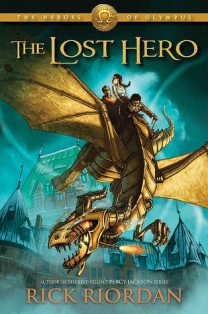
So, good characters aside, I have mixed feelings about the actual plot of The Lost Hero. Other than the chapters spent in Camp Halfblood (like Hogwarts, I think any time spent in magical establishment for kids is golden material), I found the plot unnecessarily long and repetitive. Meet a new mythical monster, fight it, lather, repeat. It didn’t give me a whole lot to latch onto and I found myself putting it down in favor of other things after getting that “wait, didn’t I just read this?” feeling every time I picked it up. The good characters and some of the other cool components (like the metal dragon on the cover) kept me reading (plus that weird motivation that comes from the mindset that I “should” love this series), but overall it didn’t knock my socks off. It got a pass because it has all the makings of something great, and I know the level of awesomeness Riordan is capable of. Even so, I believe this first book could’ve been pared down a bit for a much more concise and interesting story. Maybe it’s just me.

All that said, I think (it has been a while) I had similar issues with the first PJ book, and ended up absolutely loving the second one and beyond. Now that I know the main conflict of this series (introduced at the end of Lost Hero, which might be part of the initial issue even though I really loved the “reveal”), I like where Riordan is going with the story. I’m hoping to see my ratings increase with each installment.

Recommendations: I think at this point most people interested in this author have already tried him. However if you’re like me and late to the party, I would only recommend this Heroes of Olympus series if you’ve already read (and loved) Percy Jackson. It’s a direct continuation with spoilers abound for the first series. I think the saga is an awesome rec for middle grade readers, and as a bookseller I saw it spark a love of both reading and mythology in kids, which is pretty friggin cool.

Other books you might like:

by Niki Hawkes

Image

Book Review: An Accident of Stars by Foz Meadows

An Accident of Stars by Foz Meadows

Title: An Accident of Stars

Author: Foz Meadows

Series: Manifold Worlds #1

Genre: Fantasy

Rating: 3/5 stars

The Overview: When Saffron Coulter stumbles through a hole in reality, she finds herself trapped in Kena, a magical realm on the brink of civil war. There, her fate becomes intertwined with that of three very different women: Zech, the fast-thinking acolyte of a cunning, powerful exile; Viya, the spoiled, runaway consort of the empire-building ruler, Vex Leoden; and Gwen, an Earth-born worldwalker whose greatest regret is putting Leoden on the throne. But Leoden has allies, too, chief among them the Vex’Mara Kadeja, a dangerous ex-priestess who shares his dreams of conquest. Pursued by Leoden and aided by the Shavaktiin, a secretive order of storytellers and mystics, the rebels flee to Veksh, a neighboring matriarchy ruled by the fearsome Council of Queens. Saffron is out of her world and out of her depth, but the further she travels, the more she finds herself bound to her friends with ties of blood and magic. Can one girl – an accidental worldwalker – really be the key to saving Kena? Or will she just die trying? -Goodreads

The Review:

There were many aspects I enjoyed about An Accident of Stars even though the story never developed to its fullest potential. It’s a fun, light read for those who like classic portal-fantasies.

The diverse cast of characters (boasting some LGBT awesomeness) were easily the best component of the novel. I thoroughly enjoyed reading each POV (which bounced around in almost an omniscient style at times) and appreciated how well developed they all were. Even during the slower moments, my interest in the characters kept me engaged.

The book also impressed me with its creatively constructed clash of original cultures. Primarily two very distinct peoples with clear customs, religions, and styles. They were so interesting to read about that I wish all of the other world building elements had reached this level of development.

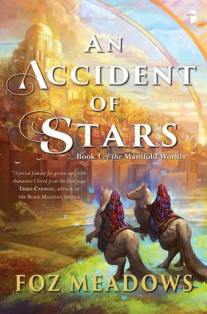
Most of the settings and overall atmosphere creation were decent, but there were definitely a few elements that could’ve been pushed further. The author had the framework and creativity to present a completely original world, but seemed to choose the easy way out when it mattered the most. The use of horses as mounts (when there was already a substitute built into the story – see cover image) is a great example of what I mean. I’m not gonna lie, seeing the Roa on the cover was one of my main reasons for picking up the book, as I was hoping it was an indication that the story would contain a plethora of original flora and fauna. The presence of horses (and a few other blatantly “our world” elements) dissolved the magic for me a bit. It was on the cusp of being what I wanted so many times before pulling back that I can’t help but feel it an opportunity wasted.

Another element that fell shy of my expectations was the politics. As I mentioned, Meadows did a great job setting up unique cultures and religions, and even set the stage right off the bat for an interesting government… but then really didn’t do anything with it for the rest of the book. I was expecting something so much more complex, but the focus was definitely on looking from the bottom-up (how everyone is affected) than from the top-down (how to affect everyone else), so the plot came off as reactionary. This may not bother some readers as much as it did me. I’ve just been immersing myself in fantasy novels abundant in political intrigue and complex plotlines lately that the straightforward non-involvement of political movement really stuck out as a deficiency to me.

My final thoughts are on the general pacing of the novel. The first half of the book contained a lot of “organizing,” where it sort of felt like the plot stalled while key players were moved into position. Generally speaking, I don’t usually mind this as long as the characters and their dynamics are interesting, as was the case here. What I ultimately object to is that if the book is going to build towards something, there’d better be a payoff. Unfortunately I don’t think the juice was worth the squeeze in this instance. The story didn’t really do anything after all of that preparation that it couldn’t have done by just jumping straight into the action. In summation: I didn’t mind it while I was reading (because the characters were bomb), but in hindsight I’m not really happy with where the story went. That is, until the very end. So many interesting things were introduced within the last 5% of the book that I’m actually excited to continue on. Hopefully all the things on the cusp in this book will slam dunk in the next one.

Overall, as my points emphasize, I think this could’ve been something truly amazing, but in the end it was just a solid “I liked it” kind of book. I have a positive attitude towards the author’s writing and look forward to seeing if she’ll develop her ideas to the next-level in future books.

Recommendations: I’d hand this to fantasy readers who love that classic portal-fantasy storyline. It gets bonus points for equally interesting and diverse LGBT characters who carry the story through some slower moments. A fun read.

Other books you might like:

by Niki Hawkes

Image

Book Review: Traitor’s Blade by Sebastien De Castell

Traitor's Blade by Sebastien De Castell

Title: Traitor’s Blade

Author: Sebastien De Castell

Series: Greatcoats #1

Genre: Fantasy

Rating: 3.5/5 stars

The Overview: Falcio is the first Cantor of the Greatcoats. Trained in the fighting arts and the laws of Tristia, the Greatcoats are travelling Magisters upholding King’s Law. They are heroes. Or at least they were, until they stood aside while the Dukes took the kingdom, and impaled their King’s head on a spike. Now Tristia is on the verge of collapse and the barbarians are sniffing at the borders. The Dukes bring chaos to the land, while the Greatcoats are scattered far and wide, reviled as traitors, their legendary coats in tatters. All they have left are the promises they made to King Paelis, to carry out one final mission. But if they have any hope of fulfilling the King’s dream, the divided Greatcoats must reunite, or they will also have to stand aside as they watch their world burn… -Goodreads

The Review:

This is one of those books that improves as it goes. My initial impression from just the first chapter was not fantastic. The story was told in a very over-the-top sarcastic voice that was almost condescending to the reader. It made me question whether the book would offer enough substance, or if I was in for a whole lot of bolstering and nothing else. Thankfully, about the point I would’ve gotten fed up, it started to tone down and I had just enough interest to keep going.

Then I hit about the halfway point and magic happened. I’m still not sure exactly what changed, but I was shocked to find myself suddenly unwilling to put it down. Who’d have thought a 1 or 2 star beginning would turn into a 4 to 5 star ending? And the second book was even better (RTC on that).

I’ve heard Greatcoats described as an alternate take on the Three Musketeers, and can’t say I disagree with that assessment. It has the same spirit of camaraderie, loyalty, and humor. But it definitely differs in delivery by amping up the sarcasm and humor to just shy of tolerable at times (this definitely relaxes as the story progresses, turning into much-needed comedic relief for some of the more intense scenes). Eventually it finds its balance, but the dynamics between the three Greatcoats was definitely a consistent highlight throughout.

Traitor’s Blade introduced some cool plot ideas I don’t think I’ve seen before, and I really liked how the story developed. It truly surprised me how much I ended up loving the second half of the book. This is one of those rare instances where I’m glad I stuck with it.

Recommendations: Traitor’s Blade had a very Locke Lamora attitude (on crack) that I think will appeal to fantasy readers who like a mix of humor and grit in their books. I think it’s safe to say that the beginning suffers a bit from being overdone, but if you stick with it, the payoff is well worth the effort.

Other books you might like:

by Niki Hawkes