Image

Book Review: The Lost Hero by Rick Riordan

The Lost Hero by Rick RiordanTitle: The Lost Hero

Author: Rick Riordan

Series: Heroes of Olympus #1

Genre: Middle Grade Fantasy

Rating: 3/5 stars

The Overview: Jason has a problem. He doesn’t remember anything before waking up in a bus full of kids on a field trip. Apparently he has a girlfriend named Piper, and a best friend named Leo. They’re all students at a boarding school for “bad kids.” What did Jason do to end up here? And where is here, exactly? Piper has a secret. Her father has been missing for three days, ever since she had that terrifying nightmare about his being in trouble. Piper doesn’t understand her dream, or why her boyfriend suddenly doesn’t recognize her. When a freak storm hits during the school trip, unleashing strange creatures and whisking her, Jason, and Leo away to someplace called Camp Half-Blood, she has a feeling she’s going to find out. Leo has a way with tools. When he sees his cabin at Camp Half-Blood, filled with power tools and machine parts, he feels right at home. But there’s weird stuff, too—like the curse everyone keeps talking about, and some camper who’s gone missing. Weirdest of all, his bunkmates insist that each of them—including Leo—is related to a god. Does this have anything to do with Jason’s amnesia, or the fact that Leo keeps seeing ghosts? -Goodreads

The Review:

Admittedly, I was a bit late to the Percy Jackson party. I ended up loving PJ enough to purchase hardcovers for all things Riordan, the set for Heroes of Olympus being among my favorite things on my shelves (so pretty!). However, it did take me a long while (5+ years) to get around to reading these, mostly because I was unaware it had anything to do with PJ until my best friend clued me in.

This series is not just a spinoff, it’s a bonafide continuation with a mix of old and new characters! I definitely would’ve started it sooner had I been aware of that. The newby characters were exceptionally well-developed compared to other middle grade series. It actually surprised me how much depth of character I got from their rich backstories. It made their motives and actions have a much bigger impact on the overall arc of the story, which really helped build my enthusiasm for what’s to come.

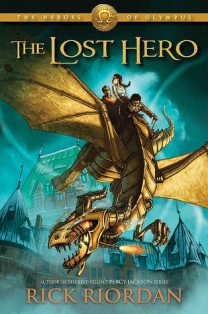
So, good characters aside, I have mixed feelings about the actual plot of The Lost Hero. Other than the chapters spent in Camp Halfblood (like Hogwarts, I think any time spent in magical establishment for kids is golden material), I found the plot unnecessarily long and repetitive. Meet a new mythical monster, fight it, lather, repeat. It didn’t give me a whole lot to latch onto and I found myself putting it down in favor of other things after getting that “wait, didn’t I just read this?” feeling every time I picked it up. The good characters and some of the other cool components (like the metal dragon on the cover) kept me reading (plus that weird motivation that comes from the mindset that I “should” love this series), but overall it didn’t knock my socks off. It got a pass because it has all the makings of something great, and I know the level of awesomeness Riordan is capable of. Even so, I believe this first book could’ve been pared down a bit for a much more concise and interesting story. Maybe it’s just me.

All that said, I think (it has been a while) I had similar issues with the first PJ book, and ended up absolutely loving the second one and beyond. Now that I know the main conflict of this series (introduced at the end of Lost Hero, which might be part of the initial issue even though I really loved the “reveal”), I like where Riordan is going with the story. I’m hoping to see my ratings increase with each installment.

Recommendations: I think at this point most people interested in this author have already tried him. However if you’re like me and late to the party, I would only recommend this Heroes of Olympus series if you’ve already read (and loved) Percy Jackson. It’s a direct continuation with spoilers abound for the first series. I think the saga is an awesome rec for middle grade readers, and as a bookseller I saw it spark a love of both reading and mythology in kids, which is pretty friggin cool.

Other books you might like:

by Niki Hawkes

Image

Book Review: An Accident of Stars by Foz Meadows

An Accident of Stars by Foz Meadows

Title: An Accident of Stars

Author: Foz Meadows

Series: Manifold Worlds #1

Genre: Fantasy

Rating: 3/5 stars

The Overview: When Saffron Coulter stumbles through a hole in reality, she finds herself trapped in Kena, a magical realm on the brink of civil war. There, her fate becomes intertwined with that of three very different women: Zech, the fast-thinking acolyte of a cunning, powerful exile; Viya, the spoiled, runaway consort of the empire-building ruler, Vex Leoden; and Gwen, an Earth-born worldwalker whose greatest regret is putting Leoden on the throne. But Leoden has allies, too, chief among them the Vex’Mara Kadeja, a dangerous ex-priestess who shares his dreams of conquest. Pursued by Leoden and aided by the Shavaktiin, a secretive order of storytellers and mystics, the rebels flee to Veksh, a neighboring matriarchy ruled by the fearsome Council of Queens. Saffron is out of her world and out of her depth, but the further she travels, the more she finds herself bound to her friends with ties of blood and magic. Can one girl – an accidental worldwalker – really be the key to saving Kena? Or will she just die trying? -Goodreads

The Review:

There were many aspects I enjoyed about An Accident of Stars even though the story never developed to its fullest potential. It’s a fun, light read for those who like classic portal-fantasies.

The diverse cast of characters (boasting some LGBT awesomeness) were easily the best component of the novel. I thoroughly enjoyed reading each POV (which bounced around in almost an omniscient style at times) and appreciated how well developed they all were. Even during the slower moments, my interest in the characters kept me engaged.

The book also impressed me with its creatively constructed clash of original cultures. Primarily two very distinct peoples with clear customs, religions, and styles. They were so interesting to read about that I wish all of the other world building elements had reached this level of development.

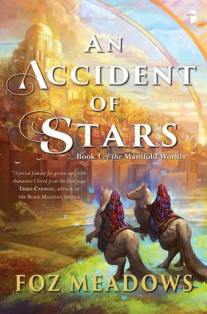
Most of the settings and overall atmosphere creation were decent, but there were definitely a few elements that could’ve been pushed further. The author had the framework and creativity to present a completely original world, but seemed to choose the easy way out when it mattered the most. The use of horses as mounts (when there was already a substitute built into the story – see cover image) is a great example of what I mean. I’m not gonna lie, seeing the Roa on the cover was one of my main reasons for picking up the book, as I was hoping it was an indication that the story would contain a plethora of original flora and fauna. The presence of horses (and a few other blatantly “our world” elements) dissolved the magic for me a bit. It was on the cusp of being what I wanted so many times before pulling back that I can’t help but feel it an opportunity wasted.

Another element that fell shy of my expectations was the politics. As I mentioned, Meadows did a great job setting up unique cultures and religions, and even set the stage right off the bat for an interesting government… but then really didn’t do anything with it for the rest of the book. I was expecting something so much more complex, but the focus was definitely on looking from the bottom-up (how everyone is affected) than from the top-down (how to affect everyone else), so the plot came off as reactionary. This may not bother some readers as much as it did me. I’ve just been immersing myself in fantasy novels abundant in political intrigue and complex plotlines lately that the straightforward non-involvement of political movement really stuck out as a deficiency to me.

My final thoughts are on the general pacing of the novel. The first half of the book contained a lot of “organizing,” where it sort of felt like the plot stalled while key players were moved into position. Generally speaking, I don’t usually mind this as long as the characters and their dynamics are interesting, as was the case here. What I ultimately object to is that if the book is going to build towards something, there’d better be a payoff. Unfortunately I don’t think the juice was worth the squeeze in this instance. The story didn’t really do anything after all of that preparation that it couldn’t have done by just jumping straight into the action. In summation: I didn’t mind it while I was reading (because the characters were bomb), but in hindsight I’m not really happy with where the story went. That is, until the very end. So many interesting things were introduced within the last 5% of the book that I’m actually excited to continue on. Hopefully all the things on the cusp in this book will slam dunk in the next one.

Overall, as my points emphasize, I think this could’ve been something truly amazing, but in the end it was just a solid “I liked it” kind of book. I have a positive attitude towards the author’s writing and look forward to seeing if she’ll develop her ideas to the next-level in future books.

Recommendations: I’d hand this to fantasy readers who love that classic portal-fantasy storyline. It gets bonus points for equally interesting and diverse LGBT characters who carry the story through some slower moments. A fun read.

Other books you might like:

by Niki Hawkes

Image

Book Review: Traitor’s Blade by Sebastien De Castell

Traitor's Blade by Sebastien De Castell

Title: Traitor’s Blade

Author: Sebastien De Castell

Series: Greatcoats #1

Genre: Fantasy

Rating: 3.5/5 stars

The Overview: Falcio is the first Cantor of the Greatcoats. Trained in the fighting arts and the laws of Tristia, the Greatcoats are travelling Magisters upholding King’s Law. They are heroes. Or at least they were, until they stood aside while the Dukes took the kingdom, and impaled their King’s head on a spike. Now Tristia is on the verge of collapse and the barbarians are sniffing at the borders. The Dukes bring chaos to the land, while the Greatcoats are scattered far and wide, reviled as traitors, their legendary coats in tatters. All they have left are the promises they made to King Paelis, to carry out one final mission. But if they have any hope of fulfilling the King’s dream, the divided Greatcoats must reunite, or they will also have to stand aside as they watch their world burn… -Goodreads

The Review:

This is one of those books that improves as it goes. My initial impression from just the first chapter was not fantastic. The story was told in a very over-the-top sarcastic voice that was almost condescending to the reader. It made me question whether the book would offer enough substance, or if I was in for a whole lot of bolstering and nothing else. Thankfully, about the point I would’ve gotten fed up, it started to tone down and I had just enough interest to keep going.

Then I hit about the halfway point and magic happened. I’m still not sure exactly what changed, but I was shocked to find myself suddenly unwilling to put it down. Who’d have thought a 1 or 2 star beginning would turn into a 4 to 5 star ending? And the second book was even better (RTC on that).

I’ve heard Greatcoats described as an alternate take on the Three Musketeers, and can’t say I disagree with that assessment. It has the same spirit of camaraderie, loyalty, and humor. But it definitely differs in delivery by amping up the sarcasm and humor to just shy of tolerable at times (this definitely relaxes as the story progresses, turning into much-needed comedic relief for some of the more intense scenes). Eventually it finds its balance, but the dynamics between the three Greatcoats was definitely a consistent highlight throughout.

Traitor’s Blade introduced some cool plot ideas I don’t think I’ve seen before, and I really liked how the story developed. It truly surprised me how much I ended up loving the second half of the book. This is one of those rare instances where I’m glad I stuck with it.

Recommendations: Traitor’s Blade had a very Locke Lamora attitude (on crack) that I think will appeal to fantasy readers who like a mix of humor and grit in their books. I think it’s safe to say that the beginning suffers a bit from being overdone, but if you stick with it, the payoff is well worth the effort.

Other books you might like:

by Niki Hawkes

Image

Book Review: Unraveled by Kate Jarvik Birch [and Blog Tour!]

Title: Unraveled

Author: Kate Jarvik Birch

Series: Perfected #3

Rating: 4/5 stars

The Overview: Ella isn’t anyone’s pet anymore, but she’s certainly not free. After exposing the dark secrets about NuPet’s breeding program, forcing them to repeal the law that allowed genetically modified girls to be kept as pets, she thought girls like her would finally be free. She never dreamed that it would backfire. NuPet may have convinced the public of their intentions to assimilate pets back into society, but Ella knows it’s a lie. They aren’t planning mass rehabilitation…they’re planning a mass extermination.  Now, with the help of a small group of rebels, Ella and Penn, the boy she’d give up her life for, set out to bring down NuPet for good. But when her group gets implicated in a string of bombings, no one is safe. If she can’t untangle the web of blackmail and lies that extends far beyond NuPet’s reach, she won’t just lose her chance at freedom, she’ll lose everyone she loves.

The Review:

I’m a fan of this series. Kate Jarvik Birch is such a lovely writer, and Ella’s story is one I won’t soon forget.

The beauty of the Perfected series was Ella’s inner story. I’ll always hold Perfected (book 1) on a pedestal for how much the innocent love story within touched me. It’s where Ella learned to see herself as a person, and a person of worth at that. Tarnished (book 2) will stick with me for the pit it put in my stomach. It’s where Ella learned the ugly cruelty of the world, but used those experiences to find and shape her convictions. More poignantly, it’s where those convictions blossomed into hope for a better world, and turned into determination to make her vision reality.

Unraveled, this final book of the trilogy, is where Ella, molded by her experiences of love and hardship, stands strong on her own and fights for vindication. Because it’s her choice.

I fully loved the journey and appreciated what each installment brought to the story. Admittedly, some of the events and dynamics in Unraveled required some suspended belief, but because the strength of the series is in the beautifully conveyed concept, I was able to put aside the need for super-realistic and just enjoy the action-packed ride to the end. This is one of those series where delivery makes a difference, and the author’s lovely writing always had me on board. Overall, these beautiful hardcovers get a permanent home on my shelves. :)

Recommendations: Perfected was a trilogy of unforgettably poignant moments that fits snugly into what I’m calling the “elegant dystopia” genre, where pretty dresses and fancy lifestyles are underscored by ugly realities (you know what I mean if you’ve read any… it’s one of my favorite weird sub-genres). Each book offers something different, the first of which landed in my conservative list of all-time favorites.

I’d like to thank Entangled Teen and Kate Jarvik Birch for the chance to read and review an early copy of Unraveled. :)

About Kate Jarvik Birch:  Kate Jarvik Birch is a visual artist, author, playwright, daydreamer, and professional procrastinator. As a child, she wanted to grow up to be either a unicorn or mermaid. Luckily, being a writer turned out to be just as magical. Her essays and short stories have been published in literary journals including Indiana Review and Saint Ann’s Review. She lives in Salt Lake City, Utah with her husband and three kids. Author Website: katejarvikbirch.com Author Twitter: @katejarvikbirch Author Facebook Author Goodreads Author Instagram 
Buylinks: https://entangledpublishing.com/unraveled.html

Other books you might like:

by Niki Hawkes

Image

Niki’s Book Journal [March 2018]

Niki’s Book Journal [March 2018]

Am I the only one who gets overwhelmed when the “To Be Reviewed” pile starts getting out of hand? I always have the best intentions, but I’m at the point where I have almost 50 unreviewed titles from just the last 6 months. It’s stressing me out! And we’re not even going to talk about all the books I’ve neglected to review beyond the 6 months. My usual solution is to stamp my foot down and say “That’s it!! I’m going to write a review every single day until I catch up!” which is promptly followed by review writing burnout where I don’t feel like doing any more for a couple of months. It’s a vicious cycle.

But I think I may have constructed a solution.

Some amazing (or horrible) books require a lot of time and effort to sit down and review properly, but oftentimes it’s the simplest, most straightforward books that don’t get reviewed because I can’t come up with much to say about them. My new book journal review format will hopefully offer a solution to that problem by giving me a place to log my smaller reviews. Then WHAM! They’ll go live whenever the mood strikes me. Here goes…


Nexus by Scott Westerfeld

Nexus by Scott Westerfeld & Co. [Zeroes #6] 3/5 stars

This was a fun trilogy that I think will appeal to fans of Sanderson’s Reckoners series. It has a very Heroes (the show) feel where kids are born with abnormal abilities. I’ll definitely give the authors kudos for coming up with “powers” I’ve never seen before, such as controlling a crowd’s energy, electronics manipulation, and “throwing” vision (to name a few). They were extremely odd, but oddly interesting at the same time. I’ll most remember the series for it’s diverse cast of characters (with different ethnicities and sexual orientations, something I love seeing more of in books). I also liked the overall plot progression. This final novel offered a nice story arc that seemed a lot grander than the self-induced problems the characters faced in the first book and I appreciated how everything played out. Overall, this trilogy is a fun read, especially if you’re in the mood for something kind of different. It didn’t knock my socks off, but it definitely entertained.

Red Tide by Marc Turner

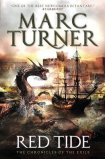
Red Tide by Marc Turner [Chronicles of the Exiled #3] DNF at 54%

I didn’t put this book down because it was a bad read. I put it down because it was taking me well over two weeks to get to just the 50% mark and I just couldn’t muster the enthusiasm to get into it knowing that it’s meant to be a six book series and there’s not a single peep that the author’s even working on the next book (for more of a reference, all 3 of the released titles came out between May 2015 and September 2016 and it doesn’t look as though he’s shared any updates on his website since). So I was finding it difficult to really care what was going on with no continuation in sight. If the author announces another book, I’ll happily pick this back up where I left off (until then…). For what it’s worth, I liked the story, the world building, the interwoven plot lines, and even the characters (who are extremely one-dimensional). It wouldn’t be the first fantasy series I recommend, but I wouldn’t discourage anyone from reading it, either.

The Girl of Fire and Thorns by Rae Carson

Girl of Fire and Thorns Stories by Rae Carson 2.5/5 stars

This compilation of three short stories would’ve been exponentially more enjoyable had I read it with the series instead of waiting several years. Considering how little I remembered of the side characters, the first two stories were entertaining enough and I’m sure they added a bit of good backstory. However, the final book (Hector’s story) didn’t really give me any of the feels I wanted even though it was the one I was most looking forward to. I’d long ago learned my lesson about waiting too long to get back to a series, but this experience just helps reinforce how important momentum is to my reading feng shui.

Lord of Misrule by Rachel Caine

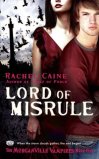
Lord of Misrule (Morganville #5) by Rachel Caine 3/5 stars

This is yet another book I would’ve enjoyed more had I continued right away. Alas, I’m grateful for the few subtle drop-in reminders of events in previous books to get me back up to speed for the rest of the series (which I’m planning to continue in a timely manner). I’m always impressed at Caine’s writing and thinks she has some of the better-developed characters in the genre. I know every time I pick up a Morganville book I’m going to be entertained. The storyline for Lord of Misrule specifically felt a little more erratic than previous books. It’s definitely functioning as a setup novel and ended without one whit of resolution (which is good motivation for me to keep reading…thank the book gods for completed series). Overall, I’m excited to dive back into this series.


Thanks for following along! What do you think of this new reviewing format for middle-of-the-road titles? :)

Image

Book Reviews: Dime Store Magic and Industrial Magic by Kelley Armstrong

Dime Store Magic: 4/5 stars
Industrial Magic 4/5 stars

It took me a loooooong time to get around to continuing this series with Dime Store Magic. I loved Bitten and Stolen, but found myself a little bitter that the series would start following different characters from there. I think my overall sentiment was “well, if continuing is going to feel like starting a new series, it doesn’t matter when I read them (salty reader, party of one).” For the most part, that was true. The story in books 3&4 focuses on Paige and her involvement in the witch and sorcerer communities (Elena’s story is a footnote, and werewolves take a backseat to other supernatural beings). It does tie back to Stolen, but more in a spin-off kind of way.

I’m not going to lie – I didn’t hate it.

I think I can see what Armstrong is trying to do with the series, and think nowadays I’m more in the mood to appreciate a series that takes a little longer to get to the payoff. What it has going for it are interesting and sassy female characters (I think Paige is one of the most relatable uf leads I’ve come across even if she is a little typical), good mysteries, romance, and writing that you can really lose yourself in. The story components weren’t earth-shattering, but I absolutely love where I think it’s going and look forward to seeing through some potential plot points.

Dime Store Magic offered a good Kate Daniels/Julie* relationship between Paige and Savannah and had a lot of excellent witchy moments (by witchy I mean supernatural spell casting and other creepy shit). It also had a decently organic romance, which I always appreciate. I finished this book feeling genuinely excited to see where the story went next. I even picked up Industrial Magic within a couple weeks (a turnaround that’s pretty unheard of with me). *Side note: I realize this was probably written before the KD series, but as I’m a super fan of that one now, everything must be compared. ;P

Industrial Magic was less about Paige’s relationships and more about the politics and dynamics within the witch and sorcerer communities (with a dash of necromancer and vampire). It expanded the plot sufficiently for me even though the story went in a different direction than I was expecting. It was much more inclusive of other supernatural groups, which made the whole world feel more robust and well-developed. The further I read, the more I appreciate how Armstrong is writing this series.

Overall, comparing books 3&4 to 1&2 is like apples to oranges. They’re still fruit sitting together in the same basket, but the sampling experience is vastly different. Elena’s story was more carnal and sensory, whereas I would call Paige’s more thoughtful and conceptual. Armstrong did a great job adapting her storytelling to both of these unique POVs, but I can see how such a drastic change caused a lot of readers to complain of a quality decline. They say the apples aren’t as good; I say that’s because you bit into an orange when you were expecting an apple.

Recommendations: I personally think there’s more than one type of urban fantasy, and books 3&4 strike a very different note than books 1&2 (as discussed above). As someone who likes most types, I’d recommend both as long as you’re prepared for the change. These haven’t landed at the top of my uf list yet, but they’re making a very compelling (and entertaining) case. :)

Other books you might like: