Image

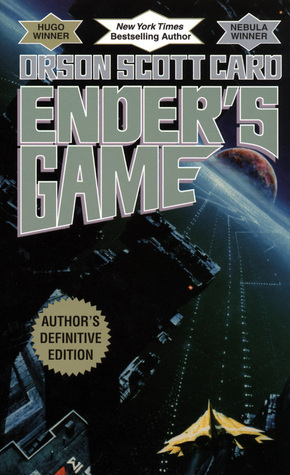
Book Review: Ender’s Game by Orson Scott Card

Title: Ender’s Game

Author: Orson Scott Card

Series: Ender’s Saga #1

Genre: Science Fiction

The Overview: From New York Times bestselling author Orson Scott Card, Ender’s Game―adapted to film starring Asa Butterfield and Harrison Ford―is the classic Hugo and Nebula award-winning science fiction novel of a young boy’s recruitment into the midst of an interstellar war. In order to develop a secure defense against a hostile alien race’s next attack, government agencies breed child geniuses and train them as soldiers. A brilliant young boy, Andrew “Ender” Wiggin lives with his kind but distant parents, his sadistic brother Peter, and the person he loves more than anyone else, his sister Valentine. Peter and Valentine were candidates for the soldier-training program but didn’t make the cut―young Ender is the Wiggin drafted to the orbiting Battle School for rigorous military training. Ender’s skills make him a leader in school and respected in the Battle Room, where children play at mock battles in zero gravity. Yet growing up in an artificial community of young soldiers Ender suffers greatly from isolation, rivalry from his peers, pressure from the adult teachers, and an unsettling fear of the alien invaders. His psychological battles include loneliness, fear that he is becoming like the cruel brother he remembers, and fanning the flames of devotion to his beloved sister. Is Ender the general Earth needs? But Ender is not the only result of the genetic experiments. The war with the Buggers has been raging for a hundred years, and the quest for the perfect general has been underway for almost as long. Ender’s two older siblings are every bit as unusual as he is, but in very different ways. Between the three of them lie the abilities to remake a world. If, that is, the world survives. –Goodreads


Niki’s Review [5/5 stars]:

I’ve read this book twice – once when I was a teenager and again a few years ago, almost two decades later. Both times I read it, I felt the impact of the ending and all the great momentum that got us there. But it was only on the second read that I appreciated all of the more quiet moments of the book and felt like I really got the full experience. There were some grittier things the first time around that my wee little self wasn’t prepared to handle, but adult me wanted expanded on. I’ve since read through more than half of the Ender’s Universe books in chronological order and have enjoyed them thoroughly. I definitely wouldn’t have been ready for them twenty years ago, but right now they are exactly what I’m in the mood to read.

Ender’s Game sits on a pedestal of books that completely dazzled me. What made it so good? First off I think school settings instantly trigger a certain fondness for books. But this school setting took it further by utilizing young brilliant minds in a game that required a lot of tactics and strategy. There were plenty of scenes where we get to see the game played with some very satisfying outcomes. All for stakes getting higher and higher in this incredible momentum build, making it one of the best culminations I’ve ever read. Truly breath-taking stuff. Ender is such a cool character because he quietly breaks the mold, yet still seems poignantly human and relatable.

This was one of my first science fiction books, and it definitely fueled my interest in the genre and set a high standard of expectations. I think my 5-star rating reflects both how brilliantly I think it was written, as well as extra points for what the book meant to me personally in my reading journey. Ender’s Shadow, while different in many ways and perhaps not quite as brilliant on paper, hit me in the same meaningful way and is also one of my favorite books. Love for both of these stories has sustained me through a series that so far has been enjoyable, but not quite as impactful. Either way, I’m loving the journey.

Overall, if you have any interest in science fiction at all and have not read Ender’s Game, you’re sorely missing out. I consider it a staple of the genre.

Thank you to my Patrons: Dave, Katrin, Frank, Jen, Karen, Sonja, Staci, Kat, Betsy, Eliss, Mike, Elizabeth, Bee, Poochtee, Kinsey, Alysa, Derek, Kelly, Grace, Carmen, Leticia, and Leah! <3


Dave’s Review [5/5 stars]:

This was my second time reading Ender’s Game, and if anything, I enjoyed it even more this time. It remains my favorite science fiction book, narrowly edging out both Dune and Hyperion, which are also near flawless books. Even knowing where the story is going (and perhaps able to appreciate what he is doing because of that), I was impressed by how effectively Card balances an exciting military science fiction story with a surprisingly thoughtful exploration of Ender’s character and psychology.

The battle school setting is a huge part of what makes the book work so well. The zero-gravity battle room provides a genuinely compelling setting for the increasingly complex games, while the competitive environment among the children creates constant tension. What initially appears to be a training exercise gradually becomes something much more serious, and Card does an excellent job of showing how Ender learns to think several steps ahead of everyone around him.

Ender himself is an exceptional protagonist. What I particularly appreciate is how much of the story is devoted to his thought process. We do not simply see that Ender is brilliant—we are allowed to follow his reasoning as he analyzes problems, anticipates his opponents, and develops increasingly unconventional solutions. At the same time, his intelligence is balanced by his empathy and growing isolation, making him considerably more interesting than a typical child-genius protagonist.

One of the things I appreciated more on this reread was how effectively the novel sets up the rest of the series. The ending provides a fascinating bridge to Speaker for the Dead, which is almost completely different in tone and subject matter, while also establishing the foundations for the Shadow books and Bean’s story.

Having read it once before, Ender’s Game remains an incredibly entertaining, intelligent, and well-constructed science fiction novel. After many years at the top of my list, I cannot imagine many books being able to displace it any time soon.


Other books you might like:

Image

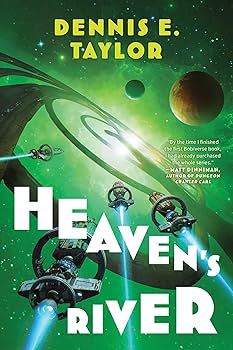
Book Review: Heaven’s River by Dennis E. Taylor

Title: Heaven’s River

Author: Dennis E. Taylor

Series: Bobiverse #4

Genre: Science Fiction

The Overview: More than a hundred years ago, Bender set out for the stars and was never heard from again. There has been no trace of him despite numerous searches by his clone-mates. Now Bob is determined to organize an expedition to learn Bender’s fate—whatever the cost. But nothing is ever simple in the Bobiverse. Bob’s descendants are out to the 24th generation now, and replicative drift has produced individuals who can barely be considered Bobs anymore. Some of them oppose Bob’s plan; others have plans of their own. The out-of-control moots are the least of the Bobiverse’s problems. Undaunted, Bob and his allies follow Bender’s trail. But what they discover out in deep space is so unexpected and so complex that it could either save the universe—or pose an existential threat the likes of which the Bobiverse has never faced. –Goodreads

Niki’s Review [3/5 stars]:

Heaven’s River was a departure from the storytelling format I’ve come to expect from Taylor, and I’m not sure the change did it any favors.

One word: pacing. One of the best things about the Bob books is that they clip along at a great pace. Maybe even too fast in some instances, which makes the moments where he decides to deep dive into a specific story thread even more satisfying and immersive. This entire book was an immersive deep dive that honestly read to me as though it were originally planned as two separate short novels that ultimately got mashed into one.

And here’s the thing: I actually LIKED the direction the story took because it reminded me of my favorite thread from the original trilogy (basking within a cool alien culture). No, my issues lie in execution. Diving in, we had a clear idea on what the objective was, however it was unclear through most of the book how the characters’ actions were actually helping them towards their objective. It felt more like stumbling around and getting fortunate a few times more than successful executions of a plan. And I mentioned pacing… oh my gosh move it along already. There were too many repeating elements and encounters that made the book feel like a lot more of a drag than it needed to be. And what’s more, the aliens they spent time with resembled a completely separate alien species we’d already encountered (the Pav). Call me crazy, but since all the main characters are basically the same, you’d think that would leave enough creativity behind to diversify the aliens just a bit more. Maybe he thinks the universe just needs more otters…

But I rant.

The book has some issues, but I’d say overall I’m still glad I read it to continue the series. I’ve been thoroughly enjoying my time with these books this year, and I look forward to reading the next one. The good new is, it’s much shorter. And even though I have a rant to spare for this book, it was still something I enjoyed reading from start to finish. It’s just wasn’t as good as it COULD’VE been, you know?

Pick this series up if you enjoy the cheekier side of scifi. It’s fun without being dumb. Most of the time.

Thank you to my Patrons: Dave, Katrin, Frank, Jen, Karen, Sonja, Staci, Kat, Betsy, Eliss, Mike, Elizabeth, Bee, Poochtee, Kinsey, Alysa, Derek, Kelly, Grace, Carmen, and Leticia! <3

Other books you might like:

by Niki Hawkes

Dave’s Review [2.5/5 stars]:

Having enjoyed the first three Bobiverse novels for the most part, I went into Heaven’s River expecting more of the same. While I still found things to like, this is the first book in the series that left me feeling somewhat disappointed. It retains much of the charm and creativity that made the earlier books so much fun, but it also shows some signs that the formula is beginning to wear thin.

The biggest issue is the length. At over 500 pages, Heaven’s River feels considerably longer than the story it has to tell. The central mission is interesting enough, but it is stretched across too many detours and repetitive scenes, causing the pacing to drag for long stretches. Likewise, the series’ trademark humor, which was one of its greatest strengths early on, no longer lands with the same consistency. The pop culture references and self-aware wit are still present, but they have become predictable more often than not, rather than truly amusing.

That said, the novel has its merits. One of the main plot lines of the novel involves the exploration of the Quinlan civilization, which is imaginative and can be fascinating at times, even if the exploration is more drawn out than necessary. Perhaps the most interesting aspect is watching the Bobs continue to diverge into distinct individuals with competing philosophies and priorities. The growing ideological conflicts between different factions add genuine depth to the series and suggest that the greatest challenges facing the Bobiverse may ultimately come from within rather than from external threats. It sets up what I feel would be the most interesting direction for future installments in the series.

Although Heaven’s River still contains flashes of the imagination and charm that hooked me in the first book, it feels overextended at this point. I remain interested in seeing where the Bobiverse goes next, but I hope future installments recapture some of the tighter pacing and freshness of the first couple of novels.

Image

Book Review: Faith of Beasts by James S.A. Corey

Title: Faith of Beasts

Author: James S.A. Corey

Series: Captive’s War #2

Genre: Science Fiction

Rating: 5/5 stars!

The Overview: The monstrous Carryx empire was built by subjugation and war. Thousands of species are bound to their Sovran’s command in an endless, blood-soaked test: be useful in the eternal conflict or be slaughtered. Dafyd Alkhor, highest among their human captives, is feared and despised by the very people he champions. Ruthless in carving out his niche in the eternal war machine of the empire, he will reshape human nature itself as a tool for their alien masters’ use.  But Dafyd’s loyalty is not what it seems. The Swarm, an agent of the Carryx’s deathless enemy, has been smuggled into the Carryx world-palace along with the human slaves. It’s discover a way to bring down the empire’s eternal reign. But the longer it lives among and within humanity, the more it forgets that it is a weapon. As the human captives spread through the battlefronts of empire, the awesome power of the Carryx becomes clear. And with it, a desperate plan for their destruction. But empires hide secrets, and even the deathless enemy may not be what it appears… –Goodreads

Niki’s Review:

My favorite book of the year so far!

Which is amazing considering it’s the second book in a trilogy (I always brace for middle-book syndrome). I don’t know why I was worried, though. These authors have been dazzling me for years and it’s to the point where I don’t even look to see what new books from Corey (or Abraham) are about – I just devour them.

I’ve said this before about most of the works I’ve read from these authors, but it continually amazes me how connected I always feel to these very flawed, painfully HUMAN characters. I’m not much of a character reader, generally, because I don’t often form bonds (or care to remember names) of the people in the stories. To me most characters feel little more than plot vessels. But it’s authors like the Corey team, Abercrombie, and Hobb who convince me the people I’m reading about are real. I’m realizing that what these character profiles have in common is how so deeply flawed (ahem.. human) they are, almost to the point of making them unlikable. THESE are the characters who’s stories move me. So maybe I am a character reader after all, I just need to buy in to how realistic they feel.

This series is so deftly written. There’s a recognizable cadence to this team’s writing style (which at this point feels like a warm hug) that is unique to their SFF series. It creates the most brilliant setups – some of the most breathtaking, fully engaging scenes I’ve ever read. Where I feel what’s going on viscerally and lose all touch with reality. It’s that X-factor that truly separates wonderful books from the absolute astounding books in my opinion. The sorts of books that make you want to find someone to talk to about them immediately. Where you finish them and find yourself reeling and still thinking about them days (or weeks/months/years) later. Only a few authors have ever done this to me before. The Corey team has now done it thrice.

After reading Faith of Beasts, I now have a newfound appreciation for why people love thriller novels. I read the back half of it on the edge of my seat. The Corey team are brilliant at cultivating momentum and suspense, and this poignant sense of danger that has me both wary and excited to turn to the next page. I can’t tell you the last book I read that actually raised the hair on my neck while I was reading it. If you can’t tell, I was super invested.

One thing we didn’t get in the Expanse was a lot of creature creation, as the series primarily takes place within our solar system. It’s almost like the duo are making up for lost time, because the abundance of aliens in Captive’s War is off the charts! It gives the story such an otherworldly (no kidding) feel. Great world-building is one of my favorite draws to books, as I love feeling completely transported to other worlds. That might be one reason why I don’t always mind when characters aren’t as strong. This series has it all though – character, world-building, writing, voice, pacing, momentum… it’s so rich! It has so many great components that I’m sure we could spend a dozen books exploring it, but how cool is it we get the best of the best compacted into a single trilogy? This is great, I can’t wait to see how it ends, and holy crap is the next one out yet?!

Thank you to my Patrons: Dave, Katrin, Frank, Jen, Karen, Sonja, Staci, Kat, Betsy, Eliss, Mike, Elizabeth, Bee, Poochtee, Kinsey, Alysa, Derek, Kelly, Grace, Carmen, and Leticia! <3

Other books you might like:

by Niki Hawkes

Image

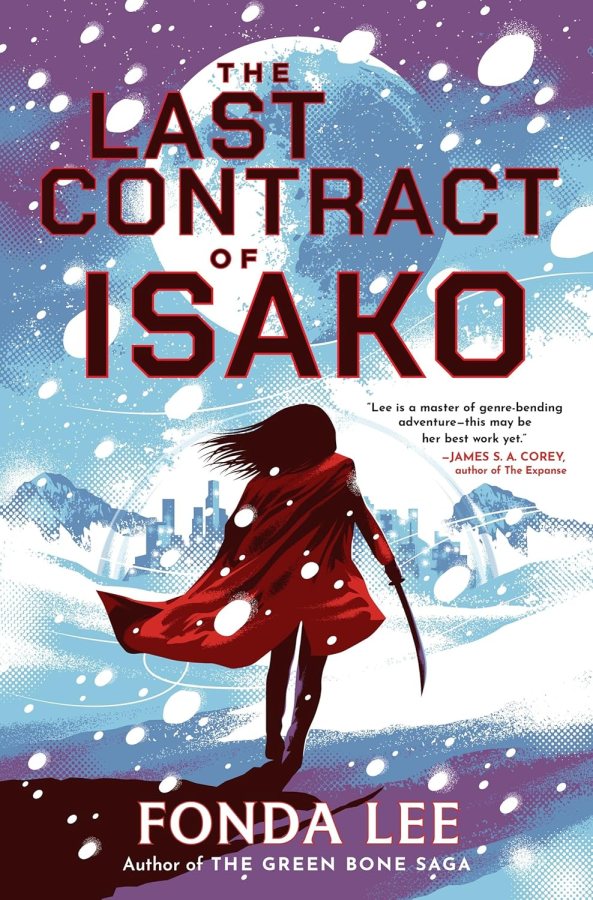
Book Review: The Last Contract of Isako by Fonda Lee

Title: The Last Contract of Isako

Author: Fonda Lee

Series: N/A

Genre: Science Fiction

The Overview: Get ready to be blown away by this searing standalone space opera where corporate samurai fight beneath merciless stars, and death is always a mere breath away. Isako is a legendary swordswoman, but every legend has to come to an end. When her long-time client unexpectedly retires, she plans to follow–to walk out into the frozen wasteland of their planet with her head held high and her family enriched by her legacy. But when a competitor offers her a final mission, it’s one she can’t refuse. Soon, she’s thrust deep into a world of corporate espionage, duty-bound duels, and shadowy secrets. What she uncovers will change humanity’s existence in the stars forever.Goodreads

Niki’s Review [3/5 stars]:

“Corporate Samurai in space” is how this story is being pitched. While the description is technically true, it evokes certain expectations for me that were absolutely not met. I had visions of warriors going toe-to-toe on some desolate moon in these intricate, cinematic fight scenes. Of rich cultures where the samurai way is the most prominent part of the plot. But other than the fact that the main character carried a sword through most of the book, you wouldn’t really know she was supposed to be a Samurai. She certainly didn’t fight much. And when she did there wasn’t anything particularly interesting about the interactions. By my reckoning, this was a slightly futuristic mystery that, for lack of decent world-building, may as well have taken place somewhere on earth.

So I feel a little let down.

That said, it’s a Fonda Lee, so it was written well. A mostly interesting crime investigation, things moved along at a good pace and I was at least mildly engaged the entire way through. Even though the story wasn’t really something I’d usually pick up, it was still an enjoyable read. There was one point in the middle where I was wondering how she was going to sustain the plot for a couple hundred more pages. But before I could lose momentum, there was a massive POV switch, which I didn’t like at first, but it ended up being exactly what the story needed to sustain itself.

I also always like Lee’s character work. Having Isako as a fifty-something “warrior” trying to retain her edge against the next generation was a great shift from the usual 20-somethings women we usually follow in these types of books. I didn’t get nearly as much depth or feel as much emotional investment as I did with her characters in Green Bone Saga, but I still enjoyed my time with them. And actually, swinging back to world-building, I ended up loving Green Bone, but my initial complaint was that it didn’t have enough of fantasy/magic components. It’s interesting that one of my main complaints here is that it doesn’t have enough scifi components for my tastes. In any case, I think fans of GBS will find a lot of things to like about Lee’s work here. But newcomers to the author would be much better off reading GBS instead of starting here.

One more thing – without spoilers, the ending left me with a lot of bigger-picture questions. The plot was so narrowly-focused on a few key players throughout, which is fine, but I found my interest lay more in the societal implications of what was happening. It was a bit dissatisfying to set the book down without any resolution there, and I feel it a somewhat missed opportunity for a more lasting impact. As it was though, that was apparently beyond the scope of the intended story…

If expectations hadn’t played a role, and if I’d been generally more interested in this type of book, I think I would’ve rated it a 4/5 stars. As it stands though, I’m sitting happy at a 3 star rating. I liked it, and at no point was I considering a DNF, but overall it was just a basically decent book with nothing remarkable for me to hang onto.

Thank you to my Patrons: Dave, Katrin, Frank, Jen, Karen, Sonja, Staci, Kat, Betsy, Eliss, Mike, Elizabeth, Bee, Poochtee, Kinsey, Alysa, Derek, Kelly, Grace, and Carmen! <3

Dave’s Review [4/5 stars]:

After reading Lee’s Green Bone Saga a couple of years ago, I vowed to read more of her books. When I read that her latest book was a cyberpunk samurai space opera, I was completely sold! The actual book is, in my opinion, not exactly that, or at least not exactly what I envision based on that description, even if it is technically accurate. However, it is a solid book regardless, and this is likely more an issue with my own expectations or the marketing of the book, rather than any problem with the writing itself.

The Last Contract of Isako might be considered a blend of genres. It is definitely science fiction for a number of reasons, but it also contains elements of fantasy/speculative fiction, as well as a bit of dystopian and noir. It is a strange mix, but the author’s talent manages to make this work smoothly and believably. Lee’s writing is efficient and easy to follow, yet has an understated elegance. I read this as an audiobook, which I am still relatively new to doing, so I do not yet have experience with many different narrators. In this case I found the narration to be just good, even if not particularly noteworthy.

One of the more interesting aspects of the novel is Lee’s choice of protagonist. She is an aging assassin in a world that has little sympathy for its elderly. As the title implies, Isako is on her last contract before retirement, and it turns out to be a wild one. The author effectively captures the weariness of a woman who has lived a hard life in an unforgiving world. This world is quite well fleshed out in many respects, effectively woven into the narrative without the need for lengthy exposition anywhere, at least as far as I can recall. My only real complaint in this regard is that the story never really takes full advantage of its setting. There are a couple of futuristic science fiction concepts that are important to the plot, but otherwise, it does not feel much like a space opera. The “samurai” element is also quite muted. Perhaps this was by design, but I would have preferred the story to have leaned into these things a little more, in some way or another. It ultimately works though, as so much of the politicking that is central to the story do not depend very much on these aspects.

The plot of the book is solid, and takes off from pretty early on in the story. The pacing is pretty good, with a few minor lulls, but nothing that drags the book down. There are a few revelations and major plot developments along the way, which are quite ingenious, although on occasion I felt that the abruptness with which they are conveyed robbed the story somewhat of the impact or emotional weight that it could have held.

The Last Contract of Isako is comparable to Lee’s Green Bone Saga in many ways, while also feeling like its own distinct world and story. This book also has the morally complex characters, the snappy dialogue, and a great deal of political conflict that seems to transcend the scope of the story itself. This is also a leaner story than the Green Bone Saga, contained within a single standalone book, and focusing largely on just one or two important characters instead of an entire family. This is a solid 4-star book that succeeds on most levels that I would recommend to anyone interested in political science fiction.

Other books you might like:
Image

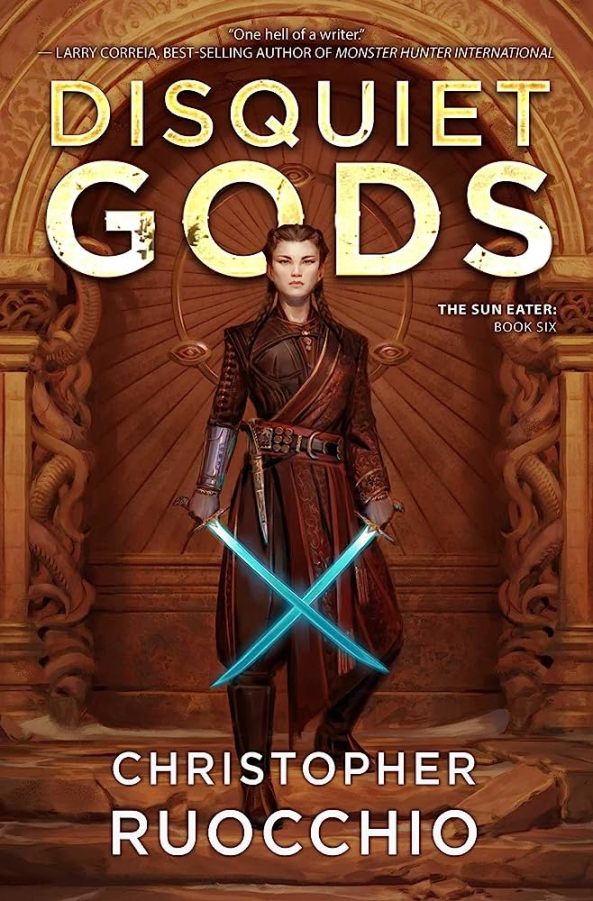
Book Review: Disquiet Gods by Christopher Ruocchio

Title: Disquiet Gods

Author: Christopher Ruocchio

Series: Sun Eater #6

Genre: Science Fiction

Rating: 3.5/5 stars

The Overview: The end is nigh. It has been nearly two hundred years since Hadrian Marlowe assaulted the person of the Emperor and walked away from war. From his Empire. His duty. From the will and service of the eldritch being known only as the Quiet. The galaxy lies in the grip of a terrible plague, and worse, the Cielcin have overrun the realms of men. A messenger has come to Jadd, bearing a summons from the Sollan Emperor for the one-time hero. A summons, a pardon, and a plea. HAPSIS, the Emperor’s secret first-contact intelligence organization, has located one of the dreadful Watchers, the immense, powerful beings worshipped by the Pale Cielcin. Called out of retirement and exile, the old hero—accompanied by his daughter, Cassandra—must race across the galaxy and against time to accomplish one last, impossible: To kill a god.Goodreads

The Review:

It took me FOREVER to get through this book. Over a year with a couple of soft DNFs in the mix. I don’t think it was solely the book’s fault, but I finished almost 80 books in that same timeframe, so it wasn’t solely me, either. There was this one part about 30% of the way in where my eyes started to glaze over both times I tried to read it. Once I got past that, I enjoyed myself quite a bit… but it took a while.

At this point in the series, I would definitely say I’m invested to see how it ends. Despite my troubles I actually liked a lot of the stuff in this book. An addition of a new character being my favorite highlight. And actually I like all the characters. They’re all wildly interesting profiles to me, which is perhaps one of the main reasons I kept coming back.

I also still appreciate the writing style. It’s distinctive in its flowing nature and often lyrical delivery. It reminds me a lot of the introspection you get during those interludes in a Drizzt book. The writing is so good it makes it easier to ignore the repetition and generally overindulgent musings. Somehow they always feel like they need to be there even though the points have long been driven home.

Even with all of that, I have to say I didn’t love the plot of this one. It bounced from one thing to the next in a way that was jarring, the subject change so abrupt. Several times throughout the book we were suddenly dealing with something drastically different, sometimes with only a couple of pages of transition. It made it feel very hodgepodge. Like a cleanup novel where the author was scrambling to tie up all the loose ends so that he could launch into the next finale book.

Even though this book wasn’t the strongest of the bunch, I’m still happy to have read all the books to this point and overall have had a great time with the series. I am earnestly looking forward to the final book of the series!

Recommendations: Interesting characters, absorbing writing, wild scifi adventures – this is a series well worth a try if you haven’t already.

Thank you to my Patrons: Dave, Katrin, Frank, Jen, Karen, Sonja, Staci, Kat, Betsy, Eliss, Mike, Elizabeth, Bee, Poochtee, Kinsey, Alysa, Derek, Kelly, Grace, and Carmen! <3

Other books you might like:
by Niki Hawkes

Image

Book Review: Alien Clay by Adrian Tchaikovsky

Title: Alien Clay

Author: Adrian Tchaikovsky

Series: N/A (…yet)

Genre: Science Fiction

Rating: 3.5/5 stars

The Overview: They travelled into the unknown and left themselves behind . . . On the distant world of Kiln lie the ruins of an alien civilization. It’s the greatest discovery in humanity’s spacefaring history – yet who were its builders and where did they go? Professor Arton Daghdev had always wanted to study alien life up close. Then his wishes become a reality in the worst way. His political activism sees him exiled from Earth to Kiln’s extrasolar labour camp. There, he’s condemned to work under an alien sky until he dies. Kiln boasts a ravenous, chaotic ecosystem like nothing seen on Earth. The monstrous alien life interacts in surprising, sometimes shocking ways with the human body, so Arton will risk death on a daily basis. However, the camp’s oppressive regime might just kill him first. If Arton can somehow escape both fates, the world of Kiln holds a wondrous, terrible secret. It will redefine life and intelligence as he knows it, and might just set him free . . . Goodreads

The Review:

Alien Clay contained concepts I’ve read before, but as it was done with Tchaikovsky’s usual flair, it felt original.

The beginning presented a plethora of compelling questions, and half the fun of the book was finding out answers to most of them. Granted, the plot wasn’t nearly as dynamic or complex as the beginning teased it could be, but overall it had more satisfying discovery moments than not.

What struck me most about Alien Clay were the odd (and varying degrees of successful) writing choices. It felt like an experimental book – containing everything from odd jumps in the timeline to breaking the fourth wall. When the latter happened it knocked me back completely, making me start questioning everything… and it kind of pissed me off. This is the book in which I discovered I’m not at all comfortable with even a perception of an unreliable narrator, which is news to me. While it certainly made for an interesting read, it didn’t do a lot to make the story cohesive.

So we have odd, experimental writing, and a plot that felt just on this side of disjointed… but only barely. At least it was memorable. But unfortunately it also led me to stop caring entirely about certain plot points as we kept switching gears. At the very least it made a great Buddy Read book because it generated a lot of discussion.

What can be celebrated, as with most of AT’s works, is the abundance of xenobiology. The flora and fauna were stellar -> every bit as exotica and exciting as the cover promises. I was wildly impressed at the ocean-modeled symbiotic nature of this world and wish I could read more.

All things considered, this lands just in the upper half of AT works, as far as I’m ranking them. Not my favorite, but nowhere near the worst one.

Recommendations: If you love great alien flora and fauna, this was a totally engaging and fun scifi jaunt. If you’re new to Tchaikovsky’s works and want to dive into the best first, start with Children of Time or Guns of Dawn (or even Ogres).

Thank you to my Patrons: Dave, Katrin, Frank, Jen, Sonja, Staci, Kat, Betsy, Eliss, Mike, Elizabeth, Bee, Tracey, Dagmara, Poochtee, and Ene! <3

Other books you might like:

by Niki Hawkes