Your Pick for Nik! – February’s Review!

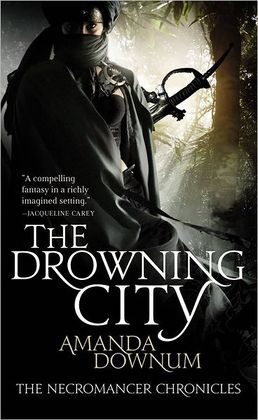
2Title: The Drowning City

Author: Amanda Downum

Series: Necromancer Chronicles #1

Genre: Fantasy

Rating: 2/5 stars

The Overview: Symir — the Drowning City. home to exiles and expatriates, pirates and smugglers. And violent revolutionaries who will stop at nothing to overthrow the corrupt Imperial government.

For Isyllt Iskaldur, necromancer and spy, the brewing revolution is a chance to prove herself to her crown. All she has to do is find and finance the revolutionaries, and help topple the palaces of Symir. But she is torn between her new friends and her duties, and the longer she stays in this monsoon-drenched city, the more intrigue she uncovers — even the dead are plotting. As the waters rise and the dams crack, Isyllt must choose between her mission and the city she came to save.

The Review:

I tried… I really did.

I made it 3/4 of the way through, but just couldn’t bring myself to finish this one. It probably didn’t help matters that every other book I picked up this month was truly fantastic. Authors like Richelle Mead, R.A. Salvatore, Veronica Roth, and Kim Harrison to name a few. So a book would really have to shine to keep my attention with so many other heavy hitters on my reading list.

It wasn’t a horrible read, by any means, and under normal circumstances I might have give it a “decent” rating. It just took far to long to get going, and even once it did, I couldn’t find any substance to keep my attention. I was really looking forward to the necromancy involved in the story (after all, it is part of the Necromancer Chronicles) but found that aspect to be a very minor note. Aside from what was on the back of the book (which I would’ve been totally lost without) I couldn’t decipher any overall motives within the story – it all felt sort of meaningless without a main story arc. I kept waiting for that inciting moment to tell me what they were working towards, but it never showed up. Also, the main protagonist (Isyllt) had the least compelling story of all the characters involved, putting me off that much more.

Note for writers: In my opinion, your main character should almost always have the most interesting story. Unfortunately, the main gal in this book didn’t really do much more than act as a facilitator to learn more about other characters and the world around them. It’s a shame, really, because in the authors notes Downum indicated that Isyllt has been a characters she’d been developing since childhood. I feel like she let go an opportunity to let this obviously well-planned character shine. She might have fallen into the trap of assuming her reader already knows how great Isyllt is because she herself is so aware if it. She knows how the character feels but didn’t convey that into action or purpose.

Another issue was the naming and presentation of the characters. I don’t know if I was just being dense, but they all seemed really similar to one-another, in name and personality. I would begin a new section, get confused, then realize I had been thinking of the wrong character. It required a great deal of extra focus, and was probably the biggest reason why I couldn’t get my head wrapped around the story. I find that incredibly sad, as a little renaming could’ve made all the difference.

One very good thing to Downum’s credit was her world-building. Drawing on inspirations of the marshy swamps of Southeast Asia, the world really came alive. She did a great job at providing a convincing atmosphere, and it was my favorite element of the book. Along with its unique qualities, the setting also played an active role in the story – a great writing technique that helps immerse readers into your world.

There were some really neat points to this book, but overall I wish the story had been more clear-cut and defined. I am bummed that I didn’t like it enough to finish it, but I decided not to long ago that life is too short to read books you don’t like. Something to consider: my mom, best friend, and I (who all enjoy the same types of books) had a book club for about a year. It always amazed me how differently we rated each book even though we all like the same stuff. Each person looks for something different when rating a book, so even though this novel didn’t work for me, I am sure others out there would enjoy it.

Now it’s your turn: what did you all think of this month’s selection?

by Niki Hawkes

Here’s a list of other books that also applied great world-building techniques:

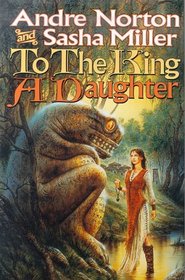
  • To the King a Daughter by Andre Norton and Sasha Miller
  • The Last Stormlord by Glenda Larke
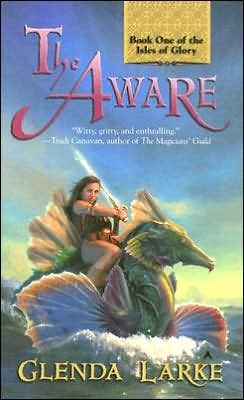
  • The Aware by Glenda Larke
  • A Shadow in Summer by Daniel Abraham
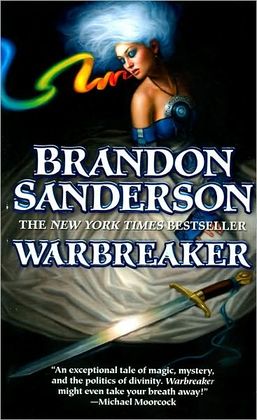
  • Warbreaker by Brandon Sanderson
  • Ship of Magic by Robin Hobb

a2 a3 a4 a5 a6 a7

Image

Book Review: Masques by Patricia Briggs

masquesTitle: Masques

Author: Patricia Briggs

Series: Sianim #1

Genre: Fantasy

Rating: 4/5 stars

The Overview: When the peaceful kingdom of Reth is overrun by Geoffrey ae’Magi, the evil master of illusion, Aralorn, weaponsmistress of the shapechanging race, and her companion, Wolf, attempt to overthrow him.

The Review:

As a long-time fan of Briggs’ Mercy Thompson series, I went ahead and bought these before I even knew what they were about. Thinking it was another urban fantasy, I was surprised to discover it’s actually a classic shapeshifter fantasy novel. I find it rather amazing how well Briggs can tell one story about werewolfs and another about shapechangers and have them sound nothing alike. It is a true testament to her creativity as an author to be able to capture each genre so well.

There were some good elements of world-building throughout the story, but overall I found it a bit minimal. She could have done a bit more to bring the feel of the world alive without distracting from the story. This is why I think the characters and events are what made this novel special. The author is excellent at portraying strong female leads, dynamic love interests, and throwing them into great conflicts.

Another writing element I like is that Briggs manages to introduce these interpersonal conflicts without making them feel like  senseless turmoils. This is a notable skill, as I find many authors sound like they’re following a formula.. “Okay, there hasn’t been any arguements between the characters in 50 pages, so I’d better invent a problem…” To take it further, all of Briggs works that I’ve read so far possess extrememly natural story progressions, which is probably why she is so easy and fun to read. Although the writing was not quite as strong as the Mercy series, it was highly entertaining in its own right.

Overall, Masques was a great book from an outstanding author and I’m eager to find out what happens next!

As a side note for all you die-hard Mercy fans out there: “Frost Burned” comes out March 5!!!!

Other books you might like:

*Image taken from bn.com

by Niki Hawkes

Your Pick for Nik! – December’s Review!

warbreakerTitle: Warbreaker

Author: Brandon Sanderson

Genre: Fantasy

Rating: 4/5 stars

Characters: My favorite element in Sanderson’s works are always his characters. They are  dynamic, interesting, and you can tell they’ve been developed over a long period of time. For novels written in third person, there is surprisingly a great deal of in-depth personal exploration that usually only comes with first person novels. He somehow managed to give us that fantasy feel while sharing that inner dialog that always makes me feel more invested into the characters’ futures.

After reading Mistborn, I’d always wondered why it was the characters were my favorite element. The magic systems and overall story were strong enough to contend in their own right, but when recommending the series to customers, I always talk about how enjoyable the characters were to read about – even the unlikable ones. After reading Warbreaker and the annotations after each chapter, the author clued me in as to why this is: his characters take action. Inner thoughts and development are indeed good for a story and they let you infer motives and tendencies, but many authors send their characters through inner struggles through most of the book before they finally overcome them to make something happen. Sanderson gives you that inner turmoil, but makes his characters act on them regardless of hangups. That, (along with their obviously well-developed personalities) is why I rave so much about them.

Pacing: ironically, although the characters were making decisions and advancing their own personal stories, it was a rather slow read. This was deliberate on the author’s part, as he mentioned in his annotations that he likes slower-moving books, but it still drug in a couple of places for me. That said, I was never bored. And as odd as it sounds, as soon as I began reading the annotations at the end of each chapter, the story really took off. Perhaps it was because my level of investment into the story had just increased, but likely it was because it gave me a lot more to think about, whether it be storyline or the writing behind it. I also don’t remember a single scene that didn’t either advance plot or reveal character, so overall I think it was a success.

World Building: Anyone who has ever seen my house (or for that matter, ever spent a bit of time with me) knows how much I love color. The idea that there is a world and magic system totally devoted to and focused around color makes me immensely happy. Sanderson always managed to subtly draw my attention back to the vibrant shades and hues that run rampant in this world. It was a delightful contrast to the drab settings I normally picture while reading fantasy, making the story that much more exotic and vibrant. Needless to say, the visual elements the author described in Warbreaker were highly evoking and I appreciated the picture he painted. (there’s your bad pun for the review… you knew it was coming.)

In any of Sanderson’s works you can tell he spends a lot of extra time developing his worlds. From the semi-tropical settings to the viable yet opposing religious systems, it was all very well-conceived. The ideas were excellent and thorough, but the most notable element was the way the author wove this information into the story. Creating a totally new world in fantasy is difficult to do without “info-dumping” on your reader, and I am in awe at how seamlessly he managed to convey loads of information about this place up-front without drawing attention away from the story. Many subtle drop-in details were used, but most of the information we found out through conversations and behaviors of the characters. As this is something I struggle with in my own writing, I found it very helpful to see it done so well.

Writing: While the book contained an excellent example of world building, it also had many other elements of writing that I found insightful. In fact, for any budding authors out there, I highly recommend studying this book to improve your craft. The epub version of this novel (available through bn.com) contain the author’s annotated notes after every chapter. They not only provided extra information on the story as a whole (making it that much more rich and vibrant) but also let us have an inside look at the developmental process that goes into writing a good fantasy novel. Sanderson even provides several suggestions and tips for making a good story even stronger. It was really interesting to read a passage then get the author’s first-hand account of what moods he was going for, what characters he hoped to highlight, and how the scene advanced the plot.

While not everybody approaches writing in the same way, it’s helpful to see inside someone else’s creative process to get a feel of how much work goes into developing a great story. This brings me to my final point: writing, at least good writing, is a lot of hard work. Sanderson, who is by all accounts setting himself up a legacy in this genre went through several drafts and considered thousands of feedback notes before settling on this final product. I admire that constant strive for perfection and I also realize that good fantasy takes hard work, dedication, and time, even for the professionals. If you are working on a novel, don’t let endless hours of rewriting and editing discourage you – your work will show and it will only get stronger.

Overall, this pick was a great read, and one that I’m especially grateful was chosen. I not only enjoyed it, but found inspiration to advance my own novel. I am eager to pick up The Way of Kings next, as at least a dozen people have told me it’s their favorite Sanderson.

by Niki Hawkes

Other Books You Might Like:

Now Let’s Discuss!

I had a lot of fun composing this review, but I’m most looking forward to hearing what YOU think:

  • What are your overall impressions/ratings of the book?
  • What were your favorite elements?
  • Who was your favorite character?
  • Did you predict the plot twists before they happened?
Image

Book Review: The Eye of the World by Robert Jordan

Title: The Eye the World

Author: Robert Jordan

Series: Wheel of Time #1

Genre: Fantasy

Rating: 3.5/5 stars

The Overview: The Wheel of Time turns and Ages come and go, leaving memories that become legend. Legend fades to myth, and even myth is long forgotten when the Age that gave it birth returns again. In the Third Age, an Age of Prophecy, the World and Time themselves hang in the balance. What was, what will be, and what is, may yet fall under the Shadow.

The Review:

I would like to start out by saying: don’t let my conservative rating scare you off from this series. At least 75% of customers I talk to about fantasy rank this series in their top 3, if not their #1. I am definitely the minority here, as the book didn’t even make my top 20.

Don’t get me wrong, it’s still a classic that deserves its place as one of the all-time fantasy greats, it just happened to have some elements that I personally didn’t care for. As the beginning of an epic quest not unlike that of Tolkien, I found it a bit long-winded. Not boring, mind you, as there were several highly developed and exciting characters (who were frankly the biggest reasons why I’m tempted to read the second book). The magic system and overall measure of time were also highly original and interesting, even though we didn’t get to learn much about them.

No, what the book lacked is that sense of excitement I usually feel while reading a great fantasy novel. I believe this is due to poor pacing decisions rather than any issues with the plot. It was just too slow-moving with too many senseless encounters. There also wasn’t much of an arc, lacking the sort of emotional highs and lows that usually go along with good storytelling. I definitely would’ve appreciated more time spent on the climax of the book rather than endless chapters of the characters meeting one fat innkeeper after another. I guess I just missed that emotional payoff – I suppose I’ll have to evaluate the series as a whole for that kind of reaction.

Overall, I respect this author a great deal, as I believe he has done wonders for the fantasy genre by inspiring new authors every day. There are just too many out there that I enjoyed more.

Other books I liked better (in a particular order):

by Niki Hawkes

Book Review: Into a Dark Realm by Raymond E. Feist

Title: Into a Dark Realm

Author: Raymond E. Feist

Series: Darkwar Saga #2

Genre: Fantasy

Rating: 5/5 stars!

The OverviewThe Conclave of Shadows has smashed the Nighthawks’ dread plot to destroy the Empire of Great Kesh, but the mad sorcerer Leso Varen hides on the world of Kelewan, and vicious Dasati warriors mass to invade. Sorcerer Pug, Magnus, Nokor, and disturbing Bek, full of bloodlust and uncanny strength, seek the solution in the heart of the Dasati Empire.

The Review:

Feist’s works are always impeccable and I’m hard-pressed to identify anything I don’t like in his stories. “Into a Dark Realm” was no exception, and in fact exceeded my expectations with its creativity and complexity.

What I liked about it was the total transportation into another realm. It provided a culture immersion that I haven’t really seen since his “Daughter of the Empire” trilogy written with Janny Wurts. This time, however, the world we got to explore was of another dimension -that of the Dasati. Following a male warrior from that evil and twisted world, we get to learn the mentality behind their rather brutal lifestyles. I really got caught up in the fascinating culture offered within this book, and found it to be one of my favorites in the entire saga.

As always, the characters are well-rounded with a nice balance between long-time beloved characters and the introduction of new ones. The story bounces back and forth between the multiple plot-lines seamlessly, maintaing my interest with each transition.

Overall, for the middle book in a trilogy, it advanced the plot nicely – revealing just enough to help build the momentum towards what promises to be an amazing conclusion!

by Niki Hawkes

Other books you might like:

Image

Book Review: Jhereg by Steven Brust

Title: Jhereg

Author: Steven Brust

Series: Vlad Taltos #1

Genre: Fantasy

Rating: 4/5 stars

The Overview: The first to be published, this is actually the fourth novel in the timeline of the VLAD TALTOS series. The books recount the adventures of the wisecracking hired killer Vlad, a human on a planet mainly inhabited by the long-lived, extremely tall sorcerers known as the Dragaerans. One of the most powerful bosses in the Jhereg–Dragaera’s premier criminal organization–hires Vlad, one of their guild members, to assassinate Mellar, who stole millions from the Jhereg leadership and fled. Unfortunately, this thief turns out to be protected in a way that makes it difficult for Vlad to do his job without gaining the permanent enmity of a friend. The reader also learns more about Vlad’s past in this, and in other, lives.

The Review:

Jhereg was nothing like I thought it would be… it was better! I was expecting a typical “boy gets a dragons and goes out on an epic adventure” book (I guess I need to stop judging by the cover alone). What I ended up with was a cheeky, magical, modern-day assassin mystery that blew my socks off.

Highly interesting characters and plot-lines, it was an extremely fast-paced novel that keeps you page-turning to the very end. And when I say fast-paced, I’m not joking around. The author has an incredible “no words wasted” writing style that makes for an exciting read. Trouble is, if you blink or get distracted for even a moment (as I am wont to do) you’ll likely miss something important and plot-advancing – so stay focused!

Initially, I thought a draw-back to this series was the lack of attention on setting. I couldn’t tell if the book was taking place in a complete fantasy world or just in a twist of our modern-day (and actually, I’m still not sure). I initially thought the author was lazy, but now I’m starting to suspect he’s a bit brilliant. His overall mastery over other elements of the craft is what clued me in. You see, the story is written in a strong first-person narrative – done well enough that I always felt totally immersed into the character. I now think the reason the reader doesn’t get to see the settings clearer is that the main character doesn’t pay much attention to such commonplace (for him) details. If this is truly the case, the Brust did an excellent job sticking to his chosen perspective, and I applaud him on it.

Overall, it was a unique read that I wish I’d picked up years ago. The author has a good fusion of fantasy and mystery that really maintained my attention. Though not the first book chronologically, it is the first book according to the publisher, and that’s good enough for me (especially since the author admitted he has no clue in what order his books should be read).

by Niki Hawkes

Other books you might like:

  • “Dragon Weather” by Lawrence Watt-Evans
  • “The Thief’s Gamble” by Juliet E. Mckenna
  • “Mistborn” by Brandon Sanderson
  • “Black Sun Rising” by C.S. Friedman
  • “Sword-Dancer” by Jennifer Roberson