Image

Book Review: Meditations for Mortals by Oliver Burkman

Title: Meditations for Mortals

Author: Oliver Burkman

Series: N/A

Genre: Non-Fiction

Rating: 5/5 stars!

The Overview: Meditations for Mortals takes us on a liberating journey towards a more meaningful life – one that begins not with fantasies of the ideal existence, but with the reality in which we actually find ourselves. Addressing the fundamental questions about how to live, it offers a powerful new way to take action on what counts: a guiding philosophy of life Oliver Burkeman calls ‘imperfectionism’. How can we embrace our non-negotiable limitations? Or make good decisions when there’s always too much to do? What if purposeful productivity were often about letting things happen, not making them happen? Reflecting on ideas drawn from philosophy, religion, literature, psychology, and self-help, Burkeman explores practical tools and shifts in perspective. The result is a bracing challenge to much familiar advice, and a profound yet entertaining crash course in living more fully. To be read either as a four-week ‘retreat of the mind’ or devoured in one or two sittings, Meditations for Mortals will be a source of solace and inspiration, and an aid to a saner, freer, and more enchantment-filled life. In anxiety-inducing times, it is rich in truths we have never needed more.Goodreads

The Review:

This might be my favorite non-fiction book.

Four Thousand Weeks no-joke changed my life with its core idea of embracing finitude and focusing on what matters most. Whereas that book was mostly philosophical in nature, this M4M companion book is almost completely practical application. You’ve embraced the philosophy with one, so now it’s time to implement the ideas.

Brilliant.

Out of the full 28 days of insight, there were only one or two ideas that didn’t totally resonate with my entire being. When coming up with material to talk about in a Youtube vid, I already had ten minutes of talking points from the intro alone. The book helps to increase understanding on why we as productive beings suffer stress, anxiety, and overwhelm. Then it offers new ways of thinking about situations and tools to feel more at peace amidst the chaos. At the very least, this book will help narrow down priorities and empower you to go through life with a little meaning, fulfillment, and grace.

If you can’t tell, I loved this book. I’ve already started in on a second read a few months later and am sure I’ll pick it up again for continued inspirations. The 5-7 minute daily snippets were absorbing, and whenever I started my day with one I experienced a lot more clarity and peace.

Overall, a 5-star winner. If Burkman hadn’t already been one of my gurus before, he absolutely is now.

Recommendations: Read this now if you want to get off the meaningless pursuit of chasing the bottom of endless to-do lists (an impossible task). The book encourages you to read it slowly over the course of 28 days, and I highly recommend that route. It lets you sit with each idea much longer and increases the efficacy at which you can apply it to your life. Consider this an Obsessive Bookseller favorite!

Thank you to my Patrons: Dave, Katrin, Frank, Jen, Sonja, Staci, Kat, Betsy, Eliss, Mike, Elizabeth, Bee, Tracey, Dagmara, and Poochtee! <3

Other books you might like:

by Niki Hawkes

Image

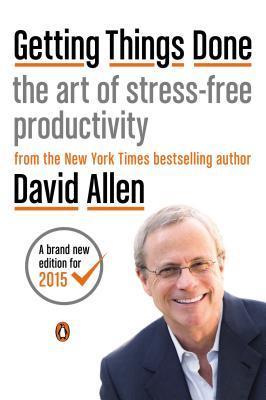
Book Review: Getting Things Done by David Allen

Title: Getting Things Done

Author: David Allen

Series: N/A

Genre: Productivity

Rating: 5/5 stars

The Overview: A completely revised and updated edition of the blockbuster bestseller from the personal productivity guru. (Fast Company) Since it was first published almost fifteen years ago, David Allen’s Getting Things Done has become one of the most influential business books of its era, and the ultimate book on personal organization. GTD is now shorthand for an entire way of approaching professional and personal tasks, and has spawned an entire culture of websites, organizational tools, seminars, and offshoots. Allen has rewritten the book from start to finish, tweaking his classic text with important perspectives on the new workplace, and adding material that will make the book fresh and relevant for years to come. This new edition of Getting Things Done will be welcomed not only by its hundreds of thousands of existing fans but also by a whole new generation eager to adopt its proven principles. -Goodreads

The Review:

I love this book. I’ve read it twice and will probably read it again in the future to bask in the, as he calls it, “methodology” of the GTD system. I took a ton of inspiration and new techniques from the book the first time around, and honed it even further upon this second read. This review will be mostly my takeaways from read two, as it’s the most recent.

My favorite tips:

Inbox Processing: When processing your inbox, deal with everything in a strict top to bottom (FIFO/LIFO) system. Make decisions on what needs to happen next before you move on to the next thing. Nothing goes back into the inbox to be dealt with later. I get trapped in the endless email-checking cycles every day where I open gmail periodically to glance through my inbox and focus on just the most interesting things. I don’t actually DEAL with any of it, which in my mind is a complete waste of time and energy. Addictive technologies suck. Allen’s inbox processing strategy can really help me out if I can retrain myself to handle only one thing at a time by deciding on next actions required for each item. Ideally I’d leave everything unopened until I’m ready to process it fully. I’ve also heard this called the “one-touch” method. I’d like to get to a point where I only open my email once or twice a day, and when I do it’s with the intention of handling the things rather than mindlessly scrolling the things. PROCESSING not LOOKING. Asking myself, “What’s the next action?”

Capturing System: Each time I read this book I come away with a new perspective and more knowledge, but one valuable insight gets slammed home each time:

“Your mind is for having ideas, not holding them.”

The GTD system helps you identify every single thing on your mind that keeps you from being fully present, and offers a way to offload them into a trusted system until you’re ready to tend to them. Since I started putting it into practice, I don’t spend as much time in my own head planning and stressing. If I do find myself there, I know that’s a sign I need to get back to my system.

The biggest takeaway from this second read is that I needed a better capturing system. One that I can trust. I’ve tried a few things over the years (everything from a bullet journal to emailing myself to-dos) and I think I finally found a tool that works for me (the app Todoist). Another thing I wasn’t doing well was taking time to REVIEW my captured items regularly. According to GTD, You need to review your captured items regularly enough to keep away the anxiety of forgetting things.

“The idea is to get comfortable enough with your system that you can completely rely on it not to let things slip through the cracks unintentionally. So that at any given moment you have the reassurance and confidence that whatever you’re choosing to do is what you ought to be doing.” (paraphrased)

What’s more, it makes you more at peace with what you’re NOT doing. I have so many things going on that I often feel swamped and overwhelmed. Being able to emphatically declare that I’m ignoring certain things for the day is liberating. Applying this correctly also means I’ll drop the ball less often.

The Two-Minute Rule: This is a concept from the book that often gets misconstrued. I’ve heard on countless organization lists that to stay on top of life, do anything immediately that can be done in two minutes or less. In the book, this strategy was specifically applied to when you’re processing your inbox and deciding on next actionable items for each item. Basically, if creating a task to-do (like “reply to this email”) takes longer to write down and file than it does to just do the task… just do the task. Allen even says that if you try the two-minute rule outside of the processing phase, you’ll spend your whole day tending to under two minute items, which can feel productive in the moment but may not be high-value enough to ultimately justify that much time. Before getting clarity on the intention behind this origin of the rule, I tried the commercialized version of tending to EVERYTHING and always found myself at the mercy of unimportant tasks all day long. I like it much better in this context. I do, however, subscribe to the advice of “put it away, not down” which is of the same spirit as the commercialized two-minute rule, but only applies to things you are already actively handling. That’s my addendum.

Applying GTD to my Reading Life: A fun new thing I’m doing is taking strategies and inspiration from these personal development books and applying them to reading. I realized a lot of my stress about reading had to do with feeling anxious about getting back to unfinished series. Combined with the ever-present stress that I’m not reading what I SHOULD be reading. Enter the GTD method: I began by combing through my resources and CAPTURING all of the series (one per piece of paper) I intend to continue into a little notebook. I identified 71 of them. 71!! No wonder I was stressed! Having to keep track of that many pending “projects” is one of the main reasons my mind was always jumping around and trying to priorities and get organized. I took those listed pages and PROCESSED each one into piles of priority. The NEXT ACTION REQUIRED was either “read” or “abandon.” After applying this process, that 71 list of open series turned into 15 high-priority series and 56 lesser-priorities. Much more manageable!! I don’t have 71 to focus on right now, just 15 (which is still high, but we’re working with baby steps here). I can also now rely on my stack of “captured” to-dos to keep track of what’s outstanding so I no longer have to carry it around in my head and stress about it. I now have the confidence that what I’m currently choosing to read is indeed the best use of my limited time. Love it!

Recommendations: Read this book. If you’re like me, the nitty-gritty details of the system is like organization porn and you’ll love every minute. It may even change your life.

Other books you might like:

by Niki Hawkes

Image

Non-Fiction Book Review: Power of Habit by Charles Duhigg

Title: Power of Habit

Author: Charles Duhigg

Genre: Non-Fiction [Habits]

Rating: 4.5/5 stars

The Overview: A young woman walks into a laboratory. Over the past two years, she has transformed almost every aspect of her life. She has quit smoking, run a marathon, and been promoted at work. The patterns inside her brain, neurologists discover, have fundamentally changed. Marketers at Procter & Gamble study videos of people making their beds. They are desperately trying to figure out how to sell a new product called Febreze, on track to be one of the biggest flops in company history. Suddenly, one of them detects a nearly imperceptible pattern—and with a slight shift in advertising, Febreze goes on to earn a billion dollars a year. An untested CEO takes over one of the largest companies in America. His first order of business is attacking a single pattern among his employees—how they approach worker safety—and soon the firm, Alcoa, becomes the top performer in the Dow Jones. What do all these people have in common? They achieved success by focusing on the patterns that shape every aspect of our lives. They succeeded by transforming habits. -Goodreads

The Review:

On reviewing Non-Fiction: Over the last few years I’ve read more and more non-fiction titles, but haven’t yet incorporated them into my reviewing strategy (until now). I didn’t feel inspired to review them as I would a fiction book, so instead I’m presenting non-fiction reviews as more notes and highlights of my favorite takeaways. It’s my way of journaling my experiences with the books so I have references for myself in the future. Here goes..

The Power of Habit is arguably the most well-written non-fiction book I’ve ever read. It’s a deftly woven exploration of habits through the use of case studies, engaging narrative, and individualistic habit implications. When I read James Clear’s Atomic Habits, I came away thinking, “great, I’m going to try to eat better… work out more, etc.,” but while reading Power of Habit it gave me some profound inspirations that I think I can use to help myself through some serious mental health stuff.. yeah, it’s that cool. There were more valuable takeaways from this book than indicated below, I just didn’t start taking notes until about the halfway point.

Takeaways:

It’s not about just cutting out a bad habit. It’s about finding something else to do in its place. The habit is the entire ritual of being compelled to do something through a trigger then following through for the payoff. If you want to stop eating cookies, don’t try to cold turkey your reach response for them when you’re hungry/stressed/whatever. Instead follow the habit perfectly but put a healthier alternative in the same spot as the cookies. <-Understanding the forces against change here has been super helpful.

After reading the chapter on Target shopping analysts, I’m now much more concerned with how much data retail companies have on me than I am on what the government has. Our destruction will be orchestrated by Target statisticians lol.

The Habit-Change Experiment:

1. Identify the Routines (what are the cues and rewards?)
2. Experiment with Rewards: change up random things to figure out which reward is driving the routines (the cafeteria/friends/cookie example).
3. Identify the Cue. 1. Where are you? 2. What time is it? 3. What’s your emotional state? 4. Who else is around? 5. What action preceded the urge?
4. Have a plan. Plan for the cue and chose a behavior that delivers the reward you are craving.

Doing these diagnosis experiments helps you gain power over habits that can sometimes feel powerless to change.

Overall rating: 4.5/5 stars. It was excellent.