Image

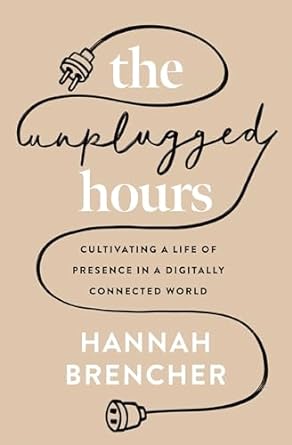
DNF Q&A: The Unplugged Hours by Hannah Brencher

Title: The Unplugged Hours

Author: Hannah Brencher

Series: N/A

Genre: Non-Fiction

Rating: 1/5 stars

The Overview: No matter what you do for a living, how much time your apps save you, or how much entertainment your phone brings, it is possible to unplug–and find an even better life on the other side. In the spring of 2021, Hannah Brencher found herself depleted and exhausted–and she knew the culprit was her constantly plugged-in lifestyle. Like so many of us, Hannah had been turning to her phone to cope with life in a time of isolation and uncertainty. Those coping mechanisms had calcified into habits she didn’t know how to break. Sound familiar? That’s when the nudge happened. Turn off your phone and keep turning off your phone. And a challenge was 1,000 unplugged hours in one year. Soon after she shared her tracker sheet on her website, thousands of people downloaded it and signed up for their own 1,000-hour challenge. Now in The Unplugged Hours, Hannah demonstrates how the act of powering down changed her entire life. It’s a strikingly small thing to do and a surprisingly difficult habit to maintain, but turning off your phone has a substantial impact on your mental health, relationships, time management, and outlook on the world. A powerful weaving of memoir, cultural commentary, and spiritual insights, this life-changing book helps. Reclaim your ability to be present and engaged with the world around youSwap the hurried, constant pace of technology for a steadier, more rooted way of livingEstablish your own unplugged rituals and rhythms in daily lifeUncover the magic within the ordinary awaiting you just beyond the screenThe Unplugged Hours gives you the practical ideas and spiritual inspiration you need to stop scrolling and start living. Goodreads


The Q&A:

Did you really give The Unplugged Hours a chance?

I think I read about 40% before throwing in the towel. That was more than enough time spent with the book to determine that it wasn’t working for me. I even kept reading several chapters past when I was ready to put it down, just to see if the experience improved.

Have you enjoyed other books in the same genre before?

Yes, I’ve made it a point to consume as many digital minimalism books as I can to help me along in my journey to stay off my phone. In most cases, simply immersing myself into a themed book like this is enough to inspire me to make changes. Unplugged Hours was odd in the sense that I didn’t even get a secondhand glow from reading it. Here are some of the ones I’ve enjoyed more lately:

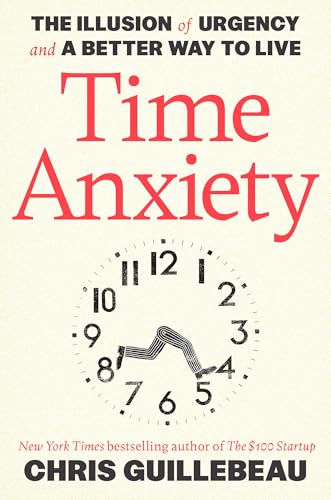
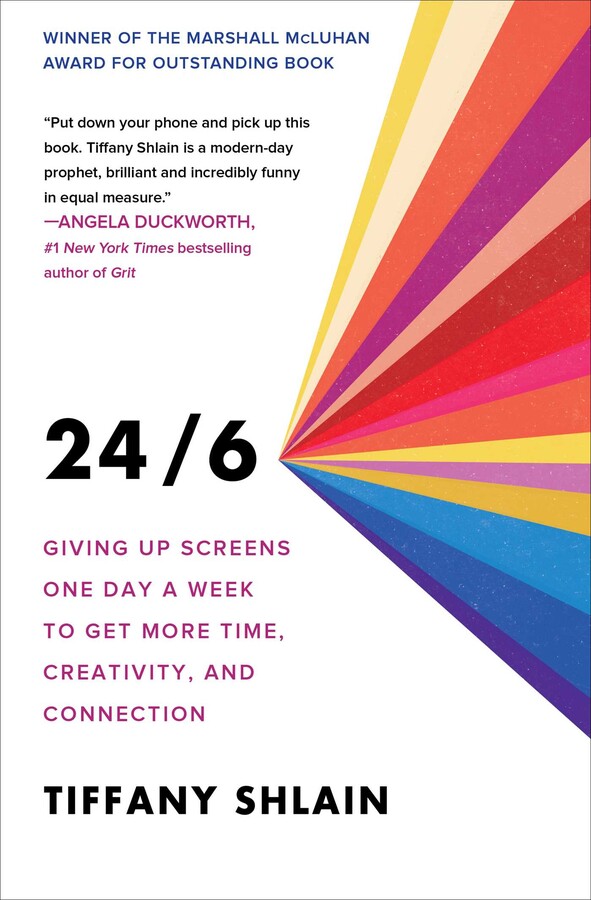
By far my favorite book on the subject is Cal Newport’s Digital Minimalism, which I’ve read half a dozen times. The some of the others are not necessarily about DM per se, but they had a radical effect on making me re-evaluate how I spend my time.

Did you have certain expectations before starting it?

As I mentioned, I expected to feel at least a little inspiration from the book. I also was thinking it would provide a few actionable tidbits, rather than just being a passive narrative. Even non-fiction that don’t work well for me almost always give me at least something to ponder on. Not the case here, for whatever reason.

What ultimately made you stop reading?

I put this down because I realized I wasn’t getting any sort of self improvement “payoff.” It was written in a very creative writing class personal narrative way where it kind of meandered from one experience to another (almost like reading someone’s journal or testimony). My biggest issue was that these reflections were never drawn back to what makes her story relevant to the reader. It could have majorly benefitted from some structure – where an experience was included to illustrated a specific point, which would then be expanded on and highlighted for the reader. As it was, it feels like it was only halfway to where it needed to be to be relevant to anyone but the writer. Maybe some people would’ve been just fine with the casual presentation of the idea (I could only find one) within the book, but because I’ve read so many of these I’ve come to expect a certain level of engagement, which I just didn’t get.

I experienced this on audio and have to say I really struggled with it. The text was delivered in a very choppy, systematic cadence that reminded me most of someone giving a graduation speech or a talk at church. It had planned variation, but very little personality or authentic inflection. It was a struggle to listen to and definitely contributed to my decision to DNF.

Was there anything you liked about The Unplugged Hours?

The author presented a challenge of intentionally choosing to be unplugged for 1000 hours per year (or 100 hours per month, if you prefer) and even provides free trackers on her website: https://hannahbrenchercreative.com/unplugged.

That was pretty cool. And although I didn’t resonate with her at all by how the book was written, the essence of being less connected and more present in one’s life is something I can completely appreciate.

Would you read anything else by this author?

Given that my objections to the book were about the basic writing style, I don’t think I’d favor other works by her over the many others on my TBR.

So you DNF’d the book – would you still recommend it?

Unfortunately, I don’t think so. For actionable inspiration in this subgenre, I’d recommend any of the books in my list above long before I’d suggest this one.


This DNF review format was borrowed with permission from Nikki @ There Were Books Involved (who doesn’t blog anymore, but she still gets all the credit).

Thank you to my Patrons: Dave, Katrin, Frank, Jen, Karen, Sonja, Staci, Kat, Betsy, Eliss, Mike, Elizabeth, Bee, Poochtee, Kinsey, Alysa, Derek, Kelly, Grace, Carmen, and Leticia! <3
by Niki Hawkes

Image

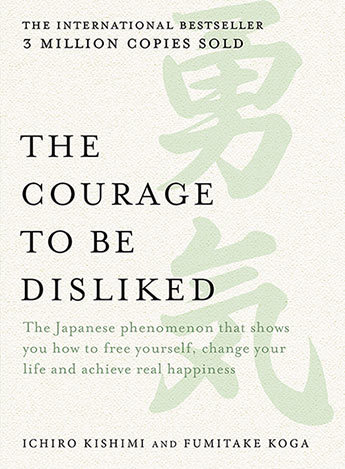
Book Review: The Courage to be Disliked

Title: The Courage to be Disliked

Author: Ichiro Kishimi & Fumitake Koga

Series: N/A

Genre: Nonfiction

Rating: 2/5 stars

The Overview: A single book can change your life. Already an enormous bestseller in Asia, with more than 3 million copies sold, The Courage to be Disliked demonstrates how to unlock the power within yourself to be the person you truly want to be. Using the theories of Alfred Adler, one of the three giants of 19th century psychology alongside Freud and Jung, it follows an illuminating conversation between a philosopher and a young man. The philosopher explains to his pupil how each of us is able to determine our own lives, free of the shackles of past experiences, doubts and the expectations of others. It’s a way of thinking that’s deeply liberating, allowing us to develop the courage to change, and to ignore the limitations that we and those around us can place on ourselves. The result is a book that is both highly accessible and profound in its importance. Millions have already read and benefited from its wisdom. Now that The Courage to be Disliked has been published for the first time in English, so can you. -Goodreads

The Review:

What a thoughtful, brilliantly crafted non-fiction book. It was clear a ton of time and effort went into the careful construction of every single argument and counter-argument. Masterful.

I mean, I completely hated it. But it was well done.

I struggled with the formatting – it was a back-and-forth argument between a young boy and an old wise man. I don’t know if it’s this current day and age of people constantly bickering back-and-forth, or just my general dislike of debate class in general, but I had a really difficult time listening to an eight hour audiobook of two people intensely discussing Adlerian theory. In some ways, it read a little condescending because I don’t need a theory argued and disproved beyond all doubt to adopted as useful in my own life. I just want to hear what the ideas are with maybe some real life examples and applications, then I can decide for myself whether or not I think it’s feasible for me. I balk at a format trying to “convince” me anything. It’s too pushy. #rebel

But if I can let the presentation go for a minute, I also didn’t really get a lot out of this book, which surprises me because within a few weeks of each other both my therapist and minimalist/productivity guru Matt D’Avella mentioned how much this book changed their lives. So I was going in with a massive set of expectations and, I mean, I got a few things from it, but not because it explored the topics in any great depth. It was all just surface-level. What I extracted, I did so because I took those surface level ideas in percolated on them for a while, and drew meaning from my inner workings rather than from what was presented in the text. This is not abnormal for a self-help nonfiction, but most that I’ve read offer a bit more topic exploration than what I got here.

That being said, I’m not discounting that this might actually be incredibly helpful for a lot of people, even though it didn’t land for me. I would highly recommend watching D’Avella’s coverage of this book in his video (https://www.youtube.com/watch?v=-DZofD0YN0A). He totally read a different book than I did and managed to thoroughly extract most of the great ideas the book has to offer.

But one gripe – I felt incredibly misled by the title “The Courage to be Disliked“ – because even though that might be the general punchline of the book, it did not spend very much time addressing that specifically. I felt like I should’ve come away with a very clear picture on what it looks like to have the courage to be disliked and how to actively pursue that state of being. I had to read between the lines, and ultimately came away with just the following takeaways:

I liked the idea that to be happy we need to stop seeking validation from outside sources. To take it further, we can tell we are living true to our needs, wants, and desires based on the presence of that outside disapproval. If you’re willing to live in acceptance that people will dislike you, it means you’re being true to yourself.

Another takeaway I liked was this promotion of lateral relationships versus vertical ones. It has universal applications, but I immediately thought of how I could apply it to better raising my kids. I can see how this would help them seek validation from within themselves, rather than always looking at me for approval. Day one applying it has been a success.

And that’s pretty much it.

So overall an interesting read, one that I more or less despised reading. I hope I carry these ideas with me going forward (the true test of a non-fiction), but I fear for me personally this is going to be quite forgettable. Don’t let this review, scare you off of picking up the book if you’re inclined – I seem to be in the vast minority.

Thank you to my Patrons: Dave, Katrin, Frank, Jen, Sonja, Staci, Kat, Betsy, Eliss, Mike, Elizabeth, Bee, Tracey, Poochtee, Kinsey, Alysa, Derek, Kelly, Meabh! <3

by Niki Hawkes

Image

Book Review: Meditations for Mortals by Oliver Burkman

Title: Meditations for Mortals

Author: Oliver Burkman

Series: N/A

Genre: Non-Fiction

Rating: 5/5 stars!

The Overview: Meditations for Mortals takes us on a liberating journey towards a more meaningful life – one that begins not with fantasies of the ideal existence, but with the reality in which we actually find ourselves. Addressing the fundamental questions about how to live, it offers a powerful new way to take action on what counts: a guiding philosophy of life Oliver Burkeman calls ‘imperfectionism’. How can we embrace our non-negotiable limitations? Or make good decisions when there’s always too much to do? What if purposeful productivity were often about letting things happen, not making them happen? Reflecting on ideas drawn from philosophy, religion, literature, psychology, and self-help, Burkeman explores practical tools and shifts in perspective. The result is a bracing challenge to much familiar advice, and a profound yet entertaining crash course in living more fully. To be read either as a four-week ‘retreat of the mind’ or devoured in one or two sittings, Meditations for Mortals will be a source of solace and inspiration, and an aid to a saner, freer, and more enchantment-filled life. In anxiety-inducing times, it is rich in truths we have never needed more.Goodreads

The Review:

This might be my favorite non-fiction book.

Four Thousand Weeks no-joke changed my life with its core idea of embracing finitude and focusing on what matters most. Whereas that book was mostly philosophical in nature, this M4M companion book is almost completely practical application. You’ve embraced the philosophy with one, so now it’s time to implement the ideas.

Brilliant.

Out of the full 28 days of insight, there were only one or two ideas that didn’t totally resonate with my entire being. When coming up with material to talk about in a Youtube vid, I already had ten minutes of talking points from the intro alone. The book helps to increase understanding on why we as productive beings suffer stress, anxiety, and overwhelm. Then it offers new ways of thinking about situations and tools to feel more at peace amidst the chaos. At the very least, this book will help narrow down priorities and empower you to go through life with a little meaning, fulfillment, and grace.

If you can’t tell, I loved this book. I’ve already started in on a second read a few months later and am sure I’ll pick it up again for continued inspirations. The 5-7 minute daily snippets were absorbing, and whenever I started my day with one I experienced a lot more clarity and peace.

Overall, a 5-star winner. If Burkman hadn’t already been one of my gurus before, he absolutely is now.

Recommendations: Read this now if you want to get off the meaningless pursuit of chasing the bottom of endless to-do lists (an impossible task). The book encourages you to read it slowly over the course of 28 days, and I highly recommend that route. It lets you sit with each idea much longer and increases the efficacy at which you can apply it to your life. Consider this an Obsessive Bookseller favorite!

Thank you to my Patrons: Dave, Katrin, Frank, Jen, Sonja, Staci, Kat, Betsy, Eliss, Mike, Elizabeth, Bee, Tracey, Dagmara, and Poochtee! <3

Other books you might like:

by Niki Hawkes