Image

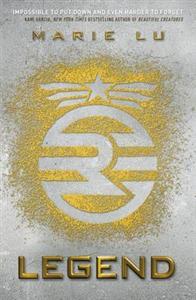
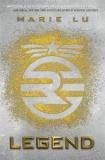
Book Review: Legend by Marie Lu

13042002Title: Legend

Author: Marie Lu

Series: Legend #1

Genre: Teen Fantasy

Rating: 5/5 stars!

The Overview: What was once the western United States is now home to the Republic, a nation perpetually at war with its neighbors. Born into an elite family in one of the Republic’s wealthiest districts, fifteen-year-old June is a prodigy being groomed for success in the Republic’s highest military circles. Born into the slums, fifteen-year-old Day is the country’s most wanted criminal. But his motives may not be as malicious as they seem. From very different worlds, June and Day have no reason to cross paths—until the day June’s brother, Metias, is murdered and Day becomes the prime suspect. Caught in the ultimate game of cat and mouse, Day is in a race for his family’s survival, while June seeks to avenge Metias’s death. But in a shocking turn of events, the two uncover the truth of what has really brought them together, and the sinister lengths their country will go to keep its secrets.

13042002

The Review:

I’d been passing over this novel for several months before someone personally recommended it to me based on the types of books I like… and now I’m kicking myself for not having read it sooner (thank you, Rachel!). It’s probably the best book I’ve read all year and is a strong contender for the #2 spot in my all-time favorite dystopian list (following Hunger Games, of course).

With fast-paced action, two amazing protagonists, and a compelling storyline, Legend really was one of those can’t-put-down books that will have you up half the night finishing it. Sometimes when an author switches back and forth between two POV characters it can steal momentum away from the story and make it more difficult to connect with either one. That was certainly not the case here: both protagonists were complex, well-rounded characters and each switch invested me deeper into the story.

The way the plot was organized helped with this too, and I’m convinced Lu really knows how to tell a story that will keep you at the edge of your seat. Just when you feel like you can’t get more involved with the book, she hits you with something even more gut-wrenching and evoking. I even found myself holding my breath on occasion – you know a book is amazing when it can garner a physical reaction, not just an emotional one.

Another reason I think the book was so effective was the way the characters and the conflicts developed throughout the story. The two main characters are highly intelligent, which means they figure things out faster than the average person. Lu completely committed to this and never once dumbed them down for the sake of drawing out a conflict. This means her story had to keep evolving as the characters made discoveries and formed conclusions. It just speaks of brilliant storytelling, and I think it’s probably my favorite element of the book.

Recommendations: For all of you fellow dystopian fanatics – if you haven’t read this book yet, consider putting it next on your list! I might’ve even liked it a bit more than Divergent, and that’s saying something. I will definitely be rereading it within the next couple of years – and if you could see the size of my TBR pile, you’d know what a commitment that is (I really, really liked it)!

Other books you might like:

 The Fifth Wave Review   •   Divergent Review   •   Partials Review   •   Pure Review

Image

Book Review: Zenn Scarlett by Christian Schoon

16071885Title: Zenn Scarlett

Author: Christian Schoon

Series: Zenn Scarlett #1

Genre: Teen Science Fiction

The Rating: 3/5 stars

The Overview: When you’re studying to be exoveterinarian specializing in exotic, alien life forms, school… is a different kind of animal. Zenn Scarlett is a resourceful, determined 17-year-old girl working hard to make it through her novice year of exovet training. That means she’s learning to care for alien creatures that are mostly large, generally dangerous and profoundly fascinating. Zenn’s all-important end-of-term tests at the Ciscan Cloister Exovet Clinic on Mars are coming up, and, she’s feeling confident of acing the exams. But when a series of inexplicable animal escapes and other disturbing events hit the school, Zenn finds herself being blamed for the problems. As if this isn’t enough to deal with, her absent father has abruptly stopped communicating with her; Liam Tucker, a local towner boy, is acting unusually, annoyingly friendly; and, strangest of all: Zenn is worried she’s started sharing the thoughts of the creatures around her. Which is impossible, of course. Nonetheless, she can’t deny what she’s feeling.

Now, with the help of Liam and Hamish, an eight-foot sentient insectoid also training at the clinic, Zenn must learn what’s happened to her father, solve the mystery of who, if anyone, is sabotaging the cloister, and determine if she’s actually sensing the consciousness of her alien patients… or just losing her mind. All without failing her novice year….

16071885

 The Review:

Because I thoroughly enjoy reading about animals, space, and people learning about things that don’t exist in our reality, I actually enjoyed several elements of this novel. The creatures Zenn took care of were creative and interesting, and I liked how each one had unique biological makeups and temperaments. The medical references on how to treat each animal were also fascinating – I was convinced that either the author knew a bit about veterinary care, or did his research. Overall, I really feel like I got to walk in the shoes of and “exovet,” a career I certainly will never have the chance to experience.

While enjoyable, I think there were some key elements missing from this story – elements that would have taken an enjoyable read into an epic one: conflict and world-building.

I talk about conflict a lot because without it, you really don’t have much of a story. Conflicts are what promotes growth and change in characters and gives readers reasons to stay put and find out how they cope. External conflicts are great for moving your story along and placing outside influence on your characters, but it is the internal conflicts that make characters more relatable and draw the audience in emotionally. There were a ton of external conflicts here (which were fun in their own right) but there wasn’t any internal exploration to give it all meaning and purpose. It’s probably why I’m left feeling like the story didn’t go anywhere – the character grew very little throughout the story and was basically in the same state at the end as she was at the beginning. That’s not to say the internal conflicts weren’t there –  I could see what they were supposed to be – they just weren’t explored or expanded on in any way that drew me in as a reader.

As far as world-building is concerned, I’ll start out by saying I enjoyed many elements in this category (most notably, the overall concept for the story) but there were a few things that needed some work. For example, the economic and political workings of this Mars settlement were a bit thin. Even taking into account that it’s a relatively new establishment compared to that of Earth’s, the conflicts presented in this book should have been a lot more complex and thorough. However, because that wasn’t the real focus of story, I turned a bit of a blind eye to it while reading. Upon reflection, however, I think more time spent developing and enriching the new culture would have enhanced the quality of the story significantly.

Overall, there were several great ideas and concepts here, but also quite a few things holding it back. Maybe it was the cover, but I expected quite a bit more adventure from this novel. The universe is endless with possibilities but the plot here was was rather narrow-focused. I also saw several minor story holes and weak plot points that could have been fixed with basic writing tricks (which included fixing really odd chapter breaks with stronger transitionary sentences and “hooks”). In any case, I enjoyed it but I wish the author had developed it a little further before publishing because I think a few changes could have made it epic.

Recommendations: You don’t see a lot of teen science fiction books, so if you’re in the mood for something “out there” this might suit your craving. It was also neat to experience a day in the life of an exovet – a career that I would consider in an alternate universe, and by far my favorite element of the story. However, if you’re looking for something a little more robust and engaging, this might not be the novel for you.

Other books you might like:

Image

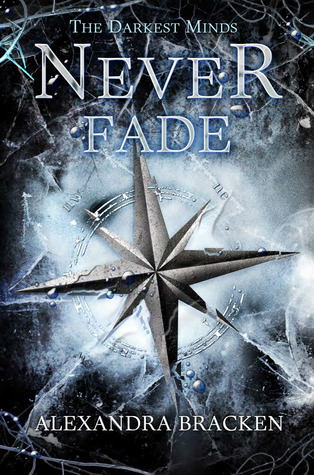
Book Review: Never Fade by Alexandra Bracken

NeverFade by Alexandra Bracken

NeverFade by Alexandra Bracken

Title: Never Fade

Author: Alexandra Bracken

Series: Darkest Minds #2

Genre: Teen Fantasy

Rating: 4/5 stars

The Overview: Ruby never asked for the abilities that almost cost her her life. Now she must call upon them on a daily basis, leading dangerous missions to bring down a corrupt government and breaking into the minds of her enemies. Other kids in the Children’s League call Ruby “Leader”, but she knows what she really is: a monster. 

When Ruby is entrusted with an explosive secret, she must embark on her most dangerous mission yet: leaving the Children’s League behind. Crucial information about the disease that killed most of America’s children—and turned Ruby and the others who lived into feared and hated outcasts—has survived every attempt to destroy it. But the truth is only saved in one place: a flashdrive in the hands of Liam Stewart, the boy Ruby once believed was her future—and who now wouldn’t recognize her.  As Ruby sets out across a desperate, lawless country to find Liam—and answers about the catastrophe that has ripped both her life and America apart—she is torn between old friends and the promise she made to serve the League. Ruby will do anything to protect the people she loves. But what if winning the war means losing herself?

bracken

The Review:

I’m sure I mentioned in my review of The Darkest Minds that I was unsure if I wanted to continue reading. It wasn’t for the hope that things would get better – she took that away completely at the end of the first book. No, what’s kept me reading was the pure appreciation of the side characters. They were vibrant, interesting, and I was excited enough about them to want to see where they ended up. I also liked the main character, but I think certain plot ideas got in the way of her relatability (I’ll talk more about that below). Let me just say this: these are some of the best characters I’ve read all year, and I could definitely learn a thing or two by studying this for my own writing.

So, now that I’ve established how much I love these characters and how brilliant I think the author is at creating them, I’d like to talk a little bit about the things that are keeping this series from being outstanding. At least in my eyes.

The only thing that consistently brings the ratings down for these books is story. In book one, the author left the characters, and therefore the readers, without any hope. It didn’t really give me anything to look forward to in Never Fade and, frankly, I had a hard time deciding whether or not I wanted to read it. While the second one inspired more hope (and convinced me I want to see where the story ends), it still had some story elements that put me off.

For example, I found myself constantly questioning the rationale of the main character. Her decisions often didn’t make any sense. It was almost like the author didn’t know how else to get the story where she needed it to go, so she made it convenient for herself by making the protagonist responsible for the new directions. As a result, the main character came off as highly illogical, unsentimental, and by extension, less relatable. When people have very little, they tend to cling to it more fiercely. Several times throughout the story, the main character went against this norm, pushing away everything she had with no solid reasons for doing so. It might have worked if those odd decisions actually accomplished anything, but all it ended up doing was stirring up senseless turmoil and make her difficult to support.

Overall, I see where Bracken was trying to take the story, and even like the ideas behind it, I think she just could have chosen a better way to get there. It is still an enjoyable series, but I just can’t help but see the opportunities where it could have been stronger.

Recommendations: as far as teen dystopian’s go, this isn’t one of my favorites based on concept and story alone. However, it has superb characters and includes one of the best naturally developing love stories I’ve ever read in a teen novel. I would probably recommend this only if you’ve already read (and enjoyed) my five favorite dystopians below. A warning to the wary, this particular teen book contains an exorbitant amount of language… perhaps a fair bit of violence, too.

Other books you might like:

by Niki Hawkes

Image

Book Review: Spartan Frost by Jennifer Estep

Spartan-Frost2-200x300Title: Spartan Frost

Author: Jennifer Estep

Series: Mythos Academy #4.5

Genre: Teen Paranormal Romance

Rating: 1/5 stars

The Overview: Professor Metis and Nickamedes say that I’m fine, that Loki and the Reapers don’t have a hold on me anymore, but I can’t risk it. I can’t risk hurting Gwen again. So I’m leaving Mythos and going somewhere far, far away. I know Gwen wonders what’s happening to me, whether I’m safe. I can’t tell her, but this is my story. . .

Spartan-Frost2-200x300 2

The Review:

It’s always fun to read from the love interest’s point of view, and I think Estep picked a great time to introduce Logan’s perspective – the events that happened in book four were incredibly pivotal for his character. While the storyline for this novella was entertaining, it left me wanting more… a lot more.

Spartan Frost was repetitive. I’d say about 75% of it was recap and reflection of what’s happened in the series so far. As this is a novella four books into this series, I think it would’ve been safe to assume that only fans of the series would be reading it (especially since it’s labeled book #4.5). Also, throughout all that recap, there was very little talk about what Logan went through. It might’ve been his voice, but the story was still centered around Gwen’s experiences.

Logan has been a great side character up to this point, but after reading this novella I get the impression he’s not as well-rounded as he could be. His struggles and thoughts were thin and often focused outward rather than inward. I was hoping to gain some insight to his character, and what I got was reflection and recap – and very little growth. Overall, I don’t think this short story added anything to Logan’s development – at least, no more than was added from reading the rest of the series from Gwen’s perspective. I think it actually revealed more to me about Sergei and Inari then it did Logan (and as those two are incredibly minor characters, it wasn’t a good thing for them to outshine the “hero”).

Recommendations: Take out all the recap, and what happened in a few dozen pages here could have been summed up in a two-page conversation in book five. It didn’t really add anything to the series and in fact detracted from my impression of Logan as a whole (from a characterization standpoint). I am disappointed and wish the author had taken the time to develop it into something deeper. I likely won’t be recommending this anytime soon.

Thank you, NetGalley, for the chance to read and review this book.

by Niki Hawkes

Image

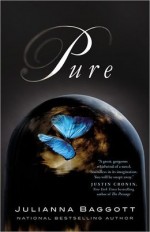
Your Pick for Nik! – July’s Review: Pure by Julianna Baggott

#1 Pure by Julianna Baggott

#1 Pure by Julianna Baggott

Title: Pure

Author: Julianna Baggott

Series: Pure #1

Genre: Dystopian Fiction

Rating: 4/5 stars

The Overview: We know you are here, our brothers and sisters . . . 
Pressia barely remembers the Detonations or much about life during the Before. In her sleeping cabinet behind the rubble of an old barbershop where she lives with her grandfather, she thinks about what is lost-how the world went from amusement parks, movie theaters, birthday parties, fathers and mothers . . . to ash and dust, scars, permanent burns, and fused, damaged bodies. And now, at an age when everyone is required to turn themselves over to the militia to either be trained as a soldier or, if they are too damaged and weak, to be used as live targets, Pressia can no longer pretend to be small. Pressia is on the run.

Burn a Pure and Breathe the Ash . . . 
There are those who escaped the apocalypse unmarked. Pures. They are tucked safely inside the Dome that protects their healthy, superior bodies. Yet Partridge, whose father is one of the most influential men in the Dome, feels isolated and lonely. Different. He thinks about loss-maybe just because his family is broken; his father is emotionally distant; his brother killed himself; and his mother never made it inside their shelter. Or maybe it’s his claustrophobia: his feeling that this Dome has become a swaddling of intensely rigid order. So when a slipped phrase suggests his mother might still be alive, Partridge risks his life to leave the Dome to find her. 

When Pressia meets Partridge, their worlds shatter all over again.
9680114 2

The Review:

World-Building: the world building was actually pretty creative. Baggott essentially re-created the parameters for our world and, as a result, had to come up with new rules for how people were forced to interact with one another and the unforgiving environment around them. Her evolution of the world was raw, gritty, and filled with the unexpected. She essentially changed the biological aspects by which people are composed and backed it up with some feasible science – I love it when authors do that.

Character: There are multiple viewpoint characters in this book. I’ve mentioned before that the only way for many viewpoints to work for me is if they are each contributing towards the story’s progression. Every scene where we switch perspectives must add something to the overall arc of the story. It was handled quite well in this case, and I liked how each scene gave us a little more information about what was going on.

Story: The basic storyline was a major strength for me, mostly because it included what I’m going to call a “rose-petal” plot. Important things were revealed in layers (which is normally called a layered or “onion” plot) which is not an uncommon tool, but in this case the layers were pulled back quite delicately, little by little – no onion around here. I liked how subtle it was, I liked how there was no false tension or people withholding information, and I genuinely enjoyed discovering what was going on with the characters. I feel like it’s been a long time since I’ve seen writing tool used this well.

Writing: I don’t believe I’ve ever read a book written in third person present tense before. I found it a bit odd, to be honest. The voice didn’t blend into the background like most third person perspectives do (which was a bit distracting on occasion), but it also lacked the emotional involvement I usually feel with present tense writing. It’s almost as if combining these two writing styles negates all the benefits that, in theory, they should be enhancing. I think this was the main reason why I felt rather impartial to the characters through most of the story and couldn’t help but wonder how much more of an impact it would have had had she chosen a different style.

That’s not to say her writing was weak. She had many passages of beautiful and often gut-wrenching description. Her writing set a very distinct tone for the story, showcased some truly beautiful imagery, showed us what’s important to the characters without rubbing our noses in it, and wowed me with her ability to pull back the layers of the plot so delicately. I would love the chance to appreciate her voice in another format.

Pacing: Pacing was really difficult for me to discern in this book – and I think it had something to do with the odd writing style choice. It kept me so impartial that I couldn’t really feel the highs and lows that normally come from adventure, danger, wonder, and romance. It kept me at a distance to the point where everything sort of flat-lined for most of the book. Logically, I could see were things sped up and slowed down, but I couldn’t feel it. And that’s a problem.

Marketing: this book is officially categorized in the adult fiction section of the bookstore I work at. As fiction is not my usual forte, I might have overlooked this one entirely if I hadn’t stumbled upon the second book while doing research for my “upcoming releases” feature. All I have to say is, thank goodness for catchy covers.

The storyline initially sounded like a typical teen dystopian novel, so as I read I tried to keep an eye out for anything that would explain why it wasn’t marketed as a teen book. At first, I thought perhaps maybe it was going to be too violent – but then I considered how much more violent it can get than children slaughtering each other in an arena for the amusement of the Capitol. Then, I thought maybe the story was too gritty and frightening – but then I considered how much more disturbing and intense things got while reading about an alien invasion in a series of five waves. Okay then, maybe it has to do with language – but then I remembered a sarcastic,  blue haired girl from an upcoming sequel of a teen dystopian (about, ironically, genetically mutated teens) dropping the F-bomb every couple of pages, and I know that’s out.

Everything I thought might have at one point made publishers wary of introducing to a teen audience turned out to be unfounded. My point? Perhaps this one should of been marketed differently to better reach its ideal demographic – teens. Besides, we all know us “adults” are devouring more of these books then actual teens, anyway. :)

Recommendations: While not my favorite dystopian on the market, it definitely was an enjoyable addition to the genre. I don’t see any reason why teens can pick this one up but would probably recommend it to those who prefer “action” dystopians like Hunger Games and The Fifth Wave over “romance” dystopian’s like Matched and Delirium.

Other books you might like:

Discussion time! (May contain spoilers):

Who was your favorite character and why?

100% – Partridge. Of all the characters, I felt the most connected to him. I appreciated how brave he was and how love for his mother drove him unfalteringly, despite the sacrifices he had to make along the way.

Did anything surprise you in the story?

El Captain – when he was first introduced, I was actually a bit disappointed. I was expecting him to be a typical one-note villain that the author would keep bouncing to just to show us how “evil” yet “justified” he was. I was pleasantly surprised when he turned out to be a rather complex and totally human character. The author gained a lot of respect for me with this one.

What was your favorite/least favorite part of the book?

My favorite and least favorite parts of the book were actually the same thing: the atmosphere. I love how totally immersed into the setting I felt the entire time and the author did a great job setting the stakes in this world and showing us the dangers within it. It was incredibly well done, with pops of beauty that shone like beacons through the pages (i.e., the little mechanical creatures Pressia created). The reason it was my least favorite is that it was gloomy, gritty, and downright depressing. I stopped reading it right before bed because I think it was giving me bad dreams.

Where would you shelve this book? Adult fiction or teen dystopian?

As stated above, I don’t think this book would be out of place at all in the teen section.

Well, there you have it! I hope you enjoyed the review – I had a lot of fun composing it.

The questions are meant to generate conversation, so feel free to answer any or all in the comments area. :-)’s

Here’s a link to the world’s coolest librarian who read along with me and made this month my favorite Pick for Nik! ever! Check out her review at: 

photo copy

by Niki Hawkes

Image

Book Review: Crimson Frost by Jennifer Estep

Crimson-FrostTitle: Crimson Frost

Author: Jennifer Estep

Series: Mythos Academy #4

Genre: Teen Paranormal Romance

Rating: 3/5 stars 

The Overview: I should have known that my first official date with Logan Quinn was destined to end in disaster. If we’d gotten into a swordfight, or been ambushed by Reapers, I’d have been more prepared. But getting arrested mid-sip at the local coffee hangout? I didn’t see that one coming. I’ve been accused of purposely helping the Reapers free Loki from his prison—and the person leading the charge against me is Linus Quinn, Logan’s dad. The worst part is that pretty much everyone at Mythos Academy thinks I’m guilty. If I’m going to get out of this mess alive, I’ll have to do it myself…

13130275

The Review:

Crimson Frost wasn’t my favorite of this series so far but it definitely was a lot better than Dark Frost (Book #3). Even so, I’m not sure it really redeemed the series. Estep does a lot of things fairly well – such as characterization, relationships, reflection, and originality – but as I sit here and evaluate the series as a whole, I’m noticing a lot of areas that might have made the books stronger.

Each book has contained some sort of mystery for the main character to solve – an element I really appreciate as an official “armchair detective.” Dark Frost had some issues in this department as Estep smacked the reader in the face with painfully obviously clues every couple of pages – clues that the main character somehow remained blind to. A good writing tip: if your average reader is smart enough to figure out what’s going on, it’s probably best if your heroine has that ability as well. No one likes screaming at the book for the character to: “Look over there! Are you friggin’ blind?! It’s right in front of your face!” (true story). Anyway, I think I’m trying to say that the author handled it a lot better this time around, which made it entirely more enjoyable.

The drawbacks I’m starting to notice in this series have to do with story. This is the fourth book that has taken place at the Academy, and while it’s a great setting, I’ve been sort of expecting the plot to grow beyond the borders of the school at this point and broaden the conflicts – much like Richelle Mead did in her Vampire Academy series when she took it to Russia. Instead, the author seems contents to keep the character stationary and repeat the same organized attack whenever Gwen’s alone in the library (which, by the way, happens all the time despite many security measures the school supposedly has… It’s a bit of a disconnect).

Frankly, if we are going to continue to spend so much time at the school, I’d like to learn a lot more about it – maybe attend some classes, meet a few teachers, even suffer through a little homework for the sake of learning more about the place. I love books that take place in schools, but the school in this one doesn’t seem to be that important. It’s a shame too, because the initial idea for it is so cool!  Children of Ninjas, Valkyries, Vikings, Spartans, and Amazons all attend this school but I know practically nothing about them even after four books. This is the biggest tragedy to me, because I was looking forward to that otherworldly feel I loved so much in the Hex Hall novels and even in Harry Potter. The author could have easily left out some of the fifty pages or so of recap and reflection to expand on this great concept.

Another plot point that’s been letting me down a bit lately is the magic system – specifically Gwen’s. Of Gypsy descent, she has a what’s known as “touch” magic. Everything she touches that has some sort of strong emotion attached to it sends her all memories of people and events surrounding that object. What was a cool concept has now developed into an inconsistent and rather convenient solutions to the character’s problems. Sometimes the magic works one way and other times it works another – I’m actually convinced the author is changing the way it works to suit whatever works best for the scene… It’s a little less effective.

My final point is probably more of a rant than anything constructive – I normally keep those to a minimum in reviews but I’m feeling a little sassy today – and it revolves around the conundrum of the falsely accused. Sure, having someone accused of a crime they didn’t commit can heighten the conflicts in a story and get the reader even more on the characters side.… but it’s also incredibly frustrating. There always seems to be enough evidence to back up the main characters’ cases, but somehow every rational human being – especially the upholders of the law – manage to have collective aneurysms during the trials and wind up siding with the enemy. The case built up against Gwen in this book was thin and rather pathetic. Honestly, the only reason it worked is because the author wanted it to. This might just be a personal thing, but I would avoid putting anything that’s truly frustrating into a story – especially if you’re writing for a genre that’s meant to be light and fun. It just seems counterproductive.

Well, as you can tell I got a little more fired up than I usually do. It really is not an awful series, and I’ve enjoyed it up to this point. I just hate that it’s not as good as it could be when I can see specific reasons why. At this point, I would still give the series a 3/5 stars as a whole.

Overall, I’m not nearly as excited about Mythos Academy as I was when I first picked it up, but it’s still one that I think House of Night fans would really enjoy – especially if they also liked the Percy Jackson series (it’s kind of a neat hybrid of the two). I’m hoping the next book (Midnight Frost out July 30th) continues this one’s upward trend, as it really was a lot more enjoyable than the third book.

Other books you might like:

 Hex Hall Review   •   The Selection Review

by Niki Hawkes