Book Review: Divergent by Veronica Roth

divergentTitle: Divergent

Author: Veronica Roth

Series: Divergent #1

Genre: Teen Fantasy

Rating: 4.5/5 stars

The Overview: In Beatrice Prior’s dystopian Chicago world, society is divided into five factions, each dedicated to the cultivation of a particular virtue–Candor (the honest), Abnegation (the selfless), Dauntless (the brave), Amity (the peaceful), and Erudite (the intelligent). On an appointed day of every year, all sixteen-year-olds must select the faction to which they will devote the rest of their lives. For Beatrice, the decision is between staying with her family and being who she really is–she can’t have both. So she makes a choice that surprises everyone, including herself.

The Review:

If you couldn’t tell from my blog’s focus over the last few weeks, I’ve been extremely hooked on the teen books, particularly the dystopian genre (I blame Partials). As Divergent is one of the best-selling novels in that category, I knew it had to be bumped to the top of my priority list.

Set in a society divided into five distinct factions, one young girl must make a decision that will change her life forever… and that’s just the beginning! Admittedly at first, it was a tad slow. I wasn’t terribly invested in the story because it read like a lot of other books on the market. Then somewhere in the middle, I’m not quite sure what happened but I suddenly found myself unable to stop reading. Exhausted beyond belief and sick with an awful cold to boot, I managed to keep myself awake an extra couple of hours to finish the book.

There were several elements that I liked about this story. I’ve mentioned before that I really enjoy books where the characters learn new skills, and the training that the main character goes through was interesting, intense, and fun to read about. The pacing was also great, and I thought the second half of the book really took me on a snowball’s ride to the end. Surprisingly, my favorite element of Divergent was the love story. Granted it wasn’t the biggest element of the plot, but I found the relationship that developed between the two characters to be incredibly natural in its progression throughout the story. I was pleased because I’ve rarely seen it done so well in the teen genre. It provided a lovely balance to the harsh realities the girl faced, and put the book near the top of the charts for me.

Recommendations: While there are many other dystopian novels that are appropriate for younger teens, I would probably only feel comfortable recommending this one to the 16+ crowd. There many elements that younger readers might be a little too… mature. As always, use your own discretion.

by Niki Hawkes

Other books you might like:

  • Matched by Ally Condie
  • Delirium by Lauren Oliver
  • Partials by Dan Wells
  • Uglies by Scott Westerfeld
  • The Maze Runner by James Dashner (I didn’t care for this book but because so many people liked it, I feel okay including it in this list. Divergent was actually sort of like what the Maze Runner could’ve been with less false tension and a lot more action.)
Image

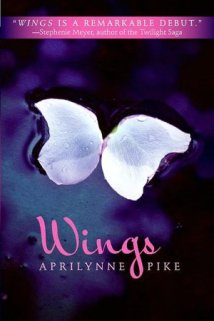
Book Review: Wings by Aprilynne Pike

Title: Wings

Author: Aprilynne Pike

Series: Wings #1

Rating: 3.5/5 stars

The Overview: Laurel was mesmerized, staring at the pale things with wide eyes. They were terrifyingly beautiful—too beautiful for words. Laurel turned to the mirror again, her eyes on the hovering petals that floated beside her head. They looked almost like wings.

In this extraordinary tale of magic and intrigue, romance and danger, everything you thought you knew about faeries will be changed forever.

The Review:

As I’ve mentioned before, teen romances have a way of sounding alike, so I am always impressed when an author manages to deliver original elements to go along with the ever-present love triangle. The story is a clever interpretation of Arthurian lore, particularly that involving the fae. Although in this version, the fae aren’t just one with nature, they are nature – beings who are actually plants at the cellular level. It was a really cool idea that the author took further by developing an entire world with hierarchy’s involving each “season” of fairy.

I really appreciated all that originality and world-building, but you really don’t find out much  about that stuff until some of the later books. The first novel seemed more like a set-up book for greater things to come and read like any other average teen romance novel (hence the lower rating). The entire series, however, was pretty magical, earning a solid 4/5 stars. I recommend it for those wanting a good wholesome love story because even though it was typical, it was still really sweet.

Other books you might like:

  • “Firelight” by Sophie Jordan
  • “Nightshade” by Andrea Cremer
  • “Wicked Lovely” by Melissa Marr
  • “City of Bones” by Cassandra Clare
  • “Matched” by Allie Condie

by Niki Hawkes

Book Review: Golden Lily by Richelle Mead

171437427

Title: Golden Lily

Author: Richelle Mead

Series: Bloodlines #2

Genre: Teen Paranormal Fantasy

Rating: 4.5/5 stars

The OverviewSydney Sage is an Alchemist, one of a group of humans who dabble in magic and serve to bridge the worlds of humans and vampires. They protect vampire secrets—and human lives.

Sydney would love to go to college, but instead, she’s been sent into hiding at a posh boarding school in Palm Springs, California–tasked with protecting Moroi princess Jill Dragomir from assassins who want to throw the Moroi court into civil war. Formerly in disgrace, Sydney is now praised for her loyalty and obedience, and held up as the model of an exemplary Alchemist.

The Review:

I’ve mentioned before in my review of book #1, “Bloodlines“, that Richelle Mead is one of my all-time favorite authors. I love everything she does, and I have yet to finish a series where I didn’t immediately want to go back and read it again.

All of her works are incredibly character driven, and this one in particular is probably the most introspective yet. While characterization is one of my most important elements when evaluating a book, I often get bored if the book focuses too much on that element. There has to be a balance of character, world-building, ideas, events, and plot to excel with me. Mead is one of the few authors that manages to address all these things while still delving deep into the thoughts of the main character.

Another thing I love about the author is her uncanny ability to make relationships feel natural and progressive. Not only does that help get readers more connected, but it also gives them more incentive to find out what happens next. I feel a stronger connection to her male leads than any other author’s, and I’m certain that has to do with her pacing and the way she develops the love story.

Overall, this series is a 4.5/5 star read, but I have to say it is my least favorite of all of Mead’s works. Thus far, anyway, as she’s got the tendency of making the final few books in a saga unforgettable. If you’ve never read anything by her, I would recommend starting with the “Vampire Academy” series, as this is a spinoff.

Other books you might like:

  • “Succubus Blues” by Richelle Mead (MA)
  • “Touch of Frost” by Jennifer Estep
  • “Firelight” by Sophie Jordan
  • “Marked” by P.C and Kristin Cast
  • “The Glass House” by Rachel Caine

by Niki Hawkes

November’s Your Pick for Nik!: Partials by Dan Wells (5/5 stars!)

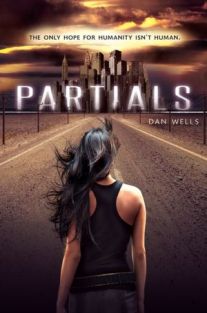
partialsTitle: Partials

Author: Dan Wells

Series: Partials #1

Genre: Teen Fantasy

Rating: 5/5 stars!

The Overview: The human race is all but extinct after a war with Partials—engineered organic beings identical to humans—has decimated the population. Reduced to only tens of thousands by RM, a weaponized virus to which only a fraction of humanity is immune, the survivors in North America have huddled together on Long Island while the Partials have mysteriously retreated. The threat of the Partials is still imminent, but, worse, no baby has been born immune to RM in more than a decade. Our time is running out.

Kira, a sixteen-year-old medic-in-training, is on the front lines of this battle, seeing RM ravage the community while mandatory pregnancy laws have pushed what’s left of humanity to the brink of civil war, and she’s not content to stand by and watch. But as she makes a desperate decision to save the last of her race, she will find that the survival of humans and Partials alike rests in her attempts to uncover the connections between them—connections that humanity has forgotten, or perhaps never even knew were there.

partials

The Review:

I have to say that “Partials” blew away all of my expectations and I couldn’t be more thrilled that it was November’s “Your Pick for Nik!”. I haven’t enjoyed a teen book so much since the “Hunger Games”. Incredibly fast-paced and creative, I guarantee you’ll have a difficult time putting this one down!

Writing: The writing was by far my favorite element of this book. Breaking the mold of your typical teen books (especially the many dealing with postapocalyptic settings) Wells managed to deliver one surprise after another throughout the story. It’s this lack of predictability that has moved this book into my top 10 favorite teen books. Don’t get me wrong, I love the genre, but after a while they do all tend to sound alike. “Partials” was so profoundly different that I’m still reeling from it a few weeks later. Wells was incredibly creative and resourceful in his plot-development, and I stand in awe at his originality. Even the scientific aspects dealing with the RM virus deserve some praise – it was written easily enough to follow for us more, uh, literary folks while still coming across as legitimate knowledge from the author (kudos to him for doing his research). In any case, I was convinced he knew what he was talking about.

Another thing I appreciate about the writing was the fact that there was not a single drop of false tension throughout the entire book. False tension is created when an author withholds stupid information to try to add suspense. Wells was actually quite forthcoming, giving the reader all the information he could up front using Kira’s perspective to shape what he wanted us to know. It was refreshing, and made the parts with actual tension that much more intense – you know something serious is going on. In contrast, when things got too intense, he always managed to relieve the tension with a well-placed bit of humor – incorporating it in a clever and non-awkward manner. I even laughed aloud a few times.

Finally, there was a supreme lack of “fluff” in this book. Every scene either worked to advance the plot or reveal character. This is a major part of why the story was so fast-paced, and this leads me to my next observations:

Pacing: I don’t know about you, but when I read, my mind tends to wander every so often and I find myself having to go back and reread several paragraphs or even pages at a time. I didn’t do that once in this entire book. In fact, I was so into the story that I found it difficult to stop and take notes for this post. It’s not the type of book you analyze, it’s the type you just enjoy! It is one of the best-paced books I’ve read in ages, and it makes me even more eager for the second book, “Fragments“, as it’s bound to be just as good. This is where I also draw my greatest comparison to the “Hunger Games” trilogy, specifically “Mockingjay.” It had all of the same elements of Collins’ final book, but didn’t have shocking events just for “shock’s” sake. In any case, Wells definitely figured out how to keep an audience engaged, and I dare you to read it without becoming riveted!

Characters: I actually don’t think the characters were the strongest elements of the story. Most of the characters, save Kira and Samm, were written in a rather flat manner, seeming to be to the vehicles by which we are led to our next events rather than people we were supposed to get connected to. A means to an end, if you will. Not to say they weren’t likable. In fact, for flat characters they were really well-developed. I think Wells did this on purpose to draw the reader’s focus to the events and provided a bit distance from the violence (I guess it’s supposed to make us a little im-“Partial”).

Since the book is written in first-person, the reader really only finds out what Kira thinks of the characters, rather than as the author would describe them. It was done quite well, but I believe this is why it lacked a bit of physical description. I, for one, would have appreciated a few more drop-in reminders. We really only get to know them through their dialog, and they don’t really develop beyond that. All that said, the format the author chose for his characters worked brilliantly within the context, and I didn’t feel the lack because Kira was such a strong lead. She was a living contrast of teenage girl and soldier, managing to be otherworldly and relatable at the same time.

World Building: The best thing I can say about the world building is that I felt like I was there. The imagery was amazing, using beautifully descriptive passages such as, “…last to fall were the buildings, distant and solemn, the gravestones for an entire world” (147).  In addition to this lovely descriptive voice we actually found out more about this world through the attitudes and lifestyles of the people. They are living in a world of extremes where danger lurks around every corner. I loved that the environment was almost a character in its own right.

Overall, “Partials” is one of the best books I’ve ever read, and I think it has the potential to be the next big hit of the genre! Give it a try – you won’t be disappointed!

Other Books You Might Like:

by Niki Hawkes

Now Let’s Discuss!

I had a lot of fun composing this review, but I’m most looking forward to hearing what YOU think. Do you agree or disagree with my assessments and why? What elements of the book worked for you? Did you find the story compelling? Did any of you enjoy the book as much as I did?

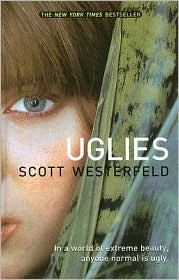
Book Review: Uglies by Scott Westerfeld

Title: Uglies

Author: Scott Westerfeld

Series: Uglies #1

Genre: Teen Fantasy

Rating: 5/5 stars!

The Overview: Tally Youngblood is about to turn sixteen, and she can’t wait for the operation that turns everyone from a repellent ugly into a stunningly attractive pretty and catapults you into a high-tech paradise where your only job is to party. But new friend Shay would rather hoverboard to “the Smoke” and be free. Tally learns about a whole new side of the pretty world and it isn’t very pretty. The “Special Circumstances” authority Dr Cable offers Tally the worst choice she can imagine: find her friend and turn her in, or never turn pretty at all. The choice Tally makes changes her world forever.

 The Review:

Although the market has been flooded with futuristic post-america settings, I’m of the opinion that this trend first began with the “Uglies” trilogy. It’s fantastic and one of the most entertaining series in the entire genre. Scott Westerfeld really knows how to tell a good story.

This is one of those books that sticks with you. I’ll talk a bit about how much I liked the writing style, but the overall concept was my favorite element of this series: To remove the favoritisms that arise from appearances, society decided to make everyone gorgeous. At sixteen, all people undergo major surgery and begin their privileged, materialistic lives. As a young girl about to undergo this procedure, Tally Youngblood decides there might be more to life than pretty faces and endless parties. As the series progresses, it digs deeper into this society, revealing that not everything is as perfect as it seems.

The author has an engaging writing style that keeps you riveted throughout the story. Adding to that, he is incredibly creative, and often used a subtle touch with certain setting and language elements that just made the story that much more dynamic and interesting. I liked it so much, I bought the sequel before I was even halfway through it.

Definitely in my top 10 favorite teen books of all-time, Uglies is well worth picking up, especially if you’re a fan of the teen genre. What’s more, every last customer and coworker I’ve talk to about this series share my thoughts – this is a trilogy that’s worth reading!

by Niki Hawkes

Other books you might like:

  • “Partials” by Dan Wells
  • “Delirium” by Lauren Oliver
  • “Matched” by Allie Condie
  • “Skinned” by Robin Wasserman
  • “Hunger Games” by Suzanne Collins
Image

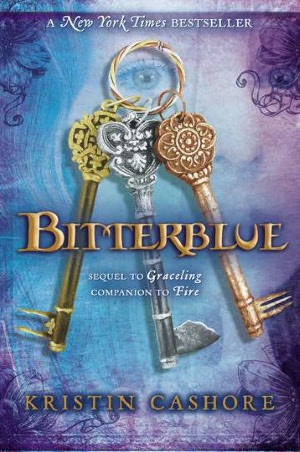
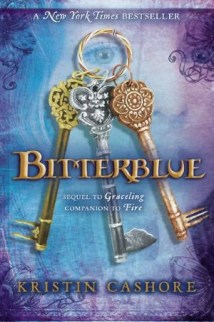
October’s Your Pick for Nik!: Bitterblue by Kristin Cashore

Title: Bitterblue

Author: Kristin Cashore

Series: Graceling Realm #3

Genre: Teen Fantasy

Rating: 3.5/5 stars

The Overview: Bitterblue is now queen of Monsea, still under the influence of her father Leck, a violent psychopath who altered minds. Her advisers want to pardon evildoers and forget everything, but she sees the past holds fast. Two thieves, who only steal what has been stolen, hold the truth and change her life. One, his Grace skill unidentified, has a key to her heart.

The Review:

“Bitterblue” was a good continuation in the Graceling saga. Even though it was told from Bitterblue’s perspective, Cashore did a great job progressing the stories of all the characters we fell in love with in the first novel – especially Katsa and Po. There were even elements of Fire that made an appearance, and I like the way both books were incorporated. The basic storyline was also good, and the element of mystery she added really helped build suspense.

There were, however a few things I found lacking. I loved “Graceling” for three reasons: the romantic love story, the adventure, and the creativity. I’m sad to say that “Bitterblue” left me wanting on two of the three. While the creative element is Cashore’s biggest strength, I don’t think she brought me the adventure or epic love story that I was hoping for.

Overall: Even though I liked the book, I wouldn’t recommend it for younger teens, as there were some seriously dark and twisted elements in the story that only made a slight appearance in the first two books. I actually think it was a big risk for Cashore to write such a sadistic villain, and the extremes to which she took him just might loose her some fans. It’s difficult to compare, but even when looking at villains in adult novels, this one was one of the worst, and not in an enjoyable “it’s just fiction” way, either. In any case, proceed with caution.

[Spoiler Alert! You might want to stop here if you haven’t read the book]

You picked it for me, now here’s the breakdown! I promised a thorough assessment, and that’s what you’re getting. :)

Plot: As I said before, I really enjoyed the fact that Po and Katsa’s story continued to a degree, even though they weren’t the stars of this book. Part of the reason why I loved the first book was the adventure Katsa goes on while running from Leck. I found that element somewhat lacking in this sequel. Even if the adventures had just been explorations of the city, I would’ve liked it better. As it was, you really only get to explore within the first few chapters, and that’s where the “adventure” ends. Unless, of course, you count the many times that she discovers things within her own castle – which brings me to my next point:

For someone as bored as Bitterblue, she sure doesn’t know a lot about her own home. You would think that spending 18 years in a place would get you rather acclimated, even if it’s just being aware of certain features of your castle (much less visiting them). I mean, it wasn’t like she was buried under paperwork right away after Leck died. I thought it was just too much senseless discovery, especially since Leck’s rooms and all the hidden passages provided plenty of “new” and interesting places for her to unveil. There was even a part where she met her dressmaker for the first time… it was odd.

The other aspect that I was the most disappointed in was the love interest. Graceling is still one of the most evoking romantic teen books I’ve ever read, yet I failed to find any of those qualities in “Bitterblue”. Heck, even “Fire” had a more compelling love story. I understand the basic appeal to Saf, as he’s got that element of danger and excitement going for him, but I was frankly more attracted to either Giddon or Teddy because they were actually, you know, nice to her. Bitterblue and Saf’s relationship just felt cheap to me. One kiss throughout a bulk of the book, then a sex scene right after she faces the trauma of watching Thiel kill himself… how romantic. “Bitter” and “blue” are good ways to describe how I feel wishing the story had gone a different route.

Characters: Cashore’s characters are always memorable, and I loved that she brought back Katsa and Po and gave them well-rounded roles within the story. She certainly has a knack for introducing new people and they always made me want to know more about them, even minor ones. I also thought Bitterblue was a great protagonist. She still felt like the little girl we met in “Graceling” but more mature, and I enjoyed watching her grow as both a young queen and a woman. If nothing else, she was consistent as a character throughout, and I liked the naive charm with which she faces the world. I would also like to note that the character I found most fascinating was Death. Not only did he have a cool grace, but it was implemented in a couple of creative ways, from memorizing books to learning a new language from a dictionary.

Writing: Cashore has a good flow to her works, and I don’t remember any passages or dialogues that felt forced. She’s got a concise way of introducing events and characters that I always struggle with in writing. She always brought a new character into the scene by giving them something memorable, whether it be by their grace, as with Fox, or their physical features or mannerisms as with Saf and Teddy. She also used a really good technique for delivering information to the reader without “dumping” it. The best example is the Questions game Saf plays with “Sparks” at the beginning of the book where we find out a lot of back-history in a conversational format.

The creative element was also impressive. The graces were diverse and interesting, and I thought she did a good job describing cyphers and integrating them into the story (I want to know who took all the time to design those charts). Cashore was also quite good at creating elements of mystery to the story: things that keep you turning the page. This is why I don’t think she needed Bitterblue to be ignorant of her castle; there were plenty of other things for her to discover along the way without that element.

Overall: I feel like a harsh critic, but my overall opinion of the book was a positive one. It was fun to read, and that factor alone gets it at least 2 stars. I learned some writing techniques that I’ll likely be using in my own works, and appreciated the expansion to Po and Katsa’s story.

Now Let’s Discuss!

I swear I haven’t been this hyper-critical of a book since high school book reports – haha! In any case, I had a lot of fun composing this review, but I’m most looking forward to hearing what YOU think. Do you agree or disagree with my assessments and why? What elements of the book worked for you? Did you find the story compelling?

by Niki Hawkes