Image

Book Review: Alien Clay by Adrian Tchaikovsky

Title: Alien Clay

Author: Adrian Tchaikovsky

Series: N/A (…yet)

Genre: Science Fiction

Rating: 3.5/5 stars

The Overview: They travelled into the unknown and left themselves behind . . . On the distant world of Kiln lie the ruins of an alien civilization. It’s the greatest discovery in humanity’s spacefaring history – yet who were its builders and where did they go? Professor Arton Daghdev had always wanted to study alien life up close. Then his wishes become a reality in the worst way. His political activism sees him exiled from Earth to Kiln’s extrasolar labour camp. There, he’s condemned to work under an alien sky until he dies. Kiln boasts a ravenous, chaotic ecosystem like nothing seen on Earth. The monstrous alien life interacts in surprising, sometimes shocking ways with the human body, so Arton will risk death on a daily basis. However, the camp’s oppressive regime might just kill him first. If Arton can somehow escape both fates, the world of Kiln holds a wondrous, terrible secret. It will redefine life and intelligence as he knows it, and might just set him free . . . Goodreads

The Review:

Alien Clay contained concepts I’ve read before, but as it was done with Tchaikovsky’s usual flair, it felt original.

The beginning presented a plethora of compelling questions, and half the fun of the book was finding out answers to most of them. Granted, the plot wasn’t nearly as dynamic or complex as the beginning teased it could be, but overall it had more satisfying discovery moments than not.

What struck me most about Alien Clay were the odd (and varying degrees of successful) writing choices. It felt like an experimental book – containing everything from odd jumps in the timeline to breaking the fourth wall. When the latter happened it knocked me back completely, making me start questioning everything… and it kind of pissed me off. This is the book in which I discovered I’m not at all comfortable with even a perception of an unreliable narrator, which is news to me. While it certainly made for an interesting read, it didn’t do a lot to make the story cohesive.

So we have odd, experimental writing, and a plot that felt just on this side of disjointed… but only barely. At least it was memorable. But unfortunately it also led me to stop caring entirely about certain plot points as we kept switching gears. At the very least it made a great Buddy Read book because it generated a lot of discussion.

What can be celebrated, as with most of AT’s works, is the abundance of xenobiology. The flora and fauna were stellar -> every bit as exotica and exciting as the cover promises. I was wildly impressed at the ocean-modeled symbiotic nature of this world and wish I could read more.

All things considered, this lands just in the upper half of AT works, as far as I’m ranking them. Not my favorite, but nowhere near the worst one.

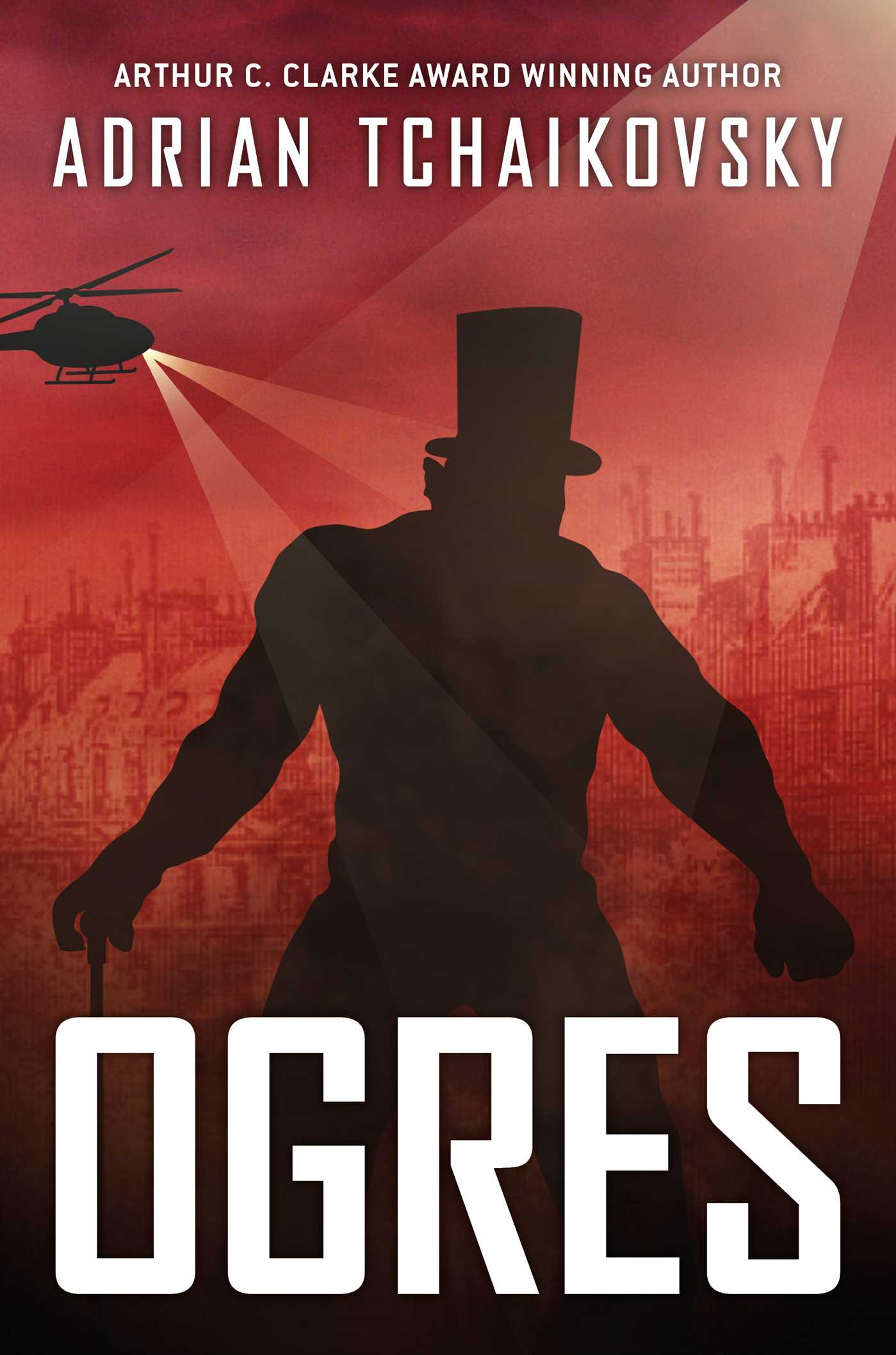
Recommendations: If you love great alien flora and fauna, this was a totally engaging and fun scifi jaunt. If you’re new to Tchaikovsky’s works and want to dive into the best first, start with Children of Time or Guns of Dawn (or even Ogres).

Thank you to my Patrons: Dave, Katrin, Frank, Jen, Sonja, Staci, Kat, Betsy, Eliss, Mike, Elizabeth, Bee, Tracey, Dagmara, Poochtee, and Ene! <3

Other books you might like:

by Niki Hawkes
Image

Book Review: Mercy of Gods by James S.A. Corey

Title: Mercy of Gods

Author: James S.A. Corey

Series: Captive’s War #1

Genre: Science Fiction

Rating: 4.5/5 stars

The Overview: How humanity came to the planet called Anjiin is lost in the fog of history, but that history is about to end. The Carryx—part empire, part hive—have waged wars of conquest for centuries, destroying or enslaving species across the galaxy. Now, they are facing a great and deathless enemy. The key to their survival may rest with the humans of Anjiin. Caught up in academic intrigue and affairs of the heart, Dafyd Alkhor is pleased just to be an assistant to a brilliant scientist and his celebrated research team. Then the Carryx ships descend, decimating the human population and taking the best and brightest of Anjiin society away to serve on the Carryx homeworld, and Dafyd is swept along with them. They are dropped in the middle of a struggle they barely understand, set in a competition against the other captive species with extinction as the price of failure. Only Dafyd and a handful of his companions see past the Darwinian contest to the deeper game that they must play to survive: learning to understand—and manipulate—the Carryx themselves. With a noble but suicidal human rebellion on one hand and strange and murderous enemies on the other, the team pays a terrible price to become the trusted servants of their new rulers. Dafyd Alkhor is a simple man swept up in events that are beyond his control and more vast than his imagination. He will become the champion of humanity and its betrayer, the most hated man in history and the guardian of his people. This is where his story begins. -Goodreads

The Review:

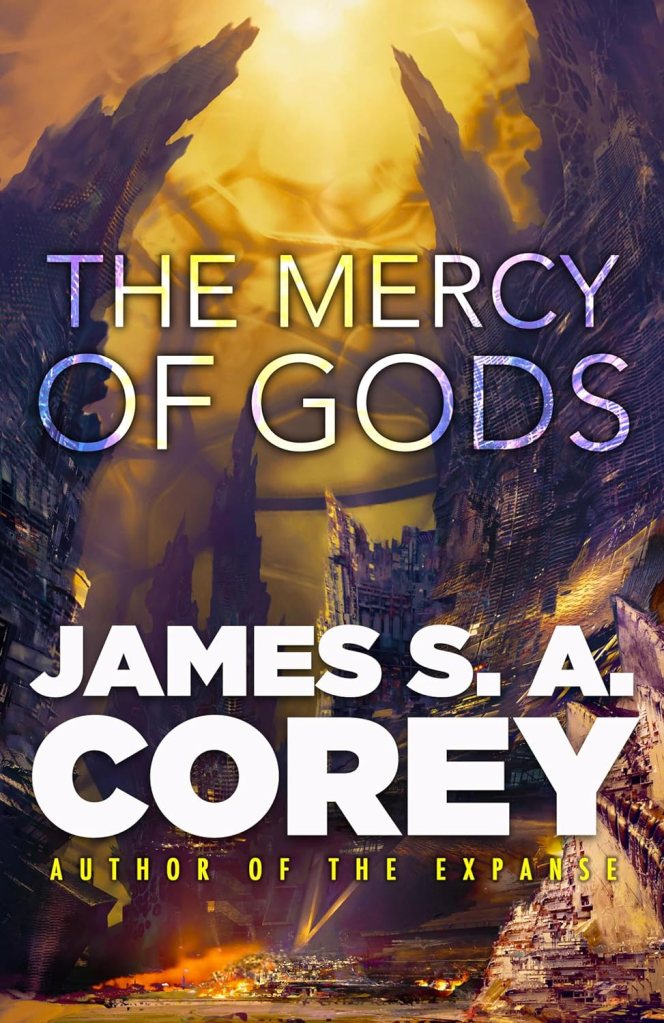
I love that we’re getting more scifi from these amazing authors! And to boot it’s something tied to the Expanse universe, albeit far removed from almost everything that’s familiar about that series. But so far, the Captive’s War is shaping up to be a completely different, but equally satisfying, experience!

But one thing that hasn’t changed is their mastery of character work. To take you into the granular details of what it means to be human coping with an unsympathetic existence. That brilliance is why I always feel so connected to the people in these stories and feel their stuff on a visceral level. I love Abraham’s fantasy works for much the same reason. There’s this way of slowing down events for the sake of connection that’s almost unparalleled (in but maybe a Hobb book) that always leaves an everlasting impression on my being. I’m a huge fan, and Mercy of the Gods is only the latest punctuation to that sentiment.

The Expanse was amazing. I’ve thought on occasion how for a scifi it was really only missing one point of interest… something that if included would’ve felt like it was trying to do too much. Mercy of Gods is where all that extra stuff came to play. It’s where the authors could throw off constraints and just have fun. And play they did! This was a wildly creative experience and I loved the overall concept of the story. It was slow and gripping and fast and action-packed and always exciting. Every bit as good as the best of Expanse!

Speaking, yes (I suppose) you could read this by itself without having read Expanse. It’s a 100% self-contained narrative at this point. However, if you ever plan to read Expanse and don’t want any of the progressions of things in that story ruined, trust me – start there. The tiebacks here were subtle but somehow also profound, and I’m most excited to figure out more ways in which this story ties back to the Expanse in future books… I have a feeling it’s going to be great.

I always say one of the reasons I love scifi is for the creature creation and new world explorations. I love the creativity involved and even more so when authors can tap into the biological workings of the aliens. Mercy of Gods was definitely one of the more satisfying books I’ve read in that regard, and I mean it when I say I can’t wait to see what’s in store for us in the next book. Is it out yet?!

Recommendations: James S.A. Corey fans, dive in without hesitation – this was awesome!! Daniel Abraham fans, dive in without hesitation – the character work is superb! New to the authors fans, consider whether or not you’ll ever want to read Expanse before diving in. It wont affect your enjoyment of this story much, but implications read in Mercy of Gods will wreck a good portion of the story arcs in the Expanse in one very specific regard…

I’d like to thank James S.A. Corey, Orbit Books, and Netgalley for the chance to read and review an early copy of Mercy of Gods – y’all made my year!

Thank you to my Patrons: Dave, Katrin, Frank, Sonja, Staci, Kat, Betsy, Eliss, Mike, Elizabeth, and Bee! <3

Other books you might like:

by Niki Hawkes
Image

Novella Review: The Fireborne Blade by Charlotte Bond

Title: The Fireborne Blade

Author: Charlotte Bond

Series: The Fireborne Blade #1

Genre: Fantasy

Rating: 2/5 stars

The Overview: Kill the dragon. Find the blade. Reclaim her honor. It’s that, or end up like countless knights before her, as a puddle of gore and molten armor. Maddileh is a knight. There aren’t many women in her line of work, and it often feels like the sneering and contempt from her peers is harder to stomach than the actual dragon slaying. But she’s a knight, and made of sterner stuff. A minor infraction forces her to redeem her honor in the most dramatic way possible, she must retrieve the fabled Fireborne Blade from its keeper, legendary dragon the White Lady, or die trying. If history tells us anything, it’s that “die trying” is where to wager your coin. Maddileh’s tale contains a rich history of dragons, ill-fated knights, scheming squires, and sapphic love, with deceptions and double-crosses that will keep you guessing right up to its dramatic conclusion. Ultimately, The Fireborne Blade is about the roles we refuse to accept, and of the place we make for ourselves in the world. -Overview

The Review:

Not what I was expecting and a bit unconventional, this was an interesting novella. I wish it had been a little more engaging.

What it had going for it was a plethora of original dragonlore ideas – stuff I’ve never seen done quite like this. So while it was an absolute standout in concept, it fell short for me in execution and pacing.

The story bounced back and forth between past events and the current happenings with the MC. The bounce happened so often that it effectively stole all momentum from the tale, and as a result I found myself struggling to pay attention. Some of the flashback scenes ultimately ended up enhancing the overall arc of the story, but not all. From a creative standpoint, I like the woven storyline and thought it was a great way to integrate all of the components, but overall, as I said, I wish it had been a little more engaging.

The MC was a bit stereotypical and I feel like I’ve read her profile countless times before. She seemed more like a vessel of perpetuating the plot rather than a character with a lot of depth and dynamics. However my biggest issue was her behavior. This novella read like a literary fiction (starring dragons) and was seemingly trying to present a few themes throughout. The MC said and did things that harmed the message plumping the narrative and also appeared inconsistent with character. It felt like she was trying to be too many things in conflict with each other. And not in an interesting, oh, this character has a lot of duality way, but more in an I’m not sure she’s fully developed kind of way.

For such a short story, I was hoping it would have more of a momentum, better character connection, and a more consistent message. In lieu of all that, I’m at least grateful for an interesting style and plot structure and liked the fresh, gritty take on dragons -> a subject in which I am obsessed, so the uniqueness was appreciated.

I experienced this story on audio and the narrator, Helen McAlpine, was adept and pleasant to listen to. I’m not sure if it was just the arc version of the audio I received or just something about the way it was recorded, but it felt about .25 slower than average, so you’ll fly through it!

Recommendations: this is a creative novella that I found entertaining in concept and technique even though it failed to draw me in. Still worth a look if you’d like a fresh take on dragonlore.

I’d like to thank Macmillan Audio, Charlotte Bond, and NetGalley for the chance to listen to and review an early copy of this novella.

Thank you to my Patrons: Dave, Katrin, Frank, Sonja, Staci, Kat, Betsy, Eliss, Mike, Elizabeth, and Bee! <3

Other books you might like:

by Niki Hawkes