Image

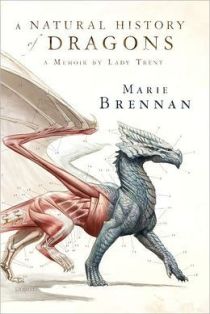
Book Review: A Natural History of Dragons by Marie Brennan

a natural history of dragonTitle: A Natural History of Dragons

Author: Marie Brennan

Series: Memoir of Lady Trent #1

Genre: Fantasy

Rating: 2.5 stars

The Overview: All the world, from Scirland to the farthest reaches of Eriga, know Isabella, Lady Trent, to be the world’s preeminent dragon naturalist. She is the remarkable woman who brought the study of dragons out of the misty shadows of myth and misunderstanding into the clear light of modern science. But before she became the illustrious figure we know today, there was a bookish young woman whose passion for learning, natural history, and, yes, dragons defied the stifling conventions of her day. Here at last, in her own words, is the true story of a pioneering spirit who risked her reputation, her prospects, and her fragile flesh and bone to satisfy her scientific curiosity; of how she sought true love and happiness despite her lamentable eccentricities; and of her thrilling expedition to the perilous mountains of Vystrana, where she made the first of many historic discoveries that would change the world forever. 

The Review:

I’ve been stalling on writing this review because I have so many conflicting emotions about it – it has been hard to get my thoughts straight. Up to about a third of the way through the novel, I was certain it was going to be one of my new all-time favorites. Every last element sang to me in a way that only a handful of novels ever have:

  • A young girl who dreams of studying dragons in a society that considers that a very unladylike endeavor.
  • A memoir narration from this girl many decades later indicating that she broke through all of the societal constraints and is now considered the foremost expert in the field.
  • A sweet love story where she meets someone willing to accept and share her passions.
  • The promise of adventure as she sets out to study her first specimen at an exotic location.
  • And of course, an abundance of dragons!

All of these elements were in line with my personal passions – books, dragons, and nature – and brought them together in a way that made me lose myself within the pages. It was magical!

But, alas, the magic didn’t carry through the entire story. ::sobs::

There were several issues that arose as the novel progressed, and I lament because ALL OF THEM could’ve been avoided with a different outlining strategy/focus on the author’s part.

The major one was the main conflict of the story. In a book about a dragon-nut going on a wild adventure to study dragons in a way never before attempted, I feel strongly that the main conflict SHOULD HAVE REVOLVED AROUND THE DRAGONS. Instead, the dragons remained on the periphery of the story and were only loosely related to what drove 2/3 of the book. It focused on a mystery surrounding a small village, a larger village, some old ruins, a handful of bandits, and some politicking between all of them – none of which had absolutely anything meaningful to do with the dragons and, frankly, could have been easily adjusted to omit the dragons altogether. What an opportunity wasted!!! I’m still agonizing over it.

The second issue was with characterization… particularly that of the main character. She was a bright woman who wanted nothing more than to study dragons. This obsession made her a bit reckless at times when dragons were concerned, which is consistent with her character (and an element I appreciated). What isn’t consistence is how she kept making harebrained decisions when no dragons were involved at all. Stupid stuff. Stuff that leaves you going “no half-intelligent person would do that! What is wrong with this woman?!” It was frustrating, to say the least. The only thing I can figure is that the author orchestrated these odd decisions because she couldn’t figure out another way to advance the plot and get the character from point A to point B any other way. But that’s just me theorizing…

Ugh. Overall, I both fawn and agonize over A Natural History of Dragons, and am really nervous to pick up the second one. I’ll keep in mind that Brennan has the ability to dazzle me and what was done well was done brilliantly enough to give me hope going forward.

Other books you might like:

by Niki Hawkes

Image

Coming Soon: The Weaver’s Lament by Elizabeth Haydon

the weavers lamentTitle: The Weaver’s Lament
Author: Elizabeth Haydon

Series: Symphony of Ages #9

Genre: Fantasy

Release Date: June 21, 2016

The Overview: For a thousand years, the lands ruled by the Cymrian Alliance have been at peace. When the brutal death of a dear friend catapults the kingdom to the brink of civil war, Rhapsody finds herself in an impossible situation: forced to choose between her beloved husband, Ashe, and her two oldest friends, Grunthor and Achmed. Choosing her husband will mean the death of thousands of innocents. Siding against him will cost Rhapsody the other half of her soul, both in this life and the next. In The Weaver’s Lament, the lines between the past and future are irrevocably blurred, and the strength of true love is tested in unthinkable ways. Bestselling author Elizabeth Haydon has delivered a spectacular conclusion to the Symphony of Ages.

Waiting on Wednesday
Hosted by Breaking the Spine

What’s that, you say? The final Symphony of Ages book is on its way? Well, it’s about time! :-)

I feel like I’ve been reading and rereading this series for half my life, so it’s nice to finally have a conclusion in sight (I was being facetious, but I think I first read Rhapsody when I was 16… I’m 30 now, so I literally HAVE been reading this series for half my life… weird). There certain things about The Symphony of Ages that make it super brilliant and memorable, and others that make it very difficult to recommend with confidence. I have to say, book 8 (The Hollow Queen) was my least favorite of the series so far (too much dialogue and recap, not enough plot advancement, and the resolution of a major conflict that was very anti-climatic). Because of that, I’m a little wary of what the end might bring – hopefully it will be every bit worth the long wait.

What book are you waiting on?

by Niki Hawkes

Image

Book Review: The Fifth Season by N. K. Jemisin

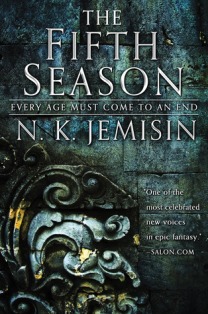
The Fifth Season by N.K. Jemisin

Title: The Fifth Season

Author: N. K. Jemisin

Series: The Broken Earth #1

Genre: Fantasy

Rating: 5/5 stars!

The Overview: This is the way the world ends. Again.

Three terrible things happen in a single day. Essun, a woman living an ordinary life in a small town, comes home to find that her husband has brutally murdered their son and kidnapped their daughter. Meanwhile, mighty Sanze — the world-spanning empire whose innovations have been civilization’s bedrock for a thousand years — collapses as most of its citizens are murdered to serve a madman’s vengeance. And worst of all, across the heart of the vast continent known as the Stillness, a great red rift has been torn into the heart of the earth, spewing ash enough to darken the sky for years. Or centuries. Now Essun must pursue the wreckage of her family through a deadly, dying land. Without sunlight, clean water, or arable land, and with limited stockpiles of supplies, there will be war all across the Stillness: a battle royale of nations not for power or territory, but simply for the basic resources necessary to get through the long dark night. Essun does not care if the world falls apart around her. She’ll break it herself, if she must, to save her daughter.

The Review:

“The Fifth Season” by N. K. Jemisin first came across my radar when one of the authors I follow casually mentioned that it had a lot of great world-building. In fantasy, I find the more expansive the world-building, the more I tend to become immersed in the story. It has the power to leave me feeling like I’d done more than read a good book, I also had an experience with it. This is probably why I value world-building so highly when evaluating speculative fiction titles. Anyway, when “The Fifth Season” was announced as a nominee for the 2015 Nebula Awards, I knew I had to read it asap.

And it was one of the coolest books I’ve read in ages!

One of my favorite things about the book (and there were many) was the story construction. It was unconventional and totally unlike anything I’ve ever read. Jemisin wove together three POVs (one of which was written in 2nd person) that at first seemed unrelated, but you still got the sense that they’d eventually come together brilliantly (which they did). Jemisin broke rules left and right, deviating from what we are taught makes up solid story construction, and it was fantastic! She clearly knew enough about the rules of writing to break them and still have a solid piece of work to present. If I ever teach a class on writing technique, “The Fifth Season” will be one of my favorite books to have students analyze – it really was that well-done.

Jemisin created a world in which the very earth itself rises up against its inhabitants. The people are at the mercy of the various “seasons” which decimate the population whenever (and wherever) they strike. With such unstable environments, you’d think working together for survival would be everyone’s primary concern. People will be people, however, which means there was no shortage of politicking, power-seeking, and discriminating to be had. It was a fascinating composition of elements that somehow managed to be both foreign in presentation yet completely relatable in concept.

For example, prejudice is very prevailent through the book, but the targets are those gifted with the talent to sense and manipulate movement within the earth. It’s a subtle representation, but definitely makes you aware of the unfairness of each situation based on unjustified things beyond the victim’s control. It’s an aspect I really loved about “The Fifth Season” because it helped make the story thought-provoking and not just downright entertaining. The book also showed diversity in sexual identity and orientation, which you don’t come across too often in fantasy works. I applaud the author for not discriminating in her character construction and reminding us that, at the end of the day, were all just people doing our best to survive and find a measure of happiness.

Overall, I can see why “The Fifth Season” is getting so much attention and think it totally deserves every bit of it. It provided everything I want from a fantasy novel while shattering boundaries and disrupting the status quo at every turn. If I had any complaints, it’s that I’m craving to understand how this world works even more, and the second book (“The Obelisk Gate”) doesn’t come out until next August – woe is me! Fair warning: sexual content and language.

Other books you might like:

by Niki Hawkes

Image

DNF Q&A: The Omen Machine by Terry Goodkind

The Omen Machine by Terry Goodkind

Title: The Omen Machine

Author: Terry Goodkind

Series: Richard and Kahlan #1

Genre: Fantasy

Rating: DNF

The Overview: #1 New York Times-bestselling author Terry Goodkind returns to the lives of Richard Rahl and Kahlan Amnell—in a compelling tale of a new and sinister threat to their world. In addition to concluding the Sword of Truth series, The Omen Machine also launches the new series of “Richard and Kahlan.

.

The Q&A:

This is a reviewing feature I’ve been eyeballing on one of my favorite book blogs There Were Books Involved for a couple years now because I think it’s an excellent way to talk about an unfinished book fairly. I’m incredibly grateful because Nikki (the brains behind the blog, who has a most excellent name)  kindly allowed me to steal the idea and questions for my own blog. As my list of “amazing books to read” continues to grow, I find I have less and less time and patience to devote to the books I’m just not enjoying. I never would have considered DNFing a book ten years ago, but then I came across a quote, “Read the best books first, for you might not have the chance to read them all,” and have since made it my personal mantra. So let the Q&A begin!

I’m a Richard and Kahlan fan to the point where my unborn child would’ve been named “Kaylen” had he been a girl, thereby representing my all-time favorite female character from anything I’ve ever read. If that’s not fangirl enough to show my passion for elements of this series, I don’t know what is. I was willing to overlook the Pillars of Creation because I thought the Chainfire trilogy really redeemed the ending of the saga. Heck, I was even willing to overlook the uninspiring prequel The First Confessor, but finally have to admit that this series is no longer doing anything for me. Omen Machine lacked everything that once made the series special. I’ll elaborate:

Did you really give the Omen Machine a chance?

I think so – I read at least half of the book, if not more, before deciding to put it down.

Have you enjoyed other books in the same genre before?

Emphatically, YES! Fantasy is my favorite genre and I still consider the Sword of Truth series a must-read for fellow fanatics.

What ultimately made you stop reading?

I mentioned above that I feel the series has reached a point where it no longer contains the elements that made it special, and unfortunately it also exacerbated all the things I’ve criticized it for. For examples, Omen Machine lacked a sense of adventure and discovery (not to mention world building), didn’t have a clear purpose to the story (or villain, as far as I read), had zero romantic tension/love story, and really didn’t give the characters much to do other than stand around and argue over magical theory. And argue they did… holy shit.

Goodkind has always been accused of needlessly beating his readers over the head with concepts that are fairly simple to grasp. In Omen Machine, there was essentially nothing other than theory and concept driving the plot, and the resulting tirade of repetitive dialogue was enough to make me pull my hair out (and don’t even get me started on the ten page argument the characters had over how to implement a card catalog system in the palace library). It’s like Richard had to say everything four different ways before he was completely satisfied, then a talking-head character would step in and say “what you mean?” and he’d proceed to explain it four more ways. Then, another character would jump in and add one more tiny nuance of a fact and the whole cycle would start all over again. After one such scene went on for over twenty pages, I decided they had about ten more to finish the conversation and continue the plot before I got fed up. After another dozen more had passed with no end in sight, I’d had enough! I put the book down. For all I know the characters beat each other into bloody pulps with all the explanations. I just knew I didn’t want to risk joining them.

This is harsh, but I’m really disappointed in Goodkind. Omen Machine came across as self-indulgent and lazy – it always takes more effort to edit your work down to something concise (which this book desperately needed) than it does to add more detail. But then, cutting out all of the needless repetition would mean he wouldn’t have been anywhere near his word count and would’ve had to replace the vacancies with things like, I don’t know, storytelling and plot advancement. That’s a scathing as you’ll probably ever hear me get, but I just expected so much more at this point and he really let me down.

Was there anything you liked about Omen Machine?

Frankly, no.

Would you read anything else by this author?

Yeah, I actually would if he started a new fantasy series with fresh concepts and characters. I feel like part of his problem with this novel was trying to extrapolate more from the story that had nothing else left to give.

So you DNF’d the book – would you still recommend it?

I definitely still recommend the Sword of Truth series, but unless you just can’t stand not having a new book with Richard and Kahlen’s names in the text, I’d say skip this one. Honestly, I thought the ending to the SoT series was really satisfying, so I’m going to continue pretending like the saga actually ended there.

Other books you might like better:

by Niki Hawkes

Image

Series Review [So Far]: Mistborn 4-6 (Wax and Wayne) by Brandon Sanderson

The Wax and Wayne Series [So Far]
(Mistborn 4-6)
by Brandon Sanderson
4.75/5 stars

I’m a huge Sanderson fan, and these latest books in the Mistborn saga are just three more very compelling reasons why he’s one of my favorite authors.

If you aren’t familiar with the Mistborn series, here’s a little more about it: Sanderson originally meant to tell the story across three trilogies (a high fantasy, a contemporary, and a science fiction). The first set (Mistborn 1-3) was published between 2006 & 2008. Somewhere along the way, while working on a plethora of other projects, Sanderson got a wild hair and decided to add what I’m calling a “bonus” series – a set of four books that focus on the characters Wax and Wayne. This bonus series, set a few hundred years after the first Mistborn trilogy, is a fantasy/mystery hybrid set in an era resembling the 1920s. While these books are strong enough to stand on their own, readers would benefit from exploring the entire series in order of publication (starting with Mistborn: The Final Empire) to fully enjoy the rich history and nuances of character this saga has to offer.

This spoiler-free review will focus on the Wax and Wayne series (thus far) as follows:


The Alloy of Law:

I really enjoyed this novel and thought it was a great introduction to both the new era and characters within the Mistborn saga. The characters all caught my attention right away with their interesting backstories, but Sanderson really only scratched the surface of their depth in this first book. The mystery was also engaging, but it’s not until the next few books where you see how it ties in to the arc of the saga as a whole. Overall, The Alloy of Law was a light first read that’s entertaining and worth your time… but you ain’t seen nothing yet!

4/5 stars


Shadows of Self:

After finishing Shadows of Self, I was certain it would be my favorite of the series, it was that good (and yet IT GETS EVEN BETTER in the final book). It not only brought in a fresh mystery that clearly tied into the overall arc of the series, but also offered a glimpse into a few characters’ pasts. Strength of character is easily one of the trilogy’s best elements, and I particularly appreciated the chance to learn more about each person’s quirks and inner motives. This book is when I knew for certain that Wayne, the loyal sidekick of the story, was my favorite character because a) he’s hysterical and b) it was fun to see him in his element (incognito, doing very serious detective stuff… wink wink). Also, as hinted at earlier, there’s a point in this novel where things start to tie back to the original trilogy in a way that had all of my nostalgic meters beeping off the charts. But the tiebacks were subtle, which made them accessible to new readers of the saga. Overall, Shadows of Self was a very strong work filled with mystery, action, humor, and a few surprises that might just knock your socks off (I’m still looking for mine, they flew so far).

4.75/5 stars


Bands of Mourning:

I could barely put Bands of Mourning down. Every single last page was engaging and exciting, culminating towards an ending that had me stalking the author for news on the next one (which is on hold for a couple years while the author finishes up Oathbringer, the third book in the Stormlight Archive series, and incidentally the only series I’d be okay with postponing this one for – can you say amazing?!). What stood out to me about Bands of Mourning, aside from the obvious aforementioned character depth, world building, excellent action scenes, and spot-on pacing, was that it felt like Sanderson had an absolute blast while writing it. It maintained its serious base plotlines while at the same time managing to be positively hilarious. I laughed out loud for what felt like most of the book while still reveling at all the twists and turns. Sanderson gets yet another A++ for execution on this one, landing it not only as my favorite book of the series so far, but one of my favorite books of all time!

5/5 stars!


Overall, is this bonus Mistborn trilogy worth your time? Definitely. Fans of the series will enjoy the continuation and delight in the new characters while newcomers will (hopefully) be intrigued enough to go back and see where the saga started. I consider Sanderson a must-read for any fan of the fantasy genre, and this latest set of books are no exception!

Other books you might like:

by Niki Hawkes

Image

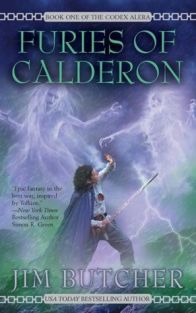
Book Review: The Furies of Calderon by Jim Butcher

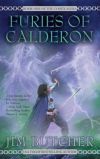
furies of calderonTitle: The Furies of Calderon

Author: Jim Butcher

Series: that The Codex Alera #1

Genre: Fantasy

Rating: 3/5 stars

The Overview: For a thousand years, the people of Alera have united against the aggressive and threatening races that inhabit the world, using their unique bond with the furies – elementals of earth, air, fire, water, and metal. But now, Gaius Sextus, First Lord of Alera, grows old and lacks an heir. Ambitious High Lords plot and maneuver to place their Houses in positions of power, and a war of succession looms on the horizon.” “Far from city politics in the Calderon Valley, the boy Tavi struggles with his lack of furycrafting. At fifteen, he has no wind fury to help him fly, no fire fury to light his lamps. Yet as the Alerans’ most savage enemy – the Marat – return to the Valley, he will discover that his destiny is much greater than he could ever imagine.” Caught in a storm of deadly wind furies, Tavi saves the life of a runaway slave named Amara. But she is actually a spy for Gaius Sextus, sent to the Valley to gather intelligence on traitors to the Crown, who may be in league with the barbaric Marat horde. And when the Valley erupts in chaos – when rebels war with loyalists and furies clash with furies – Amara will find Tavi’s courage and resourcefulness to be a power greater than any fury – one that could turn the tides of war.

The Review:

I am a huge Dresden fan and loved the unconventional means by which this series came into existence –

It’s basically a series of half a dozen books set two thousand years after a lost Roman legion travelled through a rift to a world where pokemon exist, and now the legionnaires live and work with pokemon, except they’re called “furies” (I’m not even making this up, he did it as a dare after being called on one of his assertions by a crowd at a convention: He said everything in writing is about execution. They said prove it. He said give me three crazy horrible topics and he would make something out of it. They said lost Roman Legion, Pokemon, and the Zerg. A year later he released Furies of Calderon).

-D.R. Sylvester at www.drsylvesterfiction.com (who was kind enough to clue me in with this comment on one of my posts. You should check out his blog – it’s one of my favorites).

Needless to say, I knew I had to at least give it a try. And I liked it!

It’s probably not the strongest series starter I’ve ever read, but it was at least consistently entertaining from start to finish. And the characters were fantastic – so many great POVs, and each brought something special to the story. I liked all of them pretty equally and am most excited to see where their paths lead next. Great characterization is definitely one of Butcher’s storytelling strengths, and Furies of Calderon was no exception.

It’s a good thing the characters were good because their minor, interpersonal conflicts are what got me through the story when I found the overall arc a bit too narrow. Butcher kept this first book on a fairly minor scope, which I didn’t like, but I have a lot of hope that its potential will be realized in the next few installments. There just wasn’t enough focus on the handful of things that initially drew me in. For one, the furies (Butcher’s interpretation of Pokémon) didn’t play as big of a role as they could have, to the point where it felt almost as if the wielders were controlling elements rather than elemental beings. Also, there were strong references at the beginning of the book about an academy for these fury-wielders, which wasn’t expanded on it all throughout the rest of the story. There’s plenty of time for these things to become the focus in a six book series, so I’m not too stressed, but they’re definitely the things I will be specifically looking for going forward. How well they are brought to life will ultimately determine my overall satisfaction with the series.

At the end of the day, Furies of Calderon had great characters, good writing, a somewhat narrow focus, and some excellent ideas that were a bit under-realized (but with colossal potential). Incidentally, this is almost identical to how I felt about the Aeronaut’s Windlass – the first book in his newest fantasy series. I’m very hopeful that both will dazzle me in books to come. After all, even the magic that is Harry Dresden took a couple of books to really get going.

Other books you might like:

 by Niki Hawkes