Image

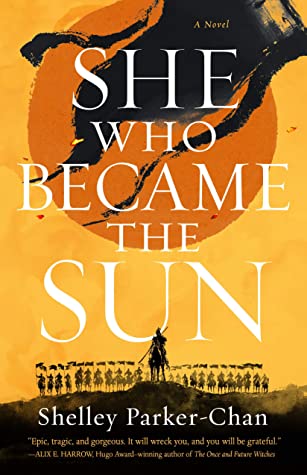
Book Review: She Who Became the Sun by Shelley Parker-Chan

Title: She Who Became the Sun

Author: Shelley Parker-Chan

Series: Radiant Emperor #1

Genre: Fantasy

Rating: 3/5 stars

The Overview: In a famine-stricken village on a dusty yellow plain, two children are given two fates. A boy, greatness. A girl, nothingness… In 1345, China lies under harsh Mongol rule. For the starving peasants of the Central Plains, greatness is something found only in stories. When the Zhu family’s eighth-born son, Zhu Chongba, is given a fate of greatness, everyone is mystified as to how it will come to pass. The fate of nothingness received by the family’s clever and capable second daughter, on the other hand, is only as expected. When a bandit attack orphans the two children, though, it is Zhu Chongba who succumbs to despair and dies. Desperate to escape her own fated death, the girl uses her brother’s identity to enter a monastery as a young male novice. There, propelled by her burning desire to survive, Zhu learns she is capable of doing whatever it takes, no matter how callous, to stay hidden from her fate. After her sanctuary is destroyed for supporting the rebellion against Mongol rule, Zhu uses takes the chance to claim another future altogether: her brother’s abandoned greatness. -Goodreads

The Review:

She Who Became the Sun felt like two books in one.

The first book (i.e. Part 1) was one of my favorite things I’ve read this year. It was a rich, immersive character study with a single POV that was frankly one of the most poignant things I’ve ever read. I felt for this character, I cared about her motives, and I was completely absorbed and 100% there for the journey. Brilliant.

And then Parts 2&3 happened.

It felt like the last two thirds of the book were written by a much less developed writer who went back years later to compose Part 1 (kind of like how Salvatore’s Dark Elf trilogy was a clear showcase of the author’s growth and gives a much stronger intro to the series than his earlier Icewind Dale trilogy). As much as I really wanted to love the rest of the book, it soon degraded into a huge struggle to finish.

Here are some of my objections:

1. The expansion to include multiple POVs. As the brilliance of the story so far was in the connection carefully garnered between the reader and the one main character, branching out to include more POVs without also taking the same time to develop those characters made them come across very, very thin by comparison. And from what I can recall, very little of the page count was given back to that first POV and a lot of what happened to her was viewed from someone else, thereby pushing the reader even further from that original connection.

What’s more, I didn’t think the perspectives that were added were very valuable. One in particular had next to no growth the entire story and basically just spent endless pages hashing and rehashing the exact same conflict with other characters without any action on it. Another character, one I at least appreciated for the unconventionality, felt included solely as a vehicle for delivering a standard of morality, which could’ve been just as effective (perhaps more so) experienced within the main character’s POV. This character’s POVs also felt like a huge tangent.

2. Parts 2&3 didn’t even come close to delivering on the promises made in Part 1. The premise of the book was this girl building an inspiring conviction of who she wants to become and how much pain she’s willing to endure to get there. That’s the type of character who, in my mind, will relentlessly pursue what she wants, regardless of the cost (Rin from Poppy War comes to mind). The trouble is, after that first part, the character did absolutely nothing to help ensure her own success. You want to become a warrior? Great! But… wouldn’t you at least consider learning how to fight? You want to be a leader? Great! But… might it be helpful to get into some academics and study battle tactics and strategies? Oooh!! Or even politics so you can be as successful on the field as off?! Those seem like good ideas. Oh.. you’re going to rely on dumb luck, happenstance, and being considered not a threat? M’kay, good luck. I’m out.

In all seriousness, I didn’t like a single thing about how the main character got from point A to point B. Nowhere in that character mock-up in Part 1 did I see someone who was passive and willing to just sit back to see how things go. I prefer characters who are catalysts of their own destiny and the sheer lack of personal initiative shown by the MC throughout most of the book was maddening.

Had her story continued to develop in a way I found meaningful, I may have been more forgiving about the additional POVs. But as it stands, the book offered me nothing of substance to cling to. Had I not experience this author at the height of brilliance in Part 1, I would’ve definitely called a DNF for the rest of the book. But I kept holding out hope she would come full-circle and dazzle me again.

Even though I remained annoyed at the rest of the book because it didn’t go the way I I expected it to, I’m ironically still sitting here appreciating some of the unconventionally in what I read. The author has some cool ideas for storyline, most of which I hadn’t seen before. Where she lost me was in execution. If we’re going somewhere new, I need to see the plausibility and continue feeling something for the characters (which I didn’t). At the moment, I don’t see myself picking up the second one anytime soon, if at all (not that it’s out yet).

I’d like to add (more positively) that the book was more accessible than I thought it would be. Anytime I see something labeled “Asian fantasy” I go in braced for graphic violence. Even though the subject matter was occasionally tough to read, it was never overly explicit in execution. You knew someone was dying horribly, but you didn’t have to experience it. I remember thinking it was nice to have an option to recommend to readers who don’t enjoy a lot of graphic violence in their books. So it’s a win on that regard, but the book does have a couple of descriptive sex scenes to compensate. As a bookseller I usually had to be aware of both of those things, else customers come back angry with me lol.

Overall, with the amazing 5 star first half and the 1-2 star second half of with some kudos for originality thrown in, I’m landing at a final 3 star rating. I think the first bit was good enough to make it worth your time regardless, but I’m still feeling a little let down.

Recommendations: pick this up for an unconventional Asian fantasy with one of the strongest beginnings on the market. Be aware, though, that the story changes significantly in Part 2.

Other books you might like:

by Niki Hawkes

Image

Book Review: The Thief Queen’s Daughter by Elizabeth Haydon

Title: The Thief Queen’s Daughter

Author: Elizabeth Haydon

Series: Lost Journals of Ven Polyphene

Genre: Middle Grade Fantasy

Rating: 3/5 stars

The Overview: On his first day on the job as Royal Reporter of the land of Serendair, King Vandemere sends young Charles Magnus Ven Polypheme–known as Ven–on a secret mission within the walls of the Gated City. His quest? To discover the origin of a mysterious artifact given to the king’s father. The king warns Ven to take care–because once you enter the Gated City, you might never be allowed to leave. Within its walls, all sorts of exotic merchandise not found anywhere else in the world can be bought or sold. But not only merchandise. Dreams, wishes, memories…even childhood…can be sold–or stolen. The Gated City is ruled by the powerful Raven’s Guild, and the guild is ruled by the Queen of Thieves. Ven and his friends enter the Gated City ready for adventure. But when one friend is kidnapped and it is revealed that they are traveling in the company of the runaway daughter of the Queen of Thieves herself, their adventure turns deadly. For the ruthless Thief Queen will stop at nothing to get her daughter back! -Goodreads

The Review:

I love when robust fantasy authors tackle Middle Grade and YA.

Responsible for one of the most poignant fantasy series I’ve ever read – Symphony of Ages, Haydon continues to dazzle me with with her rich world-building, magical adventure, and interesting characters in this MG series set in the same world.

The first book, The Floating Island, was an experience. Easily one of the strongest books I’ve read in the MG market. And what made it fun was the traveling/adventure, fun companions, all the riddles and puzzles, and the unique composition of the book itself. Told as a reconstruction of recovered journals, it is a mix of journal entries, illustrations, and fill-in text to complete the story between the first-hand accounts. I loved every moment, and was especially eager to dive into this second book.

I didn’t find The Thief Queen’s Daughter quite as strong as the first book. It had a really interesting setting – a thief market, where the bulk of the story took place. While this cool new place was explored to my satisfaction, I missed the expansive settings from the first book a bit. The novelty of the place was awesome – so many cool magical shops and items. I think my younger self would be marveled at all the discoveries.

I’m kind of weird (as we’ve no doubt established) in that if I know anything about a story from diving in, I’m less likely to feel invested. The process of discovery is my main draw to reading, so if I come across any spoilers, it can completely wreck the experience for me. This is the reason why I don’t read book overviews. And why I’m no fun to buddy read things with. But no matter how careful I am, I can’t avoid seeing the freaking title of the book. So it’s exciting main reveal? Oooooohhhh, yeah I knew that already. This is a case where someone should’ve thought it through more. Rant over.

Recommendations: this is such a magical MG series that would be my pick to hand-sell to families looking for great, accessible stories to read together. It has something for everyone, and as an adult I’m enjoying every moment.

Other books you might like:

by Niki Hawkes
Image

Book Review: The Thousand Names by Django Wexler

Title: The Thousand Names

Author: Django Wexler

Series: Shadow Campaigns #1

Genre: Flintlock Fantasy

The Overview: Enter an epic fantasy world that echoes with the thunder of muskets and the clang of steel—but where the real battle is against a subtle and sinister magic…. Captain Marcus d’Ivoire, commander of one of the Vordanai empire’s colonial garrisons, was resigned to serving out his days in a sleepy, remote outpost. But that was before a rebellion upended his life. And once the powder smoke settled, he was left in charge of a demoralized force clinging tenuously to a small fortress at the edge of the desert. To flee from her past, Winter Ihernglass masqueraded as a man and enlisted as a ranker in the Vordanai Colonials, hoping only to avoid notice. But when chance sees her promoted to command, she must win the hearts of her men and lead them into battle against impossible odds. The fates of both these soldiers and all the men they lead depend on the newly arrived Colonel Janus bet Vhalnich, who has been sent by the ailing king to restore order. His military genius seems to know no bounds, and under his command, Marcus and Winter can feel the tide turning. But their allegiance will be tested as they begin to suspect that the enigmatic Janus’s ambitions extend beyond the battlefield and into the realm of the supernatural—a realm with the power to ignite a meteoric rise, reshape the known world, and change the lives of everyone in its path. -Goodreads

The Review:

Thousand Names was an unusual military fantasy, but I quite liked it.

First off, it’s clear that magic is going to be an integral part to the overall mechanisms of the series and the conflicts within, but it’s presence in this first book was next to nil. If you pick this up, go in expecting a bonafide flintlock military story set in a fantasy world, and NOT expecting battles with mages flinging spells left and right (as I’d been).

I especially enjoyed the beginning where this army’s leaders were trying to shape a ragtag group into something reputable. That was my favorite aspect of the story, and unfortunately it was dropped a bit soon in favor of focusing on the characters and their wide array of strange conflicts. I enjoyed the transition to the characters and the journey with them, but missed that initial selling point throughout the rest of the novel. This gradual transition of story (which happened at a couple of junctures throughout the book) is part of the reason why I called it “unusual.” Nothing quite panned out as expected, but it was written well, so in this case it still managed to create a satisfying story.

I’m still trying to figure out how I feel about the military aspect of this book. My knee-jerk reaction was that the battle scenes were meh, just okay. They didn’t have a lot of human connection during, but rather seemed an endless barrage of logistics descriptions. This unit moved here, this person got shot, etc. and what was missing for me were honed-in perspectives to really make me feel something for what was happening. I think part of my disconnection was because I had just finished Abercrombie’s Age of Madness trilogy, which is riddled with some of the best battle scenes I’ve ever read. By comparison, these lacked the same spark. However, had I read them further apart, I may have enjoyed this more. The feedback I’ve gotten since first discussing my experience with this book is that most people generally liked the battles and thought them done well. I will say at least that they were quite easy to visualize, but the level of detail required for that could be both a good and a bad thing… my jury is still out.

It’s an oddly character-driven novel, and for the most part I enjoyed my experience with them. They weren’t quite as in-depth or introspective as I’d wanted, but are still the types of profiles I think I’m going to have fun rooting for while reading the rest of the series.

Overall, I’m glad I finally got around to reading this and look forward to continuing on in the series.

Recommendations: pick Thousand Names up aware that this first book is more “military” than “fantasy” and enjoy Wexler’s unconventional approach to the genre. I can see why it’s hailed as a staple flintlock fantasy.

Other books you might like:

by Niki Hawkes
Image

Announcement!! :)

If you follow me on Youtube, this might be old news. But if you haven’t caught it yet, I’m excited to announce that I’m expanding my content creation to include excusive content for those who sign up for Patreon. My goal is to provide as much value as possible to those who choose to go above and beyond in supporting my creativity. Thank you for your consideration! <3

Here’s the link to my new Patreon!!

Happy Reading! :)

Image

Tackling the TBR [82]: June 2022

It’s once again time for my favorite feature: Tackling the TBR! There’s nothing I love more than picking out which books to read next, and this slightly organized method of reading has really amped my enjoyment to the next level. Bring on the mantras!

Read the best books first.
&
Life is too short to read books you’re not enjoying.

However you put together your TBR for the next month, the goal is to reduce the amount of obligation in reading and increase the fun.


Here’s a look at how the system works:

1. Identify the titles that take top priority in your TBR.
2. Combine them all in your own Tackling the TBR post.
3. Throughout the month pick from that pile as the mood strikes you.

Here’s what mine looks like:

June 2022 TBR Tackler Shelf:

Last month I actually made a good dent in my TBR – making progress on all but three of the books listed. March’s very poor decision-making still has me scrambling to dig myself out of a reading hole, and I reckon I have at least one more month to go before I’m back to reading just one book per format at a time.

To that end, this month I looked at the 7 physical books I had going and decided to make a game out of reading. I used to do this kind of stuff all the time when I was a kid and I figured I either needed to get creative with it or sob/rage until I DNFed everything and quit reading altogether. My game: read one chapter at a time, then rotate to the next book.

To my surprise, the game helped tremendously!

On average I spend about two hours a week physically reading print or ebooks (more or less depending on how many baths I have time to take). I’ve been gradually working to increasing this time, but no method has been super effective… until now. On just my ereader alone, I clocked in almost nine hours per week. Holy shit!!

I think the spice of variety, along with having some absolutely killer books to rotate through (broken up by the occasional dud) was key to my success. I know full well had I tried to read that much focused on a single title, I would’ve gotten burnt out. So instead of finishing a book a week, I managed to progress most of them to about the 30-40% range.

As with any new reading game I’ve tried over the years, I know I’ll eventually want to mix it up again. But for now reading has been a joy and I’m really proud of my progress. I’m currently down to 6 books going (finished one, DNFed one, started a new one).

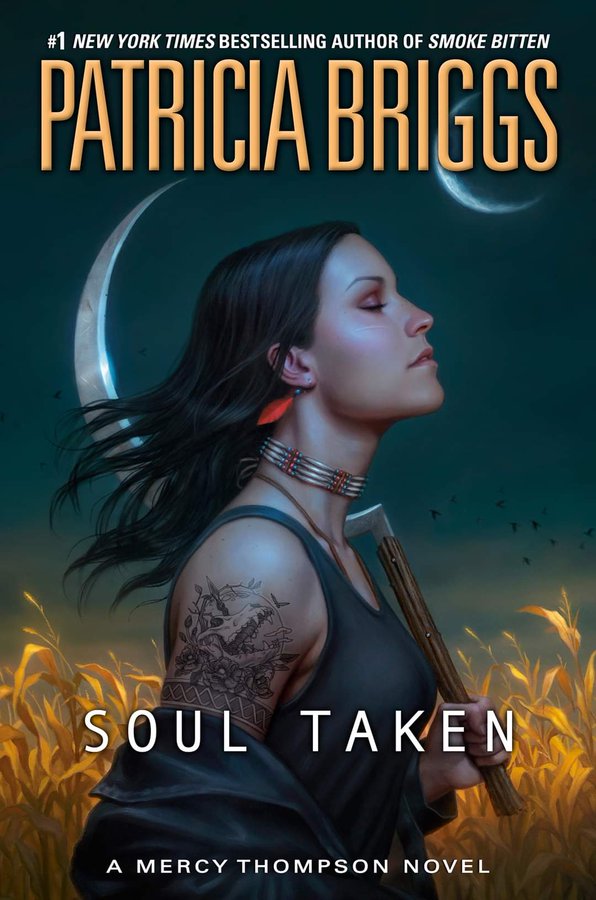
My goal is to be down to only two books going by the end of June so I can start Soul Taken by Patricia Briggs. Then I’d like to be down to just one by the end of July. At my current rate, that’s totally do-able. We’ll see how it goes. :)

The morals of the story for the month are:

•Stop getting yourself into these situations where it takes you months and months to unbury yourself from your currently reading stack.

•When buried, do what you can to enjoy the moment despite the circumstances and get creative to make it fun.

•You enjoy books MUCH less when you’re anxious about getting to the next one.

To that last point, I’ve managed to have only one audiobook going this month, and wouldn’t you know it – I’m actually enjoying myself for the first time in months! I think one at a time with the quicker completion and freedom to choose that come along with that will be key to my overall reading health.

I’m pleased I’ve found ways this month to mitigate what could’ve been a massive reading slump, but the saga continues…


Have a great month in reading!

by Niki Hawkes
Image

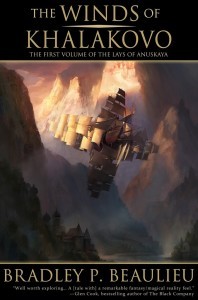
DNF Q&A: The Winds of Khalakovo by Bradley P. Beaulieu

Title: The Winds of Khalakovo

Author: Bradley P. Beaulieu

Series: Lays of Anuskaya #1

Genre: Fantasy

Rating: 1/5 stars [DNF]

The Overview: Among inhospitable and unforgiving seas stands Khalakovo, a mountainous archipelago of seven islands, its prominent eyrie stretching a thousand feet into the sky. Serviced by windships bearing goods and dignitaries, Khalakovo’s eyrie stands at the crossroads of world trade. But all is not well in Khalakovo. Conflict has erupted between the ruling Landed, the indigenous Aramahn, and the fanatical Maharraht, and a wasting disease has grown rampant over the past decade. Now, Khalakovo is to play host to the Nine Dukes, a meeting which will weigh heavily upon Khalakovo’s future. When an elemental spirit attacks an incoming windship, murdering the Grand Duke and his retinue, Prince Nikandr, heir to the scepter of Khalakovo, is tasked with finding the child prodigy believed to be behind the summoning. However, Nikandr discovers that the boy is an autistic savant who may hold the key to lifting the blight that has been sweeping the islands. Can the Dukes, thirsty for revenge, be held at bay? Can Khalakovo be saved? The elusive answer drifts upon the Winds of Khalakovo… –Goodreads

The Q&A:

Inspired by Nikki at ThereWereBooksInvolved, this is my favorite way to discuss DNFs. As my list of “amazing books to read” continues to grow, I find I have less and less time and patience to devote to the books I’m just not enjoying. I never would have considered DNFing a book ten years ago, but then I came across a quote, “Read the best books first, for you might not have the chance to read them all,” and have since made it my personal mantra. So let the Q&A begin!

Did you really give The Winds of Khalakovo a chance?

More so than I normally do for a DNF – I made it to about the 50% mark before finally throwing in the towel. It had a lot of potential, so I kept hoping it would get better.

Have you enjoyed other books in the same genre before?

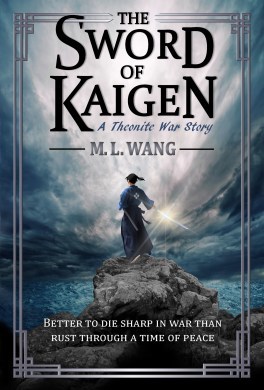
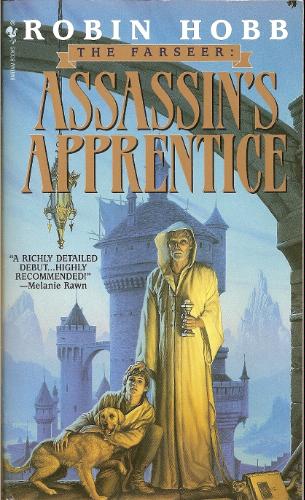
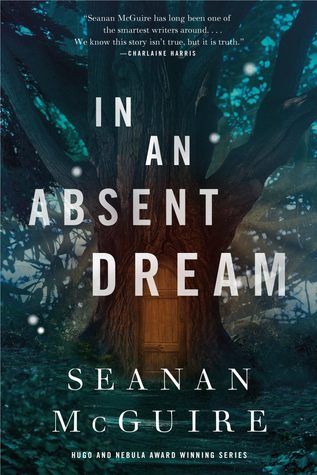
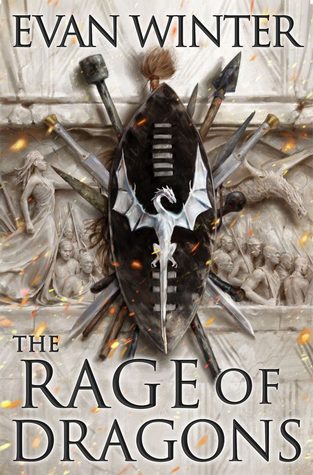
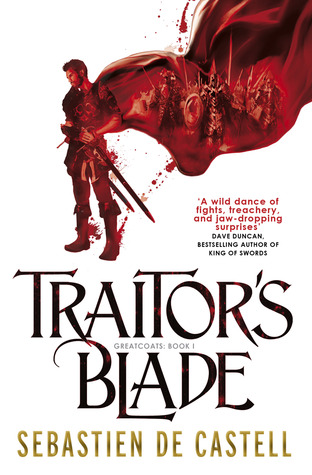
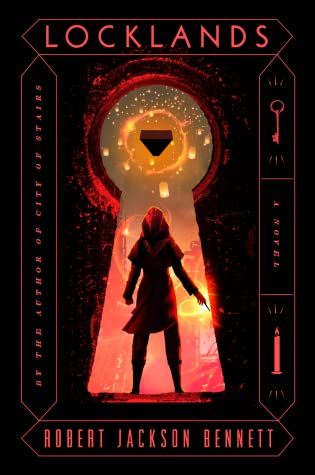
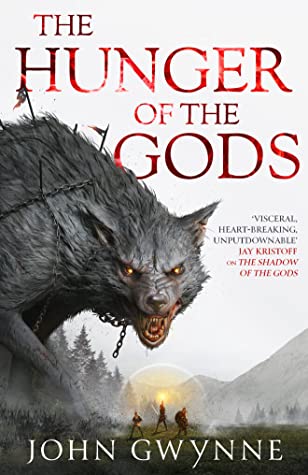
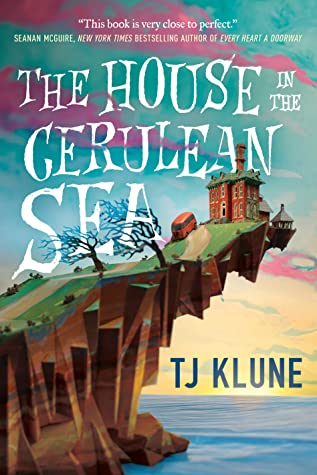
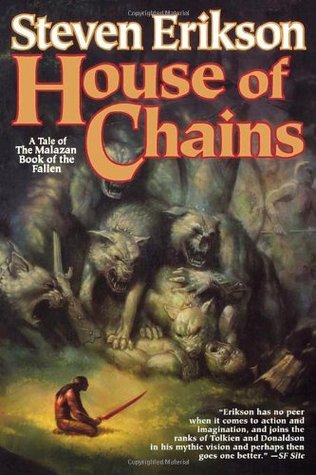
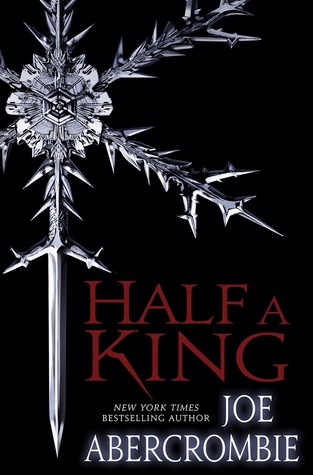
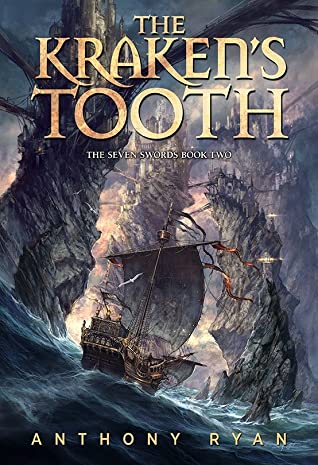
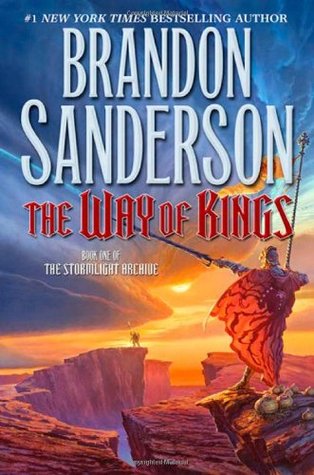
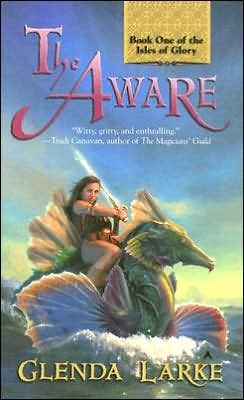
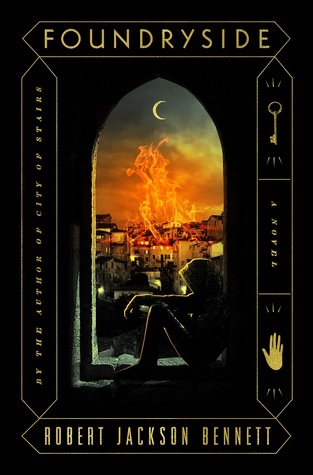
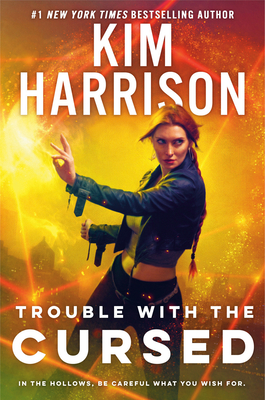
Yes! Arguably many of my reviews are skewed in favor of books with strong world-building elements. I’m always drawn to the ones with exotic covers (to varying success, as many have amazing covers with text that just doesn’t quite measure up to those promises). Here are a few books with awesome covers that actually panned out (don’t judge me on the Glenda larke, haha. I loved the variety in flora and fauna it promised):

While I think the basic premise of Khalakovo was original and interesting, it lost me on execution.

Did you have certain expectations before starting it?

Yes, as mentioned I was expecting rich world-building, trading politics, and lots of adventure and excitement! It ultimately delivered on none of those things by the time I put it down.

What ultimately made you stop reading?

When it was clear none of that dynamic politicking, fun adventures, and epic world building was happening, I contented myself with just diving into this character-driven novel. The trouble is, even with characters as really the ONLY focus of the book, they were surprisingly thin.

I believe part of the problem was in the structure of the plot. It’s seemingly designed to keep a lot of important info away from the reader in favor of some reveals later (I’m assuming the payoff is there even though I lost patience before making it that far). The author didn’t allow the reader to see what motivated any of the characters, save the main bloke. Nor what connected one character to the other (we knew they were important, but never why). And, essentially, why the reader should care about these people and what they’ve got going on. After the umpteenth intimate dialogue scene between two characters without me having any more info than I started with, I’d had enough.

The writing style was also unnecessarily clunky. The author was clearly going for a particular style of formal communication between characters (possibly to help establish his world-building), but for me the formality, even in the thought-patterns of the characters, was excessively wordy, effectively keeping them feeling like caricatures rather than real, relatable people.

There was also a lack of contractions in the text (like can’t and wouldn’t) that contributed to the story feeling drawn-out. I realize some authors prefer the sound of their story when all words are fully written out, but to me it comes across a bit condescending, reminiscent of the types of sentences in my Kindergartner’s practice reading books.

I would argue that adjusting the language and cutting out all of the unnecessary words would’ve reduced the book by about 20%, making the pacing much more enjoyable, and increasing connection to the characters tenfold. But that’s if it were my book. Beaulieu’s success in the fantasy market proves he’s doing something right. But it’s clear his tastes and mine do not align in this instance. I had trouble with the writing in the Twelve Kings of Sharakhai as well, but gave the benefit of the doubt that it might have been more a pacing issue due to the abundant flashbacks in that story. Now I’m wondering in hindsight if my weird disconnection to that book had anything to do with the the basic writing itself…. We’ll see, if I ever make time to reread and continue that one.

Was there anything you liked about The Winds of Khalakovo?

What world-building their was (air ships!!) was a ton of fun even if it wasn’t prevalent. The action scenes were exciting (all two pages of them between every 50 of dialogue). And I still really loved the overall conflict of this “blighted” land introduced very early on in the book – it gave the main character a personal investment in the issue, which was pretty cool. However, at 50% he had made exactly 0% progress on trying to find answers.

Would you read anything else by this author?

Yes, I will probably read his novella The Burning Light and also reread the Twelve Kings of Sharakhai with the intention of getting further in that series. Atm I’ve no interest in continuing this one.

So you DNF’d the book – would you still recommend it?

Surprisingly, yes. The thick language probably wouldn’t bother people as much as it did me. Some people like those types of plots where nothing is made easy for the reader. And the overall atmosphere was cool enough that I think it would keep more patient readers engaged, especially if they like the characters. It wasn’t poorly written, it was just written completely opposite from everything I personally look for in my books.

by Niki Hawkes