Image

Novella Review: Perfect State by Brandon Sanderson

perfect-state-by-brandon-sandersonTitle: Perfect State

Author: Brandon Sanderson

Series: N/A

Genre: Fantasy

Rating: 3/5 stars!

The Overview: God-Emperor Kairominas is lord of all he surveys. He has defeated all foes, has united the entire world beneath his rule, and has mastered the arcane arts. He spends his time sparring with his nemesis, who keeps trying to invade Kai’s world. Except for today. Today, Kai has to go on a date. Forces have conspired to require him to meet with his equal—a woman from another world who has achieved just as much as he has. What happens when the most important man in the world is forced to have dinner with the most important woman in the world? -Goodreads

The Review:

With a 3 star (I liked it but I didn’t love it) rating, Perfect State claims the spot as my least favorite Sanderson to date. In the whole scheme of books on the market, it was still a good read, I just happen to like all of Sanderson’s other works a bit better. What I liked most about the novella was that it made you think. It was very cleverly conceptualized and crafted (the concept for Perfect State – a permanent virtual reality experiment – was nifty). I even liked the characters, but unfortunately didn’t find the main one relatable. At all. Which is probably what kept me at arms-distance throughout the whole story. Overall, I’m glad I read it and will definitely recommend it, but only to those who have already read some of my favorite Sanderson works.

Normally, this is where I’d recommend comparable titles by other authors, but Perfect State only reminded me of a conceptual hodgepodge of Sanderson’s other works, specifically these ones:

by Niki Hawkes

Image

Novella Review: Shadows for Silence in the Forests of Hell by Brandon Sanderson

shadows-for-silenceTitle: Shadows for Silence in the Forests of Hell

Author: Brandon Sanderson

Series: The Cosmere

Genre: Fantasy

Rating: 5/5 stars!

The Overview: When the familiar and seemingly safe turns lethal, therein danger lies. Amid a forest where the shades of the dead linger all around, every homesteader knows to follow the Simple Rules: “Don’t kindle flame, don’t shed the blood of another, don’t run at night. These things draw shades.” Silence Montane has broken all three rules on more than one occasion. And to protect her family from a murderous gang with high bounties on their heads, Silence will break every rule again, at the risk of becoming a shade herself. -Goodreads 

The Review:

If you only read one novella from Brandon Sanderson, Shadows for Silence in the Forests of Hell would be my top pick (by a smidgen – they’re all awesome. And really, why would you limit yourself to just one?). It’s just one more example why Sanderson is one of my favorite authors – his novellas are every bit as good as his full-length novels. I loved this one because it had the perfect mix of characterization, setting, story, pacing, action, and resolution. It felt like a snippet out of a fully developed novel, but was self-contained enough to stand complete on its own. Silence, the main character, really struck a chord with me – her decision-making during the most intense scenes of the story still have me reeling months later. I want to get into the nitty-gritty details and geek out about all of them, but I can’t discuss it to my satisfaction without spoilers. So just take my word for it – this is definitely worth reading! :-)

Other books you might like:

by Niki Hawkes

Image

Book Review: The Tropic of Serpents by Marie Brennan

The Tropic of Serpents by Marie Brennan

Title: The Tropic of Serpents

Author: Marie Brennan

Series: Memoir of Lady Trent #2

Genre: Fantasy

Rating: 2.5 stars

The Overview: Attentive readers of Lady Trent’s earlier memoir, A Natural History of Dragons, are already familiar with how a bookish and determined young woman named Isabella first set out on the historic course that would one day lead her to becoming the world’s premier dragon naturalist. Now, in this remarkably candid second volume, Lady Trent looks back at the next stage of her illustrious (and occasionally scandalous) career. Three years after her fateful journeys through the forbidding mountains of Vystrana, Mrs. Camherst defies family and convention to embark on an expedition to the war-torn continent of Eriga, home of such exotic draconian species as the grass-dwelling snakes of the savannah, arboreal tree snakes, and, most elusive of all, the legendary swamp-wyrms of the tropics. The expedition is not an easy one. Accompanied by both an old associate and a runaway heiress, Isabella must brave oppressive heat, merciless fevers, palace intrigues, gossip, and other hazards in order to satisfy her boundless fascination with all things draconian, even if it means venturing deep into the forbidden jungle known as the Green Hell . . . where her courage, resourcefulness, and scientific curiosity will be tested as never before.

The Review:

In case you missed my review of A Natural History of Dragons, I should start out by explaining my love/hate relationship with it. The first half was SO AMAZING that I was certain it was going to be one of my new all-time favorites. However, the longer the story progressed, the more disappointed I became with how things were going. There were two main issues: 1) somewhere along the way, the focus shifted from the dragons and 2) the main character started making harebrained decisions that were way beyond what I would call realistic behavior. To sum it up, I valued the first half at a solid 5 stars and the second half at 1.5 stars. That’s a pretty wide spectrum for a single book.

However, I’m happy to report that The Tropic of Serpents was an even-keel 3 stars the whole way through.

I’ll admit, the end of the first book let me down so much that I was afraid to pick up the sequel. I finally decided to because the author did manage to completely dazzle me for that first half and I had high hopes that she could do it again (and that the second half was just a fluke). Although The Tropic of Serpents started out a bit slow, it eventually grew into the kind of dragon-centric adventure I’d been hoping for!

In Tropic of Serpents, the Lady Trent’s adventures took her to the marshlands where her and her team tried to unravel the mysteries of the swamp dragon (the specific name of which escapes me right now, but you get the gist). It was an awesome adventure and I loved the immersive setting, infusion of local culture, and great interspersal of biology to illustrate how swamp dragons live. I devoured every minute of it. This book went a long way towards reinvigorating my passion for the series and I can honestly say I’m eager to read on.

As for character, Lady Trent did make a few decisions that I would call questionable, but at least this time around they were more plausible. At the basis of it, I genuinely like her character – she’s incredibly passionate about her pursuit of knowledge, she’s brave enough to stand up against societal norms to chase her dreams, she strong enough to stand on her own accomplishments, and she loves dragons (we could totally be besties because of that alone). So when this incredibly intelligent and resourceful woman started making stupid decisions (in the first book), I got hostile. It was incredibly frustrating to try to live vicariously through her when she did that, you know? Like I said though, things were much better in The Tropic of Serpents and I’m extremely hopeful for the next few books.

Overall, Tropic of serpents goes a long way towards reinstating my faith in the series and its overall recommendability. There are certain elements to this series so far that I LOVED… however, it is a bit of a dry read (it didn’t bother me, but I could see how it might other readers). I would definitely recommend it to any fellow geek out there who has ever thought it would be cool to study dragons.

Other books you might like:

by Niki Hawkes

Image

Book Review: The Weaver’s Lament by Elizabeth Haydon

the weavers lamentTitle: The Weaver’s Lament

Author: Elizabeth Haydon

Series: The Symphony of Ages #9

Genre: Fantasy

Rating: 4/5 stars

The Overview: For a thousand years, the lands ruled by the Cymrian Alliance have been at peace. When the brutal death of a dear friend catapults the kingdom to the brink of civil war, Rhapsody finds herself in an impossible situation: forced to choose between her beloved husband, Ashe, and her two oldest friends, Grunthor and Achmed. Choosing her husband will mean the death of thousands of innocents. Siding against him will cost Rhapsody the other half of her soul, both in this life and the next. – Goodreads

 The Review:

“The Weaver’s Lament”, the ninth and final book in the “Symphony of Ages” series by Elizabeth Haydon, takes place over 1000 years after the conclusion of the previous book (“The Hollow Queen”). The first third of the book was an account of how the characters’ lives had progressed over the millennia. It read much like an extended epilogue, which I didn’t mind because I’m always clamoring for more “where are they now?” content at the end of a good series. Even though this catch-up-the-reader storytelling wasn’t particularly eventful, it was enjoyable.

Then Haydon used the remainder of the book to rip out my heart… and I’m still reeling.

I love this series first of all for the characters – it’s one of the few that boasts nonhumans as main POVs, a trait which demands much more creativity on the author’s part. The series also has dragons (which is always a win in my book), and they’re represented in a way I’ve never seen before, so major kudos to Haydon for originality. I also love it for its total immersion into this world’s rich culture and histories. The world is so well conceived it feels like a real place, and I will probably miss the overall “feel” of it more than anything else.

I admit I hadn’t enjoyed the last couple of books as much as I’d wanted to, even though they were good stories. I think the reason might be the multiple perspectives used to tell the tale. For me, the selling point of this series has always been about the Three – Rhapsody, Grunthor, and Achmed. While the other POVs were interesting, they just didn’t bring the same flare to the story. In “Weaver’s Lament”, Hayden recaptured the magic of the series by focusing solely on the Three and bringing their epic saga to an end.

Overall, “Weaver’s Lament” was one of the more satisfying series enders I’ve read in ages. The series as a whole is well worth your time if you like fantasy. Even so, I find it a little difficult to recommend with confidence. The first hundred pages or so of book one are hard to get through (not including the awesome prologue), mostly because it’s a bit confusing and drawn-out. The series also has a ton of story recap and discussion which, while integrated seamlessly, sometimes takes away from plot advancement. Between all of that, however, are moments of pure brilliance which make the whole series worthwhile. All the rehashing might make for a long-winded story, but after reading this series over the course of fifteen years, I can honestly say I remember almost everything about it quite vividly. My recommendation is, if you love fantasy and have a bit of patience, pick up The Symphony of Ages series – it won’t let you down.

Other books you might like:

by Niki Hawkes

Image

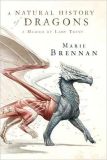
Book Review: A Natural History of Dragons by Marie Brennan

a natural history of dragonTitle: A Natural History of Dragons

Author: Marie Brennan

Series: Memoir of Lady Trent #1

Genre: Fantasy

Rating: 2.5 stars

The Overview: All the world, from Scirland to the farthest reaches of Eriga, know Isabella, Lady Trent, to be the world’s preeminent dragon naturalist. She is the remarkable woman who brought the study of dragons out of the misty shadows of myth and misunderstanding into the clear light of modern science. But before she became the illustrious figure we know today, there was a bookish young woman whose passion for learning, natural history, and, yes, dragons defied the stifling conventions of her day. Here at last, in her own words, is the true story of a pioneering spirit who risked her reputation, her prospects, and her fragile flesh and bone to satisfy her scientific curiosity; of how she sought true love and happiness despite her lamentable eccentricities; and of her thrilling expedition to the perilous mountains of Vystrana, where she made the first of many historic discoveries that would change the world forever. 

The Review:

I’ve been stalling on writing this review because I have so many conflicting emotions about it – it has been hard to get my thoughts straight. Up to about a third of the way through the novel, I was certain it was going to be one of my new all-time favorites. Every last element sang to me in a way that only a handful of novels ever have:

  • A young girl who dreams of studying dragons in a society that considers that a very unladylike endeavor.
  • A memoir narration from this girl many decades later indicating that she broke through all of the societal constraints and is now considered the foremost expert in the field.
  • A sweet love story where she meets someone willing to accept and share her passions.
  • The promise of adventure as she sets out to study her first specimen at an exotic location.
  • And of course, an abundance of dragons!

All of these elements were in line with my personal passions – books, dragons, and nature – and brought them together in a way that made me lose myself within the pages. It was magical!

But, alas, the magic didn’t carry through the entire story. ::sobs::

There were several issues that arose as the novel progressed, and I lament because ALL OF THEM could’ve been avoided with a different outlining strategy/focus on the author’s part.

The major one was the main conflict of the story. In a book about a dragon-nut going on a wild adventure to study dragons in a way never before attempted, I feel strongly that the main conflict SHOULD HAVE REVOLVED AROUND THE DRAGONS. Instead, the dragons remained on the periphery of the story and were only loosely related to what drove 2/3 of the book. It focused on a mystery surrounding a small village, a larger village, some old ruins, a handful of bandits, and some politicking between all of them – none of which had absolutely anything meaningful to do with the dragons and, frankly, could have been easily adjusted to omit the dragons altogether. What an opportunity wasted!!! I’m still agonizing over it.

The second issue was with characterization… particularly that of the main character. She was a bright woman who wanted nothing more than to study dragons. This obsession made her a bit reckless at times when dragons were concerned, which is consistent with her character (and an element I appreciated). What isn’t consistence is how she kept making harebrained decisions when no dragons were involved at all. Stupid stuff. Stuff that leaves you going “no half-intelligent person would do that! What is wrong with this woman?!” It was frustrating, to say the least. The only thing I can figure is that the author orchestrated these odd decisions because she couldn’t figure out another way to advance the plot and get the character from point A to point B any other way. But that’s just me theorizing…

Ugh. Overall, I both fawn and agonize over A Natural History of Dragons, and am really nervous to pick up the second one. I’ll keep in mind that Brennan has the ability to dazzle me and what was done well was done brilliantly enough to give me hope going forward.

Other books you might like:

by Niki Hawkes

Image

Book Review: The Fifth Season by N. K. Jemisin

The Fifth Season by N.K. Jemisin

Title: The Fifth Season

Author: N. K. Jemisin

Series: The Broken Earth #1

Genre: Fantasy

Rating: 5/5 stars!

The Overview: This is the way the world ends. Again.

Three terrible things happen in a single day. Essun, a woman living an ordinary life in a small town, comes home to find that her husband has brutally murdered their son and kidnapped their daughter. Meanwhile, mighty Sanze — the world-spanning empire whose innovations have been civilization’s bedrock for a thousand years — collapses as most of its citizens are murdered to serve a madman’s vengeance. And worst of all, across the heart of the vast continent known as the Stillness, a great red rift has been torn into the heart of the earth, spewing ash enough to darken the sky for years. Or centuries. Now Essun must pursue the wreckage of her family through a deadly, dying land. Without sunlight, clean water, or arable land, and with limited stockpiles of supplies, there will be war all across the Stillness: a battle royale of nations not for power or territory, but simply for the basic resources necessary to get through the long dark night. Essun does not care if the world falls apart around her. She’ll break it herself, if she must, to save her daughter.

The Review:

“The Fifth Season” by N. K. Jemisin first came across my radar when one of the authors I follow casually mentioned that it had a lot of great world-building. In fantasy, I find the more expansive the world-building, the more I tend to become immersed in the story. It has the power to leave me feeling like I’d done more than read a good book, I also had an experience with it. This is probably why I value world-building so highly when evaluating speculative fiction titles. Anyway, when “The Fifth Season” was announced as a nominee for the 2015 Nebula Awards, I knew I had to read it asap.

And it was one of the coolest books I’ve read in ages!

One of my favorite things about the book (and there were many) was the story construction. It was unconventional and totally unlike anything I’ve ever read. Jemisin wove together three POVs (one of which was written in 2nd person) that at first seemed unrelated, but you still got the sense that they’d eventually come together brilliantly (which they did). Jemisin broke rules left and right, deviating from what we are taught makes up solid story construction, and it was fantastic! She clearly knew enough about the rules of writing to break them and still have a solid piece of work to present. If I ever teach a class on writing technique, “The Fifth Season” will be one of my favorite books to have students analyze – it really was that well-done.

Jemisin created a world in which the very earth itself rises up against its inhabitants. The people are at the mercy of the various “seasons” which decimate the population whenever (and wherever) they strike. With such unstable environments, you’d think working together for survival would be everyone’s primary concern. People will be people, however, which means there was no shortage of politicking, power-seeking, and discriminating to be had. It was a fascinating composition of elements that somehow managed to be both foreign in presentation yet completely relatable in concept.

For example, prejudice is very prevailent through the book, but the targets are those gifted with the talent to sense and manipulate movement within the earth. It’s a subtle representation, but definitely makes you aware of the unfairness of each situation based on unjustified things beyond the victim’s control. It’s an aspect I really loved about “The Fifth Season” because it helped make the story thought-provoking and not just downright entertaining. The book also showed diversity in sexual identity and orientation, which you don’t come across too often in fantasy works. I applaud the author for not discriminating in her character construction and reminding us that, at the end of the day, were all just people doing our best to survive and find a measure of happiness.

Overall, I can see why “The Fifth Season” is getting so much attention and think it totally deserves every bit of it. It provided everything I want from a fantasy novel while shattering boundaries and disrupting the status quo at every turn. If I had any complaints, it’s that I’m craving to understand how this world works even more, and the second book (“The Obelisk Gate”) doesn’t come out until next August – woe is me! Fair warning: sexual content and language.

Other books you might like:

by Niki Hawkes