Image

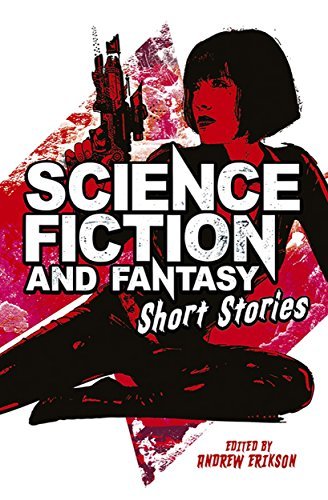
Book Review: Science Fiction and Fantasy Short Stories by Andrew Erikson (ed.)

Title: Science Fiction and Fantasy Short Stories

Author: Andrew Erikson (editor)

Series: N/A

Genre: Science Fiction

Rating: 2.5/5 stars

The Overview: Science fiction and fantasy have gone hand-in-hand since their emergence at the end of the 19th century. Containing the best short stories of the masters of the two genres, this collection brings together the outstanding imaginations of writers such as H. G. Wells, George Griffith, Robert E. Howard and William Morris. Providing both an escape from the troubles of the real world and unique insight, these tales provide an experience that can’t be replicated anywhere else.Goodreads

Dave’s Review:

This compilation is an journey through the early history of science fiction and fantasy, but I found the quality to be uneven. Some stories, particularly the H.G. Wells and Ambrose Bierce selections, remain interesting because of their ideas and the historical context in which they were written. Others are little more than pulpy adventures that feel dated today. I appreciated seeing how authors from the late nineteenth and early twentieth centuries imagined technology, space travel, and alternate realities, but too many of the stories were overly wordy, meandering, or simply failed to go anywhere particularly interesting. There are some worthwhile curiosities here, but overall I found the collection more interesting historically than enjoyable as a reading experience today.

As usual with short story collections, I noted my thoughts in a couple of sentences after reading each one, and have compiled them below.

Under the Knife by H.G. Wells. A story about a man undergoing an operation, yet is able to perceive what is happening on both a small scale and large scale via an outer body experience. Interesting for a story written in the 19th century. No doubt it was terrifying going into an operation back then, with a very high mortality rate, especially for anything major.

The Door in the Wall by H.G. Wells. This one is about a door to some sort of alternate reality where life is simple and peaceful. It definitely seems to be a metaphor for different paths in life and making decisions.

Polaris of the Snows by Charles B. Stilson. I was not familiar with the author prior to reading this story. It is a fun, pulpy adventure story that takes place in the Arctic – perhaps somewhat of a polar Tarzan. This was nothing special, just a fun read.

The Artist of the Beautiful by Nathaniel Hawthorne. I have not read Hawthorne since The Scarlet Letter in high school. This story had promise at the beginning, but ultimately did not go in the direction that I thought it might. However, that is probably not unusual for speculative fiction from so long ago. It was also overly wordy and meandering in a few places, but likely just the style of the author/times.

The Darwinian Schooner by W.L. Alden. An interesting idea of a story about a schooner found at sea, but ultimately I felt that it never went anywhere very satisfying. There was potential for a deeper story. Modern authors likely would have taken this concept much further.

A Visit to the Moon by George Griffith. I cannot say that this was a particularly good story, but it was an interesting read due to its age. This was written in 1900, the same time as H.G. Wells’ serialized novel on the same topic. Some of the details seem quite ridiculous today, but it is fascinating to see how some authors envisioned such a trip the better part of a century prior to when it occurred in reality.

Moxon’s Master by Ambrose Bierce. This starts out with “do you really believe that a machine thinks?” No doubt this was a wild statement in the late 1800s, but with AI prevalent everywhere today, it hardly raises an eyebrow. However, this was an interesting relic of a bygone era, complete with outdated perceptions of technology. And the ending, well, still very much relevant in our world today.

Rats in the Belfry by John York Cabot. An eccentric man builds a bizarre mansion and then discovers a portal. This is perhaps a simple precursor to other similar works that have since presented much more expansive ideas based on this concept. Still, this brief story was worth the small investment.

On the Martian Way by Harry Gore Bishop. I was surprised to discover afterward that this was first published in 1907, before the Titanic. I would have guessed that it took some inspiration from that event. Overall it is an average story, with some interesting insight into what we would now say is a pretty archaic view on how “shipping” routes between colonies on different planets might look.

Within an Ace of the End of the World by Robert Barr. This is a story where a world food shortage occurs at the dawn of the twentieth century. It is discovered that food can be manufactured from nitrogen in the air, but of course that then causes other problems. It was written in 1900, and is a bit bland, but it is an early attempt at tackling certain topics which are still pretty relevant today.

The Phoenix on the Sword by Robert E. Howard. A Conan story. I have read a couple of Conan novels long ago. I am not a huge fan. This is more or less what I expected, but at least in short form, it is less of a commitment. It is mildly entertaining, but there is zero depth and it suffers from some very dated tropes that feel a little uncomfortable today.

The Tower of the Elephant by Robert E. Howard. Another Conan story, this one is about a young Conan attempting to steal an artifact from a guarded tower. Again, it is purely an adventure story from another era. It is a good bit of fun with the right expectations, but it lacks any depth. This one is probably slightly more memorable than the previous Conan story in this collection.

The Shadow Kingdom by Robert E. Howard. This predates the Conan stories, and is apparently regarded as a highly influential work, considered to be one of the very first truly gritty sword and sorcery story. Be that as it may, I did not find the story particularly interesting or enjoyable to read. It feels pretentious and needlessly excessive. I guess I can at least say that I have read it now?

The Sea-Witch by Nictzin Dyalhis. I was completely unfamiliar with this author, and perhaps if would have been best left that way. This was an overly long and largely uninteresting story about, well, a witch? It is Viking-inspired, but quite pulpy and I got very little out of it for the time I invested in reading it.

The Dancer in the Crystal by Francis Flagg. This story imagines a scenario where electricity becomes nullified. Despite the strong premise, the story itself is a little underwhelming. Written in 1929 and taking place in the 1950s, the effect of the complete loss of electricity in the story is actually nowhere near as catastrophic as it would be were this to occur in our world today.

The Regent of the North by Kenneth Morris. Cool, a Viking story! Except that I found it to be very mundane. It felt like reading a history book with elegant prose. This style of short story is just so different from what tends to be popular today.

The Folk of the Mountain Door by William Morris. A Nordic tale that was supposedly an influence on early twentieth century fantasy authors. That may be the case, but I did not enjoy reading it. The prose is strong, but archaic, and the text has far too many poems/songs for my liking. I also found the story itself to be pretty unmemorable.
Image

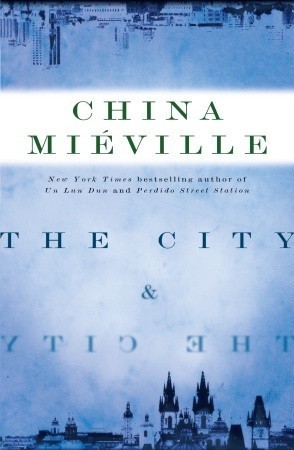
Book Review: The City & the City by China Miéville

Title: The City & the City

Author: China Miéville

Series: N/A

Genre: Science Fiction

Rating: 3.5/5 stars

The Overview: When a murdered woman is found in the city of Beszel, somewhere at the edge of Europe, it looks to be a routine case for Inspector Tyador Borlú of the Extreme Crime Squad. But as he investigates, the evidence points to conspiracies far stranger and more deadly than anything he could have imagined. Borlú must travel from the decaying Beszel to the only metropolis on Earth as strange as his own. This is a border crossing like no other, a journey as psychic as it is physical, a shift in perception, a seeing of the unseen. His destination is Beszel’s equal, rival, and intimate neighbor, the rich and vibrant city of Ul Qoma. With Ul Qoman detective Qussim Dhatt, and struggling with his own transition, Borlú is enmeshed in a sordid underworld of rabid nationalists intent on destroying their neighboring city, and unificationists who dream of dissolving the two into one. As the detectives uncover the dead woman’s secrets, they begin to suspect a truth that could cost them and those they care about more than their lives. What stands against them are murderous powers in Beszel and in Ul Qoma: and, most terrifying of all, that which lies between these two cities. Casting shades of Kafka and Philip K. Dick, Raymond Chandler and 1984, The City & the City is a murder mystery taken to dazzling metaphysical and artistic heights. Goodreads

Dave’s Review:

The City & the City, like most of Miéville’s writing, is one of the most original novels I have read recently. The central premise is so unusual that it is difficult to describe in a cogent manner. Blending a noir detective story with speculative fiction, Miéville creates a world that is truly unique. Even when I wasn’t completely invested in the story, I remained fascinated by the ideas behind it.

The novel follows Inspector Tyador Borlú as he investigates a murder spanning two cities. The bizarre element is that these cities occupy the same physical space, while their inhabitants are conditioned to perceive them as separate. It may be difficult to describe, but the concept is brilliant, and the strange atmosphere of these intertwined cities is probably the book’s greatest strength. The mystery itself is fairly engaging, but it often feels secondary to the exploration of the setting and the social structure around it. I have said before that the setting is the most memorable character in a Miéville story.

For all of its creativity, however, the novel can also be frustrating at times. Although I found this to be one of the easier Miéville settings to wrap my head around, a good bit of effort is nevertheless required to understand the world. The complexity of the world ramps up in certain ways as the story progresses, to where I occasionally found myself struggling to follow exactly what was happening in the latter parts. Borlú is a competent detective and protagonist, but he never develops into a very memorable character, and many of the others blend together or take a backseat to the setting and the ideas. The ending also left me wanting a bit more, resolving the central mystery but without the emotional or thematic payoff I had hoped for.

Despite those shortcomings, The City & the City is well worth reading for its originality alone. It reminded me of Robert Jackson Bennett’s The Tainted Cup (which, coincidentally, I had read just prior to this book) in the way it uses an inventive speculative setting to elevate a detective story into something far more unique. Both books also won the Hugo Award for best novel, perhaps fitting given the way that they creatively blend speculative fiction and mystery. I may not consider it to be a perfect novel, but it will certainly stay with me for a long time to come.

Image

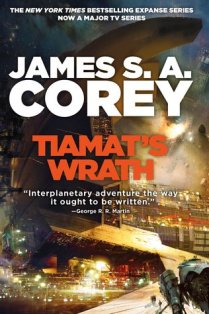
Book Review by Tiamat’s Wrath by James S.A. Corey

Tiamat's Wrath by James S.A. Corey

Title: Tiamat’s Wrath

Author: James S.A. Corey

Series: Expanse #8

Genre: Science Fiction

Rating: 5/5 stars!! (you heard me.)

The Overview: Thirteen hundred gates have opened to solar systems around the galaxy. But as humanity builds its interstellar empire in the alien ruins, the mysteries and threats grow deeper. In the dead systems where gates lead to stranger things than alien planets, Elvi Okoye begins a desperate search to discover the nature of a genocide that happened before the first human beings existed, and to find weapons to fight a war against forces at the edge of the imaginable. But the price of that knowledge may be higher than she can pay.

At the heart of the empire, Teresa Duarte prepares to take on the burden of her father’s godlike ambition. The sociopathic scientist Paolo Cortázar and the Mephistophelian prisoner James Holden are only two of the dangers in a palace thick with intrigue, but Teresa has a mind of her own and secrets even her father the emperor doesn’t guess. And throughout the wide human empire, the scattered crew of the Rocinante fights a brave rear-guard action against Duarte’s authoritarian regime. Memory of the old order falls away, and a future under Laconia’s eternal rule — and with it, a battle that humanity can only lose – seems more and more certain. Because against the terrors that lie between worlds, courage and ambition will not be enough… –Goodreads

The Review:

I can’t remember the last time I actually yelled at a book.

Coming back to this series felt like embracing family after being gone a few years… like coming home. In my mind, these characters are real people. Their development is so on-point, I always feel their triumphs and defeats poignantly. These authors are brilliant. And I have to say, they really set out to shred my soul with Tiamat’s Wrath. Holy shit.

Truth be told, I’ve been really apathetic lately with books. This is the first novel in a loooong while to evoke a reaction from me. To the point where, yes, I yelled when a few things happened and may or may not have sobbed at one point. I read so much, that kind of emotional investment only comes along once in a blue moon. And it’s these types of books I save my solid 5-star ratings for. Before Tiamat’s Wrath, I hadn’t handed out one since last July. O_o

This book was amazing. It may not have had a lot of action or moving parts, but the depth of character immersion and overall plot advancement was phenomenal. Every moment counted. Every conversation important. Every action riveting. It’s in close competition with Nemesis Games as my favorite of the series. They’re kind of hard to compare though – that one had a ton of moving parts and grand, epic events that blow your mind with the shear scale and implications of it all. This one was much more understated – an emotional roller coaster of internal turmoil that drew you in because of the human element. It was a slow burn, but every moment was fire… at least to me.

They’re definitely gearing up for a finale, and I think it’s going to be a fucking monster. Tiamat’s left me poised on the edge of a cliff, and if I could jump into a freefall right this moment to see what happens next, I wouldn’t hesitate. This is one of those anticipated series finales we’ll all have to cancel plans for… grab some tissues and maybe one of those squishy stress ball thingies and seclude ourselves in quiet corners and wait for all hell to break loose… then deal with the agony of it ending. Needless to say, I have a lot of expectations riding on the final novel, but I’m so confident in these authors that I’m truly not worried (just stressed at what they’re going to do to me).

Series status: highest priority sci-fi… omg gimmie the final novel!!!

Recommendations: if you have ANY interest in the space opera genre, there’s no better place to start than The Expanse series. It will take you on a wild ride, gut-punching you all the while… it’s awesome lol. If you haven’t checked out the novellas by this point in the series, you might want to pick up Strange Dogs before diving in (although I found merit in all of them, so consider that an endorsement). Overall, this is my first pick whenever someone wants an exciting, character-driven series. And if anything, my opinions of it have only gotten stronger with each installment.

Other books you might like:

by Niki Hawkes

Image

Niki’s Narrative Novella Review: The Murderbot Diaries by Martha Wells

Omg – the alliteration was unintentional (but the best thing I’ve done all week). This post is about my reading experience with Murderbot Diaries and why it’s now one of my favorite mini-series.

Niki’s Narrative Novella Review (Spoiler-Free)
The Murderbot Diaries

By Martha Wells
[5/5 stars]

All Systems Red by Martha Wells

All Systems Red: All Systems Red seemed to have everything I’d been hounding for in a good sci-fi – an interesting character, a compelling mystery, exploration, and some cool technology shit. Five pages into this novella and I was able to check off all the things. Hell, one sentence into this book and I knew we were going to get along (Wells is so good at opening lines. I haven’t even read The Wizard Hunters yet, but for years now I’ve been using it as a positive example of how to hook a reader). Murderbot was just so goddamned funny that I constantly felt on the verge of uncontrollable giggles the entire time. It spoke to my very introverted self like we’d been besties for years (ironically), but also spurred a level of compassion from me I haven’t given to a book in a long while. I came away from this first novella feeling like I’d just read a gem.


Artificial Condition: My feelings going into AC were tentative optimism. After all, sequels are never as good as the first, right? So if this could hold up to even 75% on how much I enjoyed All Systems Red, then I’d be good. The first few chapters were slowly paced and I really enjoyed reimmursing into Murderbot’s brain. Wells even had me laughing early on with MB’s interaction with a new character. And then the plot thickened and we were on our way to answering some questions. I lost myself for a few hours as the story snowballed to the end with a fantastic momentum that perhaps was even more of a ride than the first book. At this point, I went “omg, give me the next one,” and proceeded to troll the publisher and review sites until I lucked into a copy (okay, I didn’t really troll, but I was still exceptionally lucky).


[August 7, 2018] Rogue Protocol by Martha Wells

Rogue Protocol: I braced myself for this book. My trust in this author and this series was so strong by this point that I just hopped in and buckled up without even asking where we were going. And I was treated to possibly my favorite of the bunch (it’s like combing fine hairs). With all the key components right up front, some amazing Murderbot feels that kind of rocked some of my perspectives on life (that’s deep), and crazy whirlwind action that almost gave me whiplash, it rocked. If I wasn’t convinced from how much I loved the first two books, I was definitely a huge, unapologetically screaming fangirl by this point. Holy smoley that was good.


[October 2, 2018] Exit Strategy by Martha Wells

Exit Strategy: I entered into this final installment a little worried. For the character, for my emotions, for that heightened expectations that comes from reaching the end of something truly fantastic and hoping the quality holds up. I was not disappointed. Exit Strategy had the perfect balance of all the amazing elements that make this series so special. Did I shed a tear at some point during this book? I can’t remember. It might have been a combination of laughing and crying, or just something in my eye. Either way, I have strong opinions about how much I’d love to see this world expanded on more. I still have a few questions, but more importantly I’d miss Murderbot too much. In an interview I read, Wells mentioned that this is the end of the story arc, but she’s already thinking about what to do with it next (yay!).

So if you need me, I’ll be in my cubicle recharging from this series and trying not to get snot on my phone. I really hate it when I leak.

Other books you might like:

by Niki Hawkes