Image

Book Review: Empire of Silence by Christopher Ruocchio

Title: Empire of Silence

Author: Christopher Ruocchio

Series: Sun Eater #1

Genre: Sci-Fantasy

Rating: 5/5 stars!

The Overview: Hadrian Marlowe, a man revered as a hero and despised as a murderer, chronicles his tale in the galaxy-spanning debut of the Sun Eater series, merging the best of space opera and epic fantasy. It was not his war. On the wrong planet, at the right time, for the best reasons, Hadrian Marlowe started down a path that could only end in fire. The galaxy remembers him as a hero: the man who burned every last alien Cielcin from the sky. They remember him as a monster: the devil who destroyed a sun, casually annihilating four billion human lives—even the Emperor himself—against Imperial orders. But Hadrian was not a hero. He was not a monster. He was not even a soldier. Fleeing his father and a future as a torturer, Hadrian finds himself stranded on a strange, backwater world. Forced to fight as a gladiator and navigate the intrigues of a foreign planetary court, he will find himself fighting a war he did not start, for an Empire he does not love, against an enemy he will never understand. –Goodreads

The Review:

Booktube was right -> this is amazing.

There wasn’t a single thing I didn’t like about Empire of Silence. Having read and reviewed books for an audience for so long, it’s a rare thing when I can turn off my critical mind long enough to enjoy a book with wild abandon. I loved everything from start to finish.

And they tell me it only gets better!

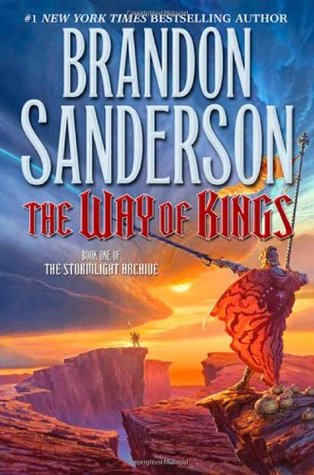
This book was a cool hodgepodge of fantasy and scifi. It read kind of like a Stormlight Archive book in tone and scope, but in a dramatic scifi setting not unlike Red Rising. And did I mention the writing voices was akin to Rothfuss’ Name of the Wind? I realize I’m referencing many SFF heavy-hitters, but Empire o Silence had so many of the best elements of each that I feel it deserves the comparisons.

My favorite aspects of the book were the characters and world-building. The character profiles enhanced it all. The main character reminded me a little of the Mandalorian where he periodically gets the ever-loving crap kicked out of him, but has to figure out how to pull himself back up. Sometimes he gets in his own way, but it’s always interesting to me to see the growth arc of a character like that. I also love the blurring of genres, and how creative the setting. Everything from the human cultures and infrastructures to the delightfully weird flora and fauna… so cool. And the alien villains? Loved them.

The writing was lyrical without being too heavy-handed, the pacing was on-point, the characters were clever and engaging, the world-building was epic and fun, the villains were bomb, and I’m so excited for the rest of the series I can hardly stand it.

Recommendations: if you loved any of the series mentioned in this review, then you’re already primed to like Empire of Silence. Give into the hype-train… it’s worth it.

Thank you to my Patrons: Dave, Katrin, Jen, Frank, Sonja, Staci, Kat, Betsy, Eliss, Mike, and Elizabeth! <3

Other books you might like:

by Niki Hawkes

Image

Book Review: Children of Ruin by Adrian Tchaikovsky

Title: Children of Ruin

Author: Adrian Tchaikovsky

Series: Children of Time #2

Genre: Science Fiction

Rating: 2/5 stars

The Overview: Long ago, Earth’s terraforming program sent ships out to build new homes for humanity among the stars and made an unexpected discovery: a planet with life. But the scientists were unaware that the alien ecosystem was more developed than the primitive life forms originally discovered. Now, thousands of years later, the Portiids and their humans have sent an exploration vessel following fragmentary radio signals. They discover a system in crisis, warring factions trying to recover from an apocalyptic catastrophe arising from what the early terraformers awoke all those years before. -Goodreads

The Review:

Children of Time is still my favorite book of 2022. Children of Ruin… not so much.

Truthfully I had a hard time finishing this one. At 80% I was forcing myself through it to the point where I initially called a DNF before deciding to just speed read to the end. I mean, I’d heard it wasn’t as good as the first one, but I wasn’t expecting to be so completely disengaged.

So what changed between books one and two? My theory is character connection. CoT was a brilliantly composed character study that managed to make me care deeply about the creatures involved. It was especially impressive that he managed to evoke that given that it was also a multi-generational story. CoR showed glimmers of good character work at the beginning, but quickly set it aside in favor of extensive theorizing and info dumps. Even the return of some familiar faces didn’t help, and in some ways actually made things worse, as none of them showed any of the depth I remember from the first book.

As you may have heard, CoT focuses on a society of spiders, whereas CoR focuses on cephalopods (octopi). I wouldn’t say spiders are any less alien to human ways of thinking and functioning as a society than cephalopods, but the way Tchaikovsky chose to present both offered wildly different experiences. The spiders came across somewhat relatable, where as the cephalopods’ society and forms of communication were so alien it was hard to form a connection to them. The creatures used complex color patterns to communicate. And the use of general impressions and imagery in place of dialogue was amazing and creative and cool… but it wasn’t engaging in the slightest. My favorite part about CoR was learning more about these creatures, but they weren’t solid, distinct enough “characters” to make me feel more than a curious interest in them.

So without anyone to latch onto, I started to feel disengaged from the story. And then the plot got a bit confusing and I lost even more momentum. So by the time I made it to the end (by the skin of my teeth), I was checked out.

I know this author can dazzle me, and by no means am I finished exploring his works. CoR had a lot of great base elements to it, I just think it lost me on some of the execution choices. I’m still looking forward to Children of Memory, but with perhaps a little less enthusiasm than after CoR.

Recommendations: while the biological components were every bit as cool as the stuff found in CoT, all of the other story elements fell a bit flat. At the moment I’d say consider CoT a stand-alone and don’t bother with this sequel, but that may change after I read the third book.

Other books you might like:

by Niki Hawkes
Image

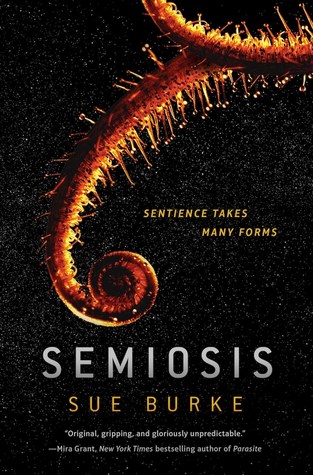
Book Review: Semiosis by Sue Burke

Title: Semiosis

Author: Sue Burke

Series: Semiosis Duology #1

Genre: Science Fiction

Rating: 2/5 stars

The Overview: In this character driven novel of first contact by debut author Sue Burke, human survival hinges on an bizarre alliance. Only mutual communication can forge an alliance with the planet’s sentient species and prove that mammals are more than tools. Forced to land on a planet they aren’t prepared for, human colonists rely on their limited resources to survive. The planet provides a lush but inexplicable landscape–trees offer edible, addictive fruit one day and poison the next, while the ruins of an alien race are found entwined in the roots of a strange plant. Conflicts between generations arise as they struggle to understand one another and grapple with an unknowable alien intellect. -Goodreads

The Review:

I didn’t enjoy anything about this book.

Not the characters, not the story, not the trajectory, and most particularly not the execution. Nothing worked for me.

First of all, the basic title and premise give away a lot about what to expect in the story itself. The reader ventures in with a pretty good idea of what’s going on already, so right there the sense of discovery I crave in books was mitigated. What’s more, the reader may know, but the characters don’t, which was a classic case of dramatic irony – where the audience is aware of what’s going on, so they feel a couple of steps removed from the drama… and then the characters take forever to figure things out. Because of this I felt disconnected from the very beginning.

Then the disconnection compounded with each new POV. It’s one of those multi-generational novels where just about the time you get acclimated with a new character, there’s a time jump. I enjoyed the stories but didn’t feel particularly invested in any of them. I suppose from an anthropological standpoint it was interesting to see how society both devolved and adjusted over the course of time, but at the end of the day it was all a bit too simple to really keep my interest.

But I kept reading for the draw of the alien flora and fauna of the world.

Yet even that didn’t play out in a way I found satisfying at the end of the day. The best bits were in the first chapter or two where you really got to immerse in the wildness of this new place. But that interesting world building quickly got replaced by societal drama and an alien entity whom I thought more akin to an AI on a spaceship than an actual foreign creation…

The whole thing was disappointing. Nowhere near where I wanted it to be.

I decided I didn’t care enough about experiencing more in this series to continue with the second book, so I looked up spoilers to see how it ended. I’m such a completionist that those who know me will appreciate how extreme that was and take it as a testament on how much I didn’t care for the first book. It’s like all the ingredients were there with moments of good flavoring, but at the end of the day the author was making cake and I wanted pie (that’s a bad metaphor because I will always eagerly accept both cake and pie, but you get my drift).

Recommendations: this was not one of my favorites, but if you like the idea of a more biological & anthropological scifi (usually my favorite type), this may fit the bill. I was surprised to see how many of my fellow reviewers on GR absolutely loved this book, so I’m definitely in the minority here. Also look up trigger warnings before diving in.

Other books you might like:

by Niki Hawkes
Image

DNF Q&A: Mutineer by Mike Shepherd

Title: Mutineer

Author: Mike Shepherd

Series: Kris Longknife

Genre: Science Fiction

Rating: 1/5 stars

The Overview: Kris Longknife is a daughter of privilege, born to money and power. Her father is the Prime Minister of her home planet. Her mother the consummate politician’s wife. She’s been raised only to be beautiful and marry well. But the heritage of the military Longknifes courses through Kris’s blood-and, against her parents’ objections, she enlists in the marines. -Goodreads

The Review:

When trying to make a decision on whether or not to read something, it can often be much more helpful to look at the low star ratings than the high ones. To that end I’m going to be including more DNF reviews in my lineup. I have a Q&A format here that I adapted from Nikki at There Were Books Involved (with permission, which is important even if her blog doesn’t exist anymore), and I think it’s a great way to discuss the book constructively. Here goes:

Did you really give Mutineer a chance?

Not as much as I usually give before throwing in the towel – 25%. But it was clear from very early on the book was not going to resonate with me.

Have you enjoyed other books in the same genre?

Space Opera SciFi? Heck yeah! Even the cheesier ones. I was hoping this series would be a fun palate cleanser between other reads, but alas. Here are a few I enjoyed a lot more:

Did you have certain expectations before starting it?

Hopeful optimism that the books would be at least 3-star quality. Beyond that I felt like I was ready to put up with a lot of weaker components if the overall story was entertaining.

What ultimately made you stop reading?

Ugh. About the point where the main character was in someone’s kitchen planetside describing the finer points of white flour and Ghirardelli chocolates, I lost patience. We were so completely removed from what I signed up for that I’d had enough. I read a few chapters more, but knew it was going to be a DNF. There were just too many things leading up to that point that had me dissatisfied.

Character development was one of the biggest misses.

The main character was not realistic to me in the slightest. Having suffered trauma at an early age, the character experienced several unbelievable reactions early on in the book. Where the mere mention of the event sent her into fits of fainting, unable to control her body. It was eye-rolling and very immature.

I’m by no means downplaying the different effects trauma can have on someone. To add context, this woman grew up very wealthy (using the “poor little rich girl” angle that drove me crazy) and her family was aware of the trauma. As infeasible as I find it that someone with that much distance from the event and resources available to heal from it would still be experiencing reactions to that degree years later, it’s the fact that she’s a ranking military officer that finalized how much I disliked that plot point. I’ve never been in the military, but I’m pretty sure they don’t let you in without background checks and psychological evaluations to ensure you’re not going to have episodes in the middle of dangerous situations where you could get others killed. At the very least she would’ve gotten help from the base shrink.

This is a very specific rant, yet the unrealistic aspects of the story kept trickling in left and right to the point where the author lost my trust in his ability to deliver a story that would work for me.

The final tip off was when the main character’s parents were introduced, and as it turns out she was not only a spoiled rich girl, but a petulant one at that. Peace out.

Is there anything you liked about Mutineer?

The fact that it was a Scifi. Although considering how little of the first part had to do with actual space, I’m more or less assuming here.

Would you read anything else by the author?

No. I need things to make more sense than they did here, and I need more realistic development of characters. The author and I are so far apart on preferences that I don’t think it possible to ever meet in the middle.

So you DNFed the book. Would you still recommend it?

Well, since most my complaints were very specific dislikes about the plot itself (and how unrealistic I found them), perhaps someone with more patience and a willingness to go with the flow might actually like it when they get to the space parts. At this point I probably wouldn’t mention it even in passing to someone though. Most books that I don’t like are from an evaluation standpoint, whereas this one actively annoyed the snot out of me lol.

by Niki Hawkes

Image

Book Review: The Last Emperox by John Scalzi

Title: Last Emperox

Author: John Scalzi

Series: Interdependency #3

Genre: Science Fiction

Rating: 2/5 stars

The Overview: The collapse of The Flow, the interstellar pathway between the planets of the Interdependency, has accelerated. Entire star systems—and billions of people—are becoming cut off from the rest of human civilization. This collapse was foretold through scientific prediction . . . and yet, even as the evidence is obvious and insurmountable, many still try to rationalize, delay and profit from, these final days of one of the greatest empires humanity has ever known. Emperox Grayland II has finally wrested control of her empire from those who oppose her and who deny the reality of this collapse. But “control” is a slippery thing, and even as Grayland strives to save as many of her people form impoverished isolation, the forces opposing her rule will make a final, desperate push to topple her from her throne and power, by any means necessary. Grayland and her thinning list of allies must use every tool at their disposal to save themselves, and all of humanity. And yet it may not be enough. Will Grayland become the savior of her civilization . . . or the last emperox to wear the crown? -Goodreads

The Review:

Considering the book didn’t actually start until 75% in, I think a 2 star rating quite generous.

Coming off the amazing, fast-paced whirlwind that was Consuming Fire, I launched into Last Emperox braced for a killer finale! Then slowly, chapter by slogging chapter, I realized the best bits of the series were probably behind me.

The first third of the novel was an extensive recap of what had happened in the series to that point. Albeit dressed up as character introspection where we worked to solidify their personal convictions. But during this time no actual plot advancement made an appearance.

The middle third of the book took all of that recap and turned it into character reflection. Where we sat around and analyzed what had happened in the first two books and agreed that yes, we need to stick to our plans. One good solid point of plot-advancing happened here, and it was enough to keep me reading, but only just.

Then finally, within the last 50 pages of the book, things came together and we discovered what we’d been working towards this entire series. It was a good ending. Perhaps even a satisfying one in some ways. But the drainage of any iota of momentum by way of totally excessive empty word count had me putting down the story wishing I’d felt as I’d had after finishing book 2.

Based on the number of plot-advancing points in this final book, I think the series would’ve been much stronger written as a duology. It only would’ve needed to add a few of the good chapters from book 3 to the end of book 2, and for me it would’ve been much more successful. At the moment I’m sitting on a $25 hardcover of the third book feeling a little like I’ve been swindled (good thing I got it on a good sale).

I suppose if you just loved the characters a lot more than I did, you may have relished in the downtime spent in retrospect with them. At this point in the series, I was looking for momentum, action, and excitement. So you can see why I disconnected. In any case, it clearly wasn’t what I wanted it to be.

It’s a good thing this was a quick read.

Recommendation: this final book had a lot of filler content that almost killed the series for me. However, because the second book was so good, and the effort it took to get through to the grand finale of the series was relatively minimal (I read it in two days), I’d still recommend the trilogy as a whole for a fun, light Scifi read.

Other books you might like:

by Niki Hawkes
Image

Book Review: The Collapsing Empire by John Scalzi

Title: Collapsing Empire

Author: John Scalzi

Series: Interdependency #1

Genre: Science Fiction

Rating: 3/5 stars

The Overview: The first novel of a new space-opera sequence set in an all-new universe by the Hugo Award-winning, New York Times-bestselling author of Redshirts and Old Man’s War. Our universe is ruled by physics and faster than light travel is not possible — until the discovery of The Flow, an extra-dimensional field we can access at certain points in space-time that transport us to other worlds, around other stars. Humanity flows away from Earth, into space, and in time forgets our home world and creates a new empire, the Interdependency, whose ethos requires that no one human outpost can survive without the others. It’s a hedge against interstellar war — and a system of control for the rulers of the empire. The Flow is eternal — but it is not static. Just as a river changes course, The Flow changes as well, cutting off worlds from the rest of humanity. When it’s discovered that The Flow is moving, possibly cutting off all human worlds from faster than light travel forever, three individuals — a scientist, a starship captain and the Empress of the Interdependency — are in a race against time to discover what, if anything, can be salvaged from an interstellar empire on the brink of collapse. -Goodreads

The Review:

I went into this first book on some really consistent high praise – many people hail this as their favorite Scalzi series to date. And while I enjoyed the book overall, I gotta say it didn’t knock my socks off. I much preferred Scalzi’s Old Man’s War as a series starter, truth be told. And I think most of that had to do with character development.

I liked the characters here, but they felt a little over-exaggerated. Especially Kira. An incredibly profane, debaucherous profile with absolutely no subtlety to her persona. It wasn’t so much that she dropped F-bombs in every sentence. It was more HOW she dropped the F-bombs. I love swearing in books. Not only does it make me laugh, but I feel it’s a fun way to add emphasis to the dialogue and characters. Two authors who integrate it brilliantly are Martha Wells (Murderbot) and Joe Abercrombie (First Law). I’ve said a variation of this before, but if swearing were an art form, our character Kira is finger painting with mud. There was no logic to the placement and was more or less just distracting. I suspect that I’m a bit of a profanity snob (who knew?) but it just didn’t work for me on any level. The only thing she had going for her were her no BS attitude and the quick-witted nature of her responses.

The other characters were much better, but I struggled on feeling any sort of connection to them other than mild interest. The villains were a hard sell for me as well. For people with that much money and resources, they were awfully short-sighted. They also lacked a thoroughness that was just too unrealistic for me to buy into.

I don’t mean to be all down about the book. I did like the overall mood and flow of the writing. Scalzi is such a feel-good Scifi author that even though I wasn’t in love with the characters, I was still enjoying the process of reading the book. I also liked the overall idea for the story. It’s easily his most ambitious plot structure I’ve read to date, and I appreciated how much thought must have gone into the flow-stream theory. It’s the kind of made-up sciency jargon I love in Scifi for its world building components.

Overall, even though it didn’t blow me away, I like the writing and the story enough to want to keep reading and (lucky me) the second book gave me everything I’d been hoping to get out of this series.

Recommendations: if you like lighthearted, easy reading Scifi, you can’t go wrong with Scalzi. His books are always fun reads with just enough plot and substance to make for a satisfying experience. As an intro to the series, this was a decent start. Wil Wheaton narrates the audiobook, and while his delivery matches the writing style perfectly, it will kind of feel like he’s yelling at you the whole time. Proceed with caution. Lol

Other books you might like:

by Niki Hawkes