Image

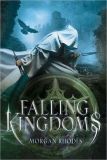
Your Pick for Nik! – January’s Review: Falling Kingdoms by Morgan Rhodes

22Title: Falling Kingdoms

Author: Morgan Rhodes

Series: Falling Kingdoms #1

Genre: Teen Fantasy

Rating: 2/5 stars

The Overview: In a land where magic has been forgotten but peace has reigned for centuries, a deadly unrest is simmering. Three kingdoms grapple for power—brutally transforming their subjects’ lives in the process. Amidst betrayals, bargains, and battles, four young people find their fates forever intertwined.

The Review: 

The cover and overall idea for Falling Kingdoms grabbed my attention as soon as it came out of the box. I immediately stopped what I was doing and thought, “Oooh! I definitely want to read this!” Having finished it just last week, I’ve been trying to figure out why I didn’t like it as much as I thought I would…

There was nothing particularly “wrong” with the book: the characters were well-rounded and interesting, the overall plot line was well-woven, and the writing style left me nothing to complain about. What’s more, I think a lot of people out there are really going to enjoy the story and get behind some of these characters. The book is being advertised as a sort of hybrid between the Game of Thrones Saga and Graceling, and that’s exactly what it read like. For some reason, however, it just didn’t quite work for me. I’ll spend a lot of time in the following sections illustrating why, but suffice to say I’m disappointed I didn’t get more from January’s selection.

[Spoiler Alert! You may want to skip down if you haven’t read the book yet]

Story

Pieces of Game of Thrones and Graceling definitely make an appearance in this novel, and with two such great draws for inspiration, this book could’ve been fantastic. I actually think Rhodes did a good job incorporating both stories, but I feel like she left out the best elements that made each of the books so special.

Graceling is an adventure involving teens doing extraordinary things to save their kingdoms and that is certainly present here, but it is also one of the most memorable love stories I’ve ever read and the main reason why it’s one of my favorites. Within Falling Kingdoms, I didn’t feel more than an ounce of relationship development throughout the whole thing, even if you count the incestuous stuff. Cleo and Theon had some potential, but even then readers were told they were falling in love and never shown until right before he was killed. For a teen book, I feel as though this was her biggest missed opportunity. There are ways to incorporate a love story without making it gushy.

Game of Thrones, on the other hand, had a highly original perspective and was told with a bit more of an edge than was typical within the genre. There were also many moments of unexpected events which added to the overall appeal and suspense of the story. Falling Kingdoms copied Martin’s multiple storylines format, took the edge out to make it accessible for teens, and brought in unexpected elements that I feel hurt the plot more than it helped.

World-Building

I thought the world-building was pretty much non-existent. Sure, there was a bit of cultural development, but everything else was fairly generic. I kept getting the impression that Rhodes didn’t pay any attention to the physical geography of this world. There are supposedly three separate distinct cultures living in partitioned areas (ruled by individual monarchs), yet it seemed to take only a few hours to travel between each kingdom. I just don’t see how the cultures could’ve remained independent, or for that matter, have enough people within for three kings to rule within such tight parameters. And, speaking of people, other than the main characters, there was really nobody else around… where are the subjects these three kings are trying to rule over? Anyway, I really missed this element of the story and hope the author spends some time on creating atmosphere in future books.

Characterization

Because of the choices she made within the plot – specifically killing off characters and following too many story-lines at once, the whole book read like one giant, glorified prequel. At no point during 95% of the book was I sure who I was supposed to rooting for and against (for that matter, I’m still not totally sure). The excellent prequel started with Sabina killing her sister, giving readers and interesting villain right off the bat. Just when we started learning where her story was going to develop, Rhodes killed her off, leaving readers relatively villian-less halfway through the book.

As for the heroes, Cleo has somehow emerged as the one with a quest before her, yet I feel as though Lucia’s developing magic (and the tension between her and her brother) is the real driving force behind story. I can’t help but wonder what it would have been like to read two totally different books following each storyline because I actually think they’re stronger on their own. Concerning the others, Jonas’ motives for revenge were a tad irrational for me, and we really don’t get to see what type of thinker he is until the end of the book. We also never get to see Ioannes’ motives in the first book, and what little we know about him got flipped near the end anyway. Hence, an excellent prequel for the story that’s actually starting in the next book.

Writing Style

As mentioned earlier, there’s nothing I can criticize about Rhode’s writing style. In fact, had the plot decisions not detracted from the book as a whole, I would probably be praising her for certain elements at this point. She did a great job of showing the inner turmoil and duality of all the various characters, making it easy to get on board and feel for their plights.

On a minor note, there was an awful lot of false tension and “soon to be revealed” secrets in this book. I believe she was trying to build suspense and keep people turning pages, but I’m the type of reader that likes to have as much information up front as possible. Secrets are great, but if the protagonist knows something, I’d like to know it too. It helps explain motives and reveal character which allows me to fully invest myself into their struggles.

[End Spoilers]

Pacing

I will say that the prequel to this book was incredibly grabbing! After reading it, I hunkered down thinking “this is going to be epic! I’d better get comfortable…” Fifty pages and a dozen characters later, I was half asleep waiting for the story to start. Too many characters make it very difficult to get the plot moving. It also can steal away momentum further along because the author constantly has to drag the reader back and forth between characters. It is a risky tactic, as you are literally giving your readers permission to have a short attention span with your work. You also take the risk that readers will get bored with one or another of the characters (mostly because this format doesn’t allow you time to develop each one fully, and readers aren’t sure who to invest their attentions in). I know many people who have admitted to skipping entire chapters when this happens, particularly with J.R. Ward and George R.R. Martin books. I’m not saying it can’t work, I’m just saying it’s a risk an author needs to consider when outlining.

Overall, I wish I could’ve had more positives for this book. I have the tendency to be harsher on books that I’ve been looking forward to, and I think that might have been the case here. I am honestly hoping for one of you to reply with: “You’re crazy, this book was amazing!” because I feel like I might’ve been a bit hyper-critical of it. In any case, I hope I like next month’s selection (Drowning City by Amanda Dunham) a bit better.

Other books you might like:

Now Let’s Discuss!

I love composing these reviews, but I’m most looking forward to hearing what YOU thought of the book:

  • What are your overall impressions/ratings of the book?
  • What were your favorite/least favorite elements?
  • Who was your favorite character/storyline?
  • Is Niki too harsh a critic? ;)

by Niki Hawkes

Image

Book Review: Masques by Patricia Briggs

masquesTitle: Masques

Author: Patricia Briggs

Series: Sianim #1

Genre: Fantasy

Rating: 4/5 stars

The Overview: When the peaceful kingdom of Reth is overrun by Geoffrey ae’Magi, the evil master of illusion, Aralorn, weaponsmistress of the shapechanging race, and her companion, Wolf, attempt to overthrow him.

The Review:

As a long-time fan of Briggs’ Mercy Thompson series, I went ahead and bought these before I even knew what they were about. Thinking it was another urban fantasy, I was surprised to discover it’s actually a classic shapeshifter fantasy novel. I find it rather amazing how well Briggs can tell one story about werewolfs and another about shapechangers and have them sound nothing alike. It is a true testament to her creativity as an author to be able to capture each genre so well.

There were some good elements of world-building throughout the story, but overall I found it a bit minimal. She could have done a bit more to bring the feel of the world alive without distracting from the story. This is why I think the characters and events are what made this novel special. The author is excellent at portraying strong female leads, dynamic love interests, and throwing them into great conflicts.

Another writing element I like is that Briggs manages to introduce these interpersonal conflicts without making them feel like  senseless turmoils. This is a notable skill, as I find many authors sound like they’re following a formula.. “Okay, there hasn’t been any arguements between the characters in 50 pages, so I’d better invent a problem…” To take it further, all of Briggs works that I’ve read so far possess extrememly natural story progressions, which is probably why she is so easy and fun to read. Although the writing was not quite as strong as the Mercy series, it was highly entertaining in its own right.

Overall, Masques was a great book from an outstanding author and I’m eager to find out what happens next!

As a side note for all you die-hard Mercy fans out there: “Frost Burned” comes out March 5!!!!

Other books you might like:

*Image taken from bn.com

by Niki Hawkes

Book Review: Hidden by Sophie Jordan

mTitle: Hidden

Author: Sophie Jordan

Series: Firelight #3

Genre: Teen Paranormal Romance

Rating: 2.5/5 stars

The Overview: Jacinda was supposed to bond with Cassian, the “prince” of their pride. But she resisted long before she fell in love with Will—a human and, worse, a hunter. When she ran away with Will, it ended in disaster, with Cassian’s sister, Miram, captured. Weighed down by guilt, Jacinda knows she must rescue her to set things right. Yet to do so she will have to venture deep into the heart of enemy territory.

The only way Jacinda can reach Miram is by posing as a prisoner herself, though once she assumes that disguise, things quickly spiral out of her control. As she learns more about her captors, she realizes that even if Will and Cassian can carry out their part of the plan, there’s no guarantee they’ll all make it out alive. But what Jacinda never could have foreseen is that escaping would be only the beginning….

The Review:

Has anyone else noticed that most romance novels focus mostly on relationship development and inner conflict? It seems as though creating any sort of sustainable plot is a low priority. I supposed that’s the point, though, as the author is trying to evoke emotion. Personally, I prefer my novels with a bit more substance. This is why I didn’t enjoy Hidden as much as I could have; it was clear the author was drawing heavily on her skills as a romance writer.

Books one and two were decent, and I really got into the whole concept of this hidden society of dragon-shifters. Jordan did a great job at building the world, making it my overall favorite element of the series. This final book, however, brought the whole thing down for me. The storyline was just a bit too thin, and I caught holes in the plot left and right which definitely took away from my enjoyment of the story. The sad thing is that they were stupid errors that I think could have been easily avoided with a little revising. This speaks to a rushed and almost lazy effort on the part of the author (which, to be fair, could’ve been due to pressure from the publisher). Either way, a book I’ve been anticipating for a year got put down in favor of other books no fewer than three times. 

Plot holes aside, I found it irritatingly repetitive. I don’t usually go into specifics, but holy crap – if she explained one more time that the human can’t understand what she’s saying while in dragon form I was going to throw the book across the room. It was seriously tacked on to literally every sentence. Again, this is another thing that points towards a rushed effort because I think if anyone examined it closely they would’ve caught such a blatant repetition.

I realize I”m being harsh, but I haven’t been so let down by a book in a long time. The only reason I gave it a 2.5/5 is because there was resolution to the series, the relationship development was actually quite good, and the first books made great impressions on me. Despite my gripes, I would still recommend reading it if you’ve already committed to the first books – you might as well see how it all ends.

Other books you might like:

by Niki Hawkes

Book Review: Disappearing Nightly by Laura Resnick

157712182Title: Disappearing Nightly

Author: Laura Resnick

Series: Esther Diamond #1

Genre: Urban Fantasy

Rating: 2.5/5 stars

The Overview: I’m not a heroine — I just play one. Also psychotics, vamps, orphans, hookers, housewives and — on one memorable occasion — a singing rutabaga. It was never my ambition to utilize my extensive dramatic training by playing a musical vegetable. However, as my agent is fond of pointing out, there are more actors in New York than there are people in most other cities. Translation: Beggars can’t be choosers.

This explains how I wound up painting my body green and prancing around stage half-naked the night Golly Gee, the female lead in the off-broadway show “Sorcerer!” disappeared into thin air. Literally. Now other performers are also vanishing, and a mysterious stranger is warning me: There is evil among us. But the producers want me to take over Golly’s part. Looks like I’m going to need a little magical help if I want to keep my starring role . . .

The Review:

I have to say that I was really looking forward to reading this one, so it’s a bit disappointing that I found it a bit lacking. I now understand why the publishers were willing to put out books 2-5 before releasing it.

The whole thing was just… okay. The writing style was decent in the sense that I didn’t notice any flaws, and the basic plot was even a good one. Honestly, my main complaint was with some storyline decisions. There were just too many ridiculous and far-fetched elements for me to really enjoy it. I’m not even referring to the bizarre things that make Piers Anthony and Terry Pratchett so successful either. It was more of a bad series of decision that came across cliché and overdone. Now I’m not averse to whimsy in urban fantasies (and in fact expect a little), I even went with it at first, but Resnick lost me when she brought in the drag queens and condom-selling cowboys. It just went too far, especially since there are so many other fantasies out there that merge eccentric and mystery quite well (see list below).

My other complaint was characterization. There were a few really good characters that I definitely want to read more about, but for every one good character, there were five others that needed some work. You’ve probably gleaned from my mention of queens and cowboys that there were a lot of stereotypical fillers in this book. What’s sad is that she didn’t need them. If she had just taken the time to develop a well-rounded character in place of a couple of the fillers the story would’ve been a lot less silly and a whole lot more compelling.

I don’t usually post negative reviews, as I usually prefer to focus on the books I find recommend-worthy. The reason I made an exception here is that I’m almost positive I’m going to read the second book. I know that sounds odd, but based on the backwards publication circumstances of this novel, along with the promise I see in the story and the writing, I’m completely willing to make an exception to give the author a second chance. I guess we’ll all find out soon if the second book is any better (unless someone out there wants to save me some time by providing some feedback…).

Other books you might like more:

  • Blood Engines by T.A. Pratt
  • How to Flirt with a Naked Werewolf by Molly Harper
  • Touched by an Alien by Gini Koch
  • Storm Born by Richelle Mead
  • Ill Wind by Rachel Caine

by Niki Hawkes

Book Review: Divergent by Veronica Roth

divergentTitle: Divergent

Author: Veronica Roth

Series: Divergent #1

Genre: Teen Fantasy

Rating: 4.5/5 stars

The Overview: In Beatrice Prior’s dystopian Chicago world, society is divided into five factions, each dedicated to the cultivation of a particular virtue–Candor (the honest), Abnegation (the selfless), Dauntless (the brave), Amity (the peaceful), and Erudite (the intelligent). On an appointed day of every year, all sixteen-year-olds must select the faction to which they will devote the rest of their lives. For Beatrice, the decision is between staying with her family and being who she really is–she can’t have both. So she makes a choice that surprises everyone, including herself.

The Review:

If you couldn’t tell from my blog’s focus over the last few weeks, I’ve been extremely hooked on the teen books, particularly the dystopian genre (I blame Partials). As Divergent is one of the best-selling novels in that category, I knew it had to be bumped to the top of my priority list.

Set in a society divided into five distinct factions, one young girl must make a decision that will change her life forever… and that’s just the beginning! Admittedly at first, it was a tad slow. I wasn’t terribly invested in the story because it read like a lot of other books on the market. Then somewhere in the middle, I’m not quite sure what happened but I suddenly found myself unable to stop reading. Exhausted beyond belief and sick with an awful cold to boot, I managed to keep myself awake an extra couple of hours to finish the book.

There were several elements that I liked about this story. I’ve mentioned before that I really enjoy books where the characters learn new skills, and the training that the main character goes through was interesting, intense, and fun to read about. The pacing was also great, and I thought the second half of the book really took me on a snowball’s ride to the end. Surprisingly, my favorite element of Divergent was the love story. Granted it wasn’t the biggest element of the plot, but I found the relationship that developed between the two characters to be incredibly natural in its progression throughout the story. I was pleased because I’ve rarely seen it done so well in the teen genre. It provided a lovely balance to the harsh realities the girl faced, and put the book near the top of the charts for me.

Recommendations: While there are many other dystopian novels that are appropriate for younger teens, I would probably only feel comfortable recommending this one to the 16+ crowd. There many elements that younger readers might be a little too… mature. As always, use your own discretion.

by Niki Hawkes

Other books you might like:

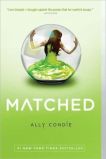
  • Matched by Ally Condie
  • Delirium by Lauren Oliver
  • Partials by Dan Wells
  • Uglies by Scott Westerfeld
  • The Maze Runner by James Dashner (I didn’t care for this book but because so many people liked it, I feel okay including it in this list. Divergent was actually sort of like what the Maze Runner could’ve been with less false tension and a lot more action.)

Your Pick for Nik! – December’s Review!

warbreakerTitle: Warbreaker

Author: Brandon Sanderson

Genre: Fantasy

Rating: 4/5 stars

Characters: My favorite element in Sanderson’s works are always his characters. They are  dynamic, interesting, and you can tell they’ve been developed over a long period of time. For novels written in third person, there is surprisingly a great deal of in-depth personal exploration that usually only comes with first person novels. He somehow managed to give us that fantasy feel while sharing that inner dialog that always makes me feel more invested into the characters’ futures.

After reading Mistborn, I’d always wondered why it was the characters were my favorite element. The magic systems and overall story were strong enough to contend in their own right, but when recommending the series to customers, I always talk about how enjoyable the characters were to read about – even the unlikable ones. After reading Warbreaker and the annotations after each chapter, the author clued me in as to why this is: his characters take action. Inner thoughts and development are indeed good for a story and they let you infer motives and tendencies, but many authors send their characters through inner struggles through most of the book before they finally overcome them to make something happen. Sanderson gives you that inner turmoil, but makes his characters act on them regardless of hangups. That, (along with their obviously well-developed personalities) is why I rave so much about them.

Pacing: ironically, although the characters were making decisions and advancing their own personal stories, it was a rather slow read. This was deliberate on the author’s part, as he mentioned in his annotations that he likes slower-moving books, but it still drug in a couple of places for me. That said, I was never bored. And as odd as it sounds, as soon as I began reading the annotations at the end of each chapter, the story really took off. Perhaps it was because my level of investment into the story had just increased, but likely it was because it gave me a lot more to think about, whether it be storyline or the writing behind it. I also don’t remember a single scene that didn’t either advance plot or reveal character, so overall I think it was a success.

World Building: Anyone who has ever seen my house (or for that matter, ever spent a bit of time with me) knows how much I love color. The idea that there is a world and magic system totally devoted to and focused around color makes me immensely happy. Sanderson always managed to subtly draw my attention back to the vibrant shades and hues that run rampant in this world. It was a delightful contrast to the drab settings I normally picture while reading fantasy, making the story that much more exotic and vibrant. Needless to say, the visual elements the author described in Warbreaker were highly evoking and I appreciated the picture he painted. (there’s your bad pun for the review… you knew it was coming.)

In any of Sanderson’s works you can tell he spends a lot of extra time developing his worlds. From the semi-tropical settings to the viable yet opposing religious systems, it was all very well-conceived. The ideas were excellent and thorough, but the most notable element was the way the author wove this information into the story. Creating a totally new world in fantasy is difficult to do without “info-dumping” on your reader, and I am in awe at how seamlessly he managed to convey loads of information about this place up-front without drawing attention away from the story. Many subtle drop-in details were used, but most of the information we found out through conversations and behaviors of the characters. As this is something I struggle with in my own writing, I found it very helpful to see it done so well.

Writing: While the book contained an excellent example of world building, it also had many other elements of writing that I found insightful. In fact, for any budding authors out there, I highly recommend studying this book to improve your craft. The epub version of this novel (available through bn.com) contain the author’s annotated notes after every chapter. They not only provided extra information on the story as a whole (making it that much more rich and vibrant) but also let us have an inside look at the developmental process that goes into writing a good fantasy novel. Sanderson even provides several suggestions and tips for making a good story even stronger. It was really interesting to read a passage then get the author’s first-hand account of what moods he was going for, what characters he hoped to highlight, and how the scene advanced the plot.

While not everybody approaches writing in the same way, it’s helpful to see inside someone else’s creative process to get a feel of how much work goes into developing a great story. This brings me to my final point: writing, at least good writing, is a lot of hard work. Sanderson, who is by all accounts setting himself up a legacy in this genre went through several drafts and considered thousands of feedback notes before settling on this final product. I admire that constant strive for perfection and I also realize that good fantasy takes hard work, dedication, and time, even for the professionals. If you are working on a novel, don’t let endless hours of rewriting and editing discourage you – your work will show and it will only get stronger.

Overall, this pick was a great read, and one that I’m especially grateful was chosen. I not only enjoyed it, but found inspiration to advance my own novel. I am eager to pick up The Way of Kings next, as at least a dozen people have told me it’s their favorite Sanderson.

by Niki Hawkes

Other Books You Might Like:

Now Let’s Discuss!

I had a lot of fun composing this review, but I’m most looking forward to hearing what YOU think:

  • What are your overall impressions/ratings of the book?
  • What were your favorite elements?
  • Who was your favorite character?
  • Did you predict the plot twists before they happened?