Image

Book Review: The Strength of the Few by James Islington

Title: The Strength of the Few

Author: James Islington

Series: Hierarchy #1

Genre: Fantasy

Rating: 4.5/5 stars

The Overview: The Hierarchy still call me Vis Telimus. Still hail me as Catenicus. They still, as one, believe they know who I am. But with all that has happened—with what I fear is coming—I am not sure it matters anymore. I am no longer one. I won the Iudicium, and lost everything—and now, impossibly, the ancient device beyond the Labyrinth has replicated me across three separate worlds. A different version of myself in each of Obiteum, Luceum, and Res. Three different bodies, three different lives. I have to hide; fight; play politics. I have to train; trust; lie. I have to kill; heal; prove myself again, and again, and again. I am loved, and hated, and entirely alone. Above all, though, I need to find answers before it’s too late. To understand the nature of what has happened to me, and why. I need to find a way to stop the coming Cataclysm, because if all I have learned is true, I may be the only one who can. Goodreads

The Review:

I’m writing my review after having just finished this book, but I can tell this is one of those that I’m going to have to sit with for a while before I can completely form how I feel about it. Or maybe I just need to talk it through:

I think I loved it, but there were just a few tiny minor things that made me question myself while I was reading. One of which was a bit of a disjointed plot, another was a moment that I viewed as clear emotional manipulation (which I’m carrying some resentment for thank you very much), and few story conveniences.

I thought the plot was a bit disjointed. And I don’t even mean the grander-scale tertiary plot that made up the very core of the story. No, no I mean WITHIN each of those branches, there were a few things that seemingly to me, came out of nowhere. A great example is the chariot race – it’s not a spoiler because it really didn’t have a ton of bearing on the plot as a whole, and while I enjoyed it wildly – it felt nestled in just for the sake of having that fun element. Now I would definitely rather this than the alternative, but it’s things like this that pulled me out of the story a bit.

And maybe disjointed isn’t even the right word – maybe it’s the lack of seamless integration for some of these cool elements. They felt plunked in. There wasn’t enough lead-up. And there were a couple of times where I had to suspend my disbelief a little bit and “just go with it.”

But given the massive undertaking that was this project, and how well he wove together the storylines, and how ultimately it culminated into an ending that left me eager to pick up more, even though I just spent an entire month on it – how much do my criticisms matter?

This is still one of the best books I read in 2025 and I consider it an entirely worthwhile continuation to one of the best books that I’ve ever read, period. And that’s the thing – when you write a book that is the paragon of perfection (at least as far as my personal reviewing criteria), it would be really, really difficult for anything else to measure up. Let alone a middle book which doesn’t have either new series novelty or series-ending momentum. Even comparing it to the first book, which lives on a pedestal, I think it has more than earned some slack.

So all of that said, I’m disappointed that I didn’t love it quite as much as the first book, but if I can get enough distance and perspective to evaluate it as a whole, holy crap – that was a great read! It’s one of those books, kind of like Sanderson‘s Stormlight Archive, where you go through hundreds and hundreds of pages without feeling like a single one of them is wasted. It was a joy to read, and I cannot wait for the next one.

Thank you to my Patrons: Dave, Katrin, Frank, Jen, Sonja, Staci, Kat, Betsy, Eliss, Mike, Elizabeth, Bee, Tracey, Poochtee, Kinsey, Alysa and Derek! <3

by Niki Hawkes

Image

Book Review: A Practical Guide to Conquering the World by K.J. Parker

Title: A Practical Guide to Conquering the World

Author: K.J. Parker

Series: The Siege Trilogy #3

Genre: Fantasy

Rating: 4/5 Stars

The Overview: This is the true story of Aemilius Felix Boioannes the younger, the intended and unintended consequences of his life, the bad stuff he did on purpose, and the good stuff that happened in spite of him. It is, in other words, the tale of a war to end all wars, and the man responsible. -Goodreads

The Review:

I’m so glad I read this trilogy. The first book was the strongest, but there’s so much good stuff in the rest of it that I still recommend the entire thing highly.

The writing voice and style choices are always what strike me first when I start a Parker novel, convincing me it’s written by someone who knows all the rules masterfully enough to break them with flair. Everything from the construction of the series as a whole to certain ways he drops in backstory – it’s all so good I feel like I need to read it again to pick up on the even subtler things I missed. Add to all of that a deeply funny infusion of dry humor, and you have novels that fire on all cylinders in my wee brain.

Felix’s story was interesting, cleverly written, and abundant with “keep reading to find out more” mechanisms that had me engrossed. Each MC POV so far has had a particular talent that lends itself to the plot, and Felix’s eclectic ones were especially fun, adding a nice variety to the story.

One of the most compelling things about this trilogy was finding out how he was going to tie the whole series together. Books 2 & 3 start out seemingly unrelated, but slowly start to show their connections. I will say the way in which they relate ended up being a bit looser than I was hoping for, but ultimately the journey of discovery was worth the effort.

Also did I mention it was funny? Perhaps not quite as funny as the first book, but overall I’ve read this entire trilogy with a constant edge of amusement (kind of like with a Pratchett book, only darker), which is a big part of why I enjoyed it so much. I genuinely can’t wait to read more from this author. Consider him a new Obsessive Bookseller favorite!

This is one of those series you read for a certain vibe/mood, and I’m hoping to find more of this specific craving in his other works (good thing he has so many!). Another good comparison is that it reads like a more jovial version of Abercrombie. Who knew grimdark would end up being the types of books that tickle me the most? Maybe it has something to do with the contrast of so many darker moments making the smidgen of light and hope shine through all the brighter. Or perhaps I just relate to it more – when everything’s gone to shit, you may as well laugh.

Recommendations: read at least the first book, Sixteen Ways to Defend a Walled City, as it’s the strongest (and I think it would be just fine as a stand-alone). However, if you’re even a fraction as delighted with it as I was, I think you’ll like the rest of the trilogy too. But seriously that first book -> a must read!

Thank you to my Patrons: Dave, Katrin, Frank, Jen, Sonja, Staci, Kat, Betsy, Eliss, Mike, Elizabeth, Bee, Tracey, Dagmara, and Poochtee! <3

Other books you might like:

by Niki Hawkes
Image

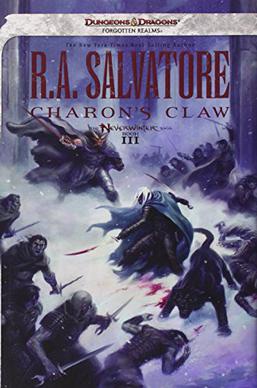
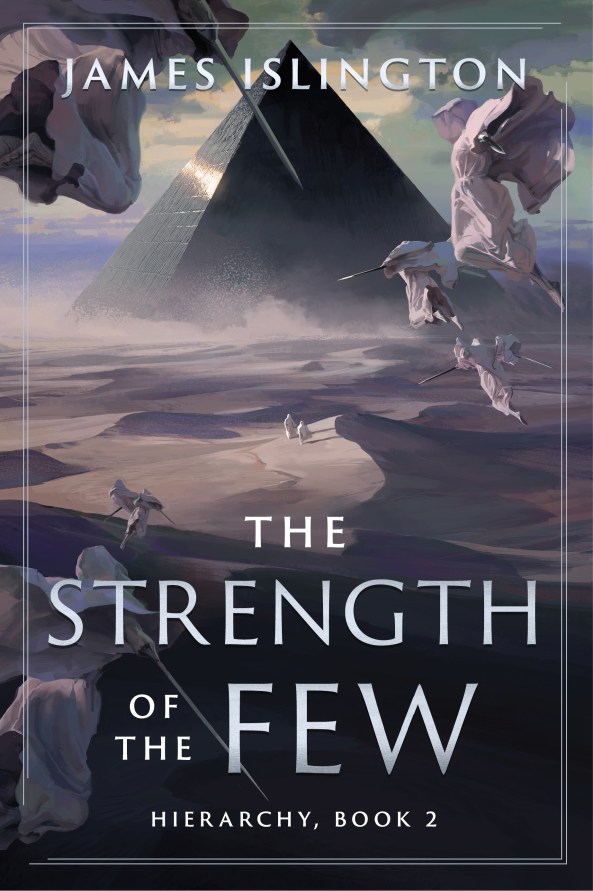
Book Review: Charon’s Claw by R.A. Salvatore

Title: Charon’s Claw

Author: R.A. Salvatore

Series: Neverwinter #3, Legend of Drizzt #25

Genre: Fantasy

Rating: 2/5 stars

The Overview: Drizzt draws his swords once more to aid his friends. His lover, Dahlia Sin’felle, can speak of nothing but the moment she will face the Netherese lord Herzgo Alegni once again. Drizzt has already followed a trail of vengeance beside Dahlia. Can he justify one more battle to settle a grudge he does not understand? Artemis Entreri too seeks vengeance. He offers to aid Dahlia in her mission to destroy Alegni. But Charon’s Claw, Alegni’s sentient sword, dominates Entreri’s movements—if not his mind. And then there’s the way Entreri looks at Dahlia. Can Drizzt trust his old foe? -Goodreads

The Review:

I kind of hated this book. And have kind of hated this entire set.

Hated.

I’ve read over twenty books with Drizzt so far and seriously – everything through Ghost King has been superb (assuming we’re giving Icewind Dale a pass). Neverwinter has felt directionless. Aimless. Lacking in any sort of purpose… boring? Which granted is in line with the transitional state of the main character and is probably partially intentional, but that does not mean that I have to enjoy reading about it. Thank goodness for those Drizzt interludes, is all I’m saying.

That leads well into the most prominent problem: not enough Drizzt. Only 20% Drizzt and a whole mess of dozens and dozens of villains with limited shelf lives. What little there was of Drizzt progressed the plot in a meaningful way, but did I really need to slog through 300+ pages for such a small amount of actual story?

What’s left felt like filler plot. Within the prologue and the first couple of chapters, Salvatore introduced over a dozen villains I needed to keep track of if I had any hope of following the plot. Problem is, it’s a Drizzt book. The 25th fricken Drizzt book. And you know most of those villains are going to wind up cannon fodder. So ultimately, having to commit to memory all of those characters felt like a colossal waste of my reading time.

On top of all of that, there’s a new character in this set whom I don’t like even a little.

Those are very specific reasons why Neverwinter has been less than successful for me. I’m really hoping to like the final book more. I was averaging a book or two per year in the Drizzt world until I hit Neverwinter, and it has taken me half a decade just to read the first three. And I still have one more to go!

Recommendations: as I mentioned, everything up to and including Ghost King has been superb – highly recommended (starting with the Dark Elf Trilogy)! It’s only in this Neverwinter set that I’ve personally become grouchy and dissatisfied. Here’s hoping the next set is a better return to form on all of the Salvatore/Drizzt greatness I’m used to. EDIT: I’ve started book #4, the Last Threshold, and it’s SO MUCH BETTER. Finally.

Other books you might like:

by Niki Hawkes

Image

Book Review: The Dragonbone Chair by Tad Williams

Title: The Dragonbone Chair

Author: Tad Williams

Series: Memory, Sorrow, and Thorn #1

Genre: Fantasy

Rating: 3/5 stars

The Overview: A war fueled by the powers of dark sorcery is about to engulf the peaceful land of Osten Ard—for Prester John, the High King, lies dying. And with his death, the Storm King, the undead ruler of the elf-like Sithi, seizes the chance to regain his lost realm through a pact with the newly ascended king. Knowing the consequences of this bargain, the king’s younger brother joins with a small, scattered group of scholars, the League of the Scroll, to confront the true danger threatening Osten Ard. Simon, a kitchen boy from the royal castle unknowingly apprenticed to a member of this League, will be sent on a quest that offers the only hope of salvation, a deadly riddle concerning long-lost swords of power. Compelled by fate and perilous magics, he must leave the only home he’s ever known and face enemies more terrifying than Osten Ard has ever seen, even as the land itself begins to die. -Goodreads

The Review:

This review is going to be more of a non-spoiler reading log. I hope you enjoy this journey a “tad” more than I did the one in the book.

Merely mentioning Dragonbone Chair in a recent video about all the unread books on my shelves, I was bombarded with a slew of comments saying I needed to read it ASAP. So I bumped it up a few years in the priority list and gave it a go.

Of all the popular classic fantasy, I think Williams is the only one I hadn’t read something from. I was excited to dive in. But I was also aware that classic fantasy has a tendency to be a bit long-winded and that the joy is often in the journey itself rather than in the destination. I’m not a patient reader, so with comments like “it takes a while to get going,” you can see how this may not be a good match for my tastes right from the start.

But it’s a classic. And beloved by many book friends who love a lot of the same stuff I do. So I gave it a go.

Truthfully, the beginning was about what I’d expected. Very slowly paced and all about immersing the reader in the often mundane aspects of castle life. The writing immediately jumped out to me as beautiful, relaxed, and well-flowing. Like getting a warm hug from your book. I really liked that aspect, so I was content to sit back and enjoy the journey for once. Then some amazing stuff happened for about one chapter and I was hooked!

…And then the novel proceeded to take over 120 pages for X character to get from point A to point B, and I was so disengaged that I started asking, “uh.. exactly when does this get better?”

I was truthfully considering a DNF. But remembering how relatively slow Hobb’s initial Farseer Trilogy was at first, and how many people abandon it before the magic really starts happening, I felt like there was a similar situation here, and if I just kept reading, eventually I’d see why so many love this series.

But, you see, there’s one distinct difference between my experience with this series and Hobb’s. I don’t mind slow plot progression in books as long as there’s a lot of deep character exploration. I’m totally on board for that type of story. However, with the Dragonbone Chair, the characters were interesting, but I really didn’t get a ton of depth from them. Their actions went a long ways towards developing character near the end, but for most of the book I liked them but didn’t feel particularly connected to them.

The overall handling of characters was weird for me. So, we get several hundred pages more or less focused on just a handful of people. I enjoyed reading about them quite a bit. And if nothing else got a connection of familiarity with them. However, we went from a handful of characters doing not much of anything but talking, to a massive influx of new people to keep track of without much time at all to build a connection with them. It felt like I’d picked up a totally different book at about the 75% mark. I wasn’t ready to keep track of so many names, and by the time I realized I needed to, I was already a bit lost.

So the story got way more interesting towards the end of the book, but any connection I had to most of the characters got lost in the jumble. To the point where something would happen to someone and my first thought would be, “holy $#%?, I didn’t even realize they were in this scene (or existed at all, in some cases).” Oye.

Perhaps my level of disengagement near the end was a result of how passive I already felt about the book up to that point.

Here’s the thing. I feel like I’m standing back, admiring a painting called “Blue Explosion,” appreciating that it’s a brilliant work of art and more or less enjoying looking at it, but can’t shake the thought, “but, does it really need that much blue?” The Dragonbone Chair is supposed to make you feel like you’re sitting around a campfire getting an epic tale told to you. It’s supposed to be all about the journey and the lore. While I’m over here wishing the plot had been more concise and the pacing more evenly distributed. That was a really long-winded way of saying that it just wasn’t written for my personal tastes but was still very well done.

So where do I go from here? Despite the rapid-fire of characters near the end, I found myself very interested in the politics. The battle scenes were good. I liked the quest aspect, even though I still couldn’t tell you exactly who’s on it or what their individual motives are. I find myself masochisticly willing to dive into the next book to see if my issues carry over. Perhaps it will keep the same decent momentum and all I need to do is care enough to keep the characters straight.

I started this book as a Buddy Read in my Goodreads group with a bunch of people. We lost a few right out the gate, but then they started dropping like flies until only myself and two others remained. Plodding diligently. We’ve agreed we’ll need the commitment of a BR to get to the next one and it’s currently scheduled for April. I’m still not sure I want to work that hard to read hundreds more pages for a series I’m just okay about atm. But that glimmer of potential is keeping me around. For now.

Recommendations: this is a beloved classic fantasy that would be a great match for those who love Tolkien and Jordan (…I’m not one of those people). It’s also the series that inspired George R.R. Martin, and you can totally see bits of influence throughout. The writing is beautiful and it’s more about the journey than the destination. It’s perhaps is a mite less engaging than I want, but I know it will work well for more patient readers.

Other books you might like:

by Niki Hawkes
Image

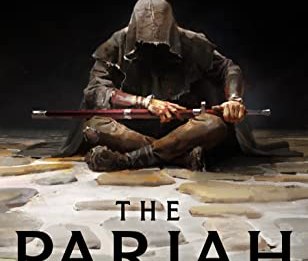
Book Review: Pariah by Anthony Ryan

Title: Pariah

Author: Anthony Ryan

Series: Covenant of Steel #1

Genre: Fantasy

Rating: 2/5 stars

The Overview: Born into the troubled kingdom of Albermaine, Alwyn Scribe is raised as an outlaw. Quick of wit and deft with a blade, Alwyn is content with the freedom of the woods and the comradeship of his fellow thieves. But an act of betrayal sets him on a new path – one of blood and vengeance, which eventually leads him to a soldier’s life in the king’s army. Fighting under the command of Lady Evadine Courlain, a noblewoman beset by visions of a demonic apocalypse, Alwyn must survive war and the deadly intrigues of the nobility if he hopes to claim his vengeance. But as dark forces, both human and arcane, gather to oppose Evadine’s rise, Alwyn faces a choice: can he be a warrior, or will he always be an outlaw? -Goodreads

The Review:

Pariah was my most-anticipated fantasy release of 2021. I was so excited… and I wished I’d liked it more.

A couple of things sort of sapped my enjoyment of this book. Things that may not bother others as much as they did me. For starters, the plot felt like it reset itself a couple of times throughout. Just as I was getting settled in with the characters and the situation, it would flip on its head and I’d have to start over again. Momentum in books is a huge component for me, and I didn’t feel as though this one carried any. It kept me feeling distant from the characters and apathetic about the plot. After all, what’s the point in getting attached to a story if we’re just going to flip directions again!

Even if the plot had maintained a trajectory and built on itself better, I still probably wouldn’t have liked the main character. I have come to realize that I crave characters who are catalysts of their own destiny. People who make things happen for themselves and who aren’t content to constantly drift back and forth on the whims of everyone around them. Now, granted, this is a story about an outcast, who understandably has a hell of a time getting anywhere with all of the obstacles in front of him. But to me, that prospect of a challenge can be even more exciting! I saw plenty of opportunities where the main character could’ve made things happen. Opportunities that wouldn’t have changed the story drastically, but would’ve upped my enjoyment considerably. Alas, that’s just not the character Ryan was shooting for, and it left me wanting.

To be fair, this next complaint is just a personal preference thing, and objectively I don’t hold it against the novel. But I cannot stand stories focused heavily on religious zealotry (a little is fine. Here it completely dominated the plot). Compound that with a passive character extremely susceptible to those ulterior machinations, and I found myself at the end of my patience very early on.

But I stuck with it, even though it was almost a DNF at only 50 pages to go. I finally realized I wasn’t interested in seeing what happened to the characters, I disliked the subject matter, and I was most likely going to pass on picking up the second book. It was hard to keep going. But I love this author for so many things that I made myself see it through to the end. There was some great stuff there for those who’ll like the book more than me, but I couldn’t bring myself to care.

This is very weird. I’ve been boasting Draconius Memoria as my all-time favorite fantasy series ever. Like, compared to literally every other series I’ve read, DM comes out on top. #1. The very best. The one I won’t shut up about.

So not enjoying Pariah makes me feel like I’m going to get kicked out of the Anthony Ryan fan club. I hope not. I still wildly appreciate this author, and I will continue to be excited about new books he has coming out… just maybe not Pariah’s sequel, Martyr, due out next year.

Recommendations: okay, so I didn’t love this one, but I still think it a book others will really dig. If you liked Ryan’s slow-burn character-driven novel like Blood Song and don’t have the same reading quirks I do about character roles, plot structures, and religious zealotry, then you’ll probably enjoy this a lot more than I did. Also, don’t read what the book is about before diving in. The overview does what I hate most and gives major spoilers for things well into the book.

Other books you might like:

by Niki Hawkes
Image

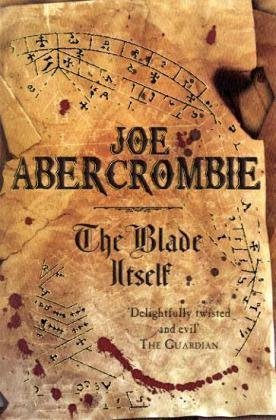
Book Review Addendum: The Shadow of What Was Lost by James Islington

The Shadow of What was Lost by James Islington

Title: The Shadow of What Was Lost

Author: James Islington

Series: Licanius Trilogy #1

Genre: Fantasy

Rating: 5/5 stars!

The Overview: As a student of the Gifted, Davian suffers the consequences of a war fought—and lost—before he was born. Despised by most beyond the school walls, he and those around him are all but prisoners as they attempt to learn control of the Gift. Worse, as Davian struggles with his lessons, he knows that there is further to fall if he cannot pass his final tests. But when Davian discovers he has the ability to wield the forbidden power of the Augurs, he sets into motion a chain of events that will change everything. To the north, an ancient enemy long thought defeated begins to stir. And to the west, a young man whose fate is intertwined with Davian’s wakes up in the forest, covered in blood and with no memory of who he is… -Goodreads

The (Updated) Review:

Responsible for one of my favorite reading experiences in 2017, I originally reviewed the first two books for a newspaper. I addressed the series as a whole and didn’t have the word count to really delve into specifics of each book. I also averaged my ratings of the two into a 4.5. Not a bad rating, but it didn’t accurately reflect my experience with each book. After finishing my reread in preparation to finish the series, now seems like a great time to update my review.

I loved The Shadow of What was Lost my first time through, but somehow it was even better the second time. I think I mentioned an issue with repetitive word choice near the end to justify the docking of .5 stars, but whatever pedantic mindset made me focus on that must have vanished because I didn’t notice it this time around (and I was looking). I completely loved every single moment. So much so that my re-evaluation places it with a solid 5 stars and a spot on my very conservative all-time favorites shelf.

The book does an amazing job providing that nostalgic classic fantasy/adventure feel. Between the likable nature of all the characters, the lightheartedness of the beginning chapters, and that exciting first spark leading to adventure, it reminded me of the likes of Brooks, Eddings, and Jordan. But it only got better from there as Islington used some cool concepts and concise writing to modernize the story. I love classic fantasy, but find its simplicity something I have to be in a specific mood for. Islington managed to provide the best of new and old. Combine all of that with with a quality Michael Kramer audio production, and we have a winner.

I loved the pacing, the characters, the adventure, the carefully parceled-out information, the twists, the world-building, all of it. The only thing that made it difficult on the first go-round was the similarity of many of the names. It made it difficult and slightly stressful to keep track of everyone. But this time I just kind of sat back and trusted that it would all come together, and that helped a lot. I’m sure these issues would’ve been nil had I been reading the physical copy, but for obvious reasons (Michael Kramer), I sacrificed some clarity for the experience.

Recommendations: this is a phenomenal start to a series that only gained momentum on the reread. I’d hand it to fantasy readers who love that classic fantasy feel, but crave something more complex. I’m reserving final recommendations until I read the last book, but consider The Shadow of What Was Lost an official Obsessive Bookseller favorite!

Other books you might like:

by Niki Hawkes