Image

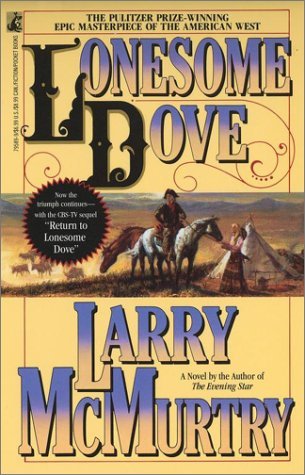
Book Review: Lonesome Dove by Larry McMurtry

Title: Lonesome Dove

Author: Larry McMurtry

Series: Lonesome Dove #1

Genre: Literary Fiction/Western

Rating: 5/5 stars

The Overview: A love story, an adventure, and an epic of the frontier, Larry McMurtry’s Pulitzer Prize-winning classic, Lonesome Dove, the third book in the Lonesome Dove tetralogy, is the grandest novel ever written about the last defiant wilderness of America. Journey to the dusty little Texas town of Lonesome Dove and meet an unforgettable assortment of heroes and outlaws, whores and ladies, Indians and settlers. Richly authentic, beautifully written, always dramatic, Lonesome Dove is a book to make us laugh, weep, dream, and remember. –Goodreads

Dave’s Review:

Lonesome Dove is an enormous book, and it is not a fast-paced one. McMurtry takes his time developing the story, allowing the characters and their relationships to evolve at a leisurely pace. However, despite its length and deliberate pacing, I never found it a chore to read. Quite the opposite, actually. I was happy to spend time in this world, following these characters wherever the journey took them.

Having seen the television miniseries years ago, I was already familiar with the main characters, even if I no longer remembered many of the details of the plot. Revisiting Gus, Call, Deets, and the others in the novel was a pleasure. McMurtry creates an impressive cast of characters, and what struck me most was how many of them are memorable and endearing, even those who only appear briefly. They feel like real people, with their own quirks, flaws, and motivations, rather than simply serving a purpose in the story.

The book also offers a fairly unromantic view of life in the American West. There is plenty of adventure, humor, and camaraderie, but McMurtry never loses sight of how difficult and often brutal life could be. The journey is filled with hardship, violence, and loss, and the author is not afraid to let events unfold in ways that are uncomfortable or heartbreaking. In that respect, I found the novel considerably harsher at times than I remembered the miniseries being. Perhaps that is partly because the television adaptation may have been softened to some degree for prime-time network audiences, but the book certainly does not pull any punches.

Ultimately, what makes Lonesome Dove so good is not any single event or plot development, but the characters and the time spent with them. McMurtry has created a wonderfully rich and lived-in world that feels both compelling and authentic. Despite its considerable length, I was never eager for it to end. This is a remarkable novel that absolutely deserves its reputation as a classic of the Western genre and the Pulitzer Prize it received.
Image

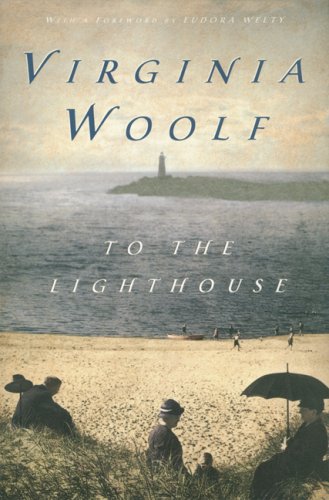
Book Review: To the Lighthouse by Virginia Woolf

Title: To the Lighthouse

Author: Virginia Woolf

Series: N/A

Genre: Literary Fiction

Rating: 3/5 stars

The Overview: The serene and maternal Mrs. Ramsay, the tragic yet absurd Mr. Ramsay, and their children and assorted guests are on holiday on the Isle of Skye. From the seemingly trivial postponement of a visit to a nearby lighthouse, Woolf constructs a remarkable, moving examination of the complex tensions and allegiances of family life and the conflict between men and women. As time winds its way through their lives, the Ramsays face, alone and simultaneously, the greatest of human challenges and its greatest triumph—the human capacity for change. –Goodreads

Dave’s Review:

Virginia Woolf’s To the Lighthouse is widely considered to be a pinnacle of twentieth-century literature. Its deep symbolism, introspective style, and philosophical musings about the passage of time and life serve as a wealth of material for study and discussion. That said, I found it much easier to appreciate than to actually enjoy.

Anyone expecting a conventional narrative will almost certainly struggle, as I did. There is very little in the way of plot, with the author instead focusing largely on the inner thoughts and shifting perspectives of her characters. While this stream-of-consciousness approach has merit, it comes at the expense of momentum. Long portions of the novel feel more like introspection than storytelling. The pacing is glacial, and I was frequently waiting, hoping, for something interesting to happen.

The characters likewise failed to engage me. Woolf spends much time in the minds of a number of them, but the style renders them largely indistinct and unmemorable. They blend together, making it difficult to relate closely or to form a real attachment to any one individual. At this point, a couple of weeks after having finished the book, very few of the characters left any lasting impression on me. They really function merely as mouthpieces (mind pieces?) for the author’s ideas, a choice which often caused me to struggle with engagement.

Despite these frustrations, the book succeeds at what I believe it is intended to do – that is to ruminate on the passage of time and life. The lighthouse can be seen as a symbol of long-term goals, and the many ways that they shape our lives as we aspire to achieve them. It is certainly symbolic of a plethora of other things that attentive readers will pick up on as well, given some patience. Woolf is clearly a strong writer, being almost poetic at times. The density and style do at times require a careful analysis, similar to that of poetry, to extract some of the layered meaning. If I ever revisit this work in the future, I will be sure to do so at a point where I am prepared to devote the necessary time and focus.

I can certainly appreciate why To the Lighthouse is considered a masterpiece, even if it never connected with me on the level that was likely intended. It is a book whose ideas outlive the characters or story. I am glad to have read it, even though the journey was difficult and ultimately not as rewarding as I had hoped to find it.