Image

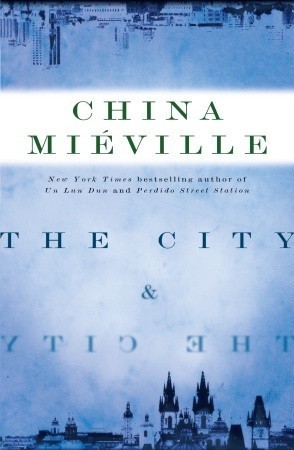
Book Review: The City & the City by China Miéville

Title: The City & the City

Author: China Miéville

Series: N/A

Genre: Science Fiction

Rating: 3.5/5 stars

The Overview: When a murdered woman is found in the city of Beszel, somewhere at the edge of Europe, it looks to be a routine case for Inspector Tyador Borlú of the Extreme Crime Squad. But as he investigates, the evidence points to conspiracies far stranger and more deadly than anything he could have imagined. Borlú must travel from the decaying Beszel to the only metropolis on Earth as strange as his own. This is a border crossing like no other, a journey as psychic as it is physical, a shift in perception, a seeing of the unseen. His destination is Beszel’s equal, rival, and intimate neighbor, the rich and vibrant city of Ul Qoma. With Ul Qoman detective Qussim Dhatt, and struggling with his own transition, Borlú is enmeshed in a sordid underworld of rabid nationalists intent on destroying their neighboring city, and unificationists who dream of dissolving the two into one. As the detectives uncover the dead woman’s secrets, they begin to suspect a truth that could cost them and those they care about more than their lives. What stands against them are murderous powers in Beszel and in Ul Qoma: and, most terrifying of all, that which lies between these two cities. Casting shades of Kafka and Philip K. Dick, Raymond Chandler and 1984, The City & the City is a murder mystery taken to dazzling metaphysical and artistic heights. Goodreads

Dave’s Review:

The City & the City, like most of Miéville’s writing, is one of the most original novels I have read recently. The central premise is so unusual that it is difficult to describe in a cogent manner. Blending a noir detective story with speculative fiction, Miéville creates a world that is truly unique. Even when I wasn’t completely invested in the story, I remained fascinated by the ideas behind it.

The novel follows Inspector Tyador Borlú as he investigates a murder spanning two cities. The bizarre element is that these cities occupy the same physical space, while their inhabitants are conditioned to perceive them as separate. It may be difficult to describe, but the concept is brilliant, and the strange atmosphere of these intertwined cities is probably the book’s greatest strength. The mystery itself is fairly engaging, but it often feels secondary to the exploration of the setting and the social structure around it. I have said before that the setting is the most memorable character in a Miéville story.

For all of its creativity, however, the novel can also be frustrating at times. Although I found this to be one of the easier Miéville settings to wrap my head around, a good bit of effort is nevertheless requires to understand the world. The complexity of the world ramps up in certain ways as the story progresses, to where I occasionally found myself struggling to follow exactly what was happening in the latter parts. Borlú is a competent detective and protagonist, but he never develops into a very memorable character, and many of the others blend together or take a backseat to the setting and the ideas. The ending also left me wanting a bit more, resolving the central mystery but without the emotional or thematic payoff I had hoped for.

Despite those shortcomings, The City & the City is well worth reading for its originality alone. It reminded me of Robert Jackson Bennett’s The Tainted Cup (which, coincidentally, I had read just prior to this book) in the way it uses an inventive speculative setting to elevate a detective story into something far more unique. Both books also won the Hugo Award for best novel, perhaps fitting given the way that they creatively blend speculative fiction and mystery. I may not consider it to be a perfect novel, but it will certainly stay with me for a long time to come.

Image

Book Review: Heaven’s River by Dennis E. Taylor

Title: Heaven’s River

Author: Dennis E. Taylor

Series: Bobiverse #4

Genre: Science Fiction

The Overview: More than a hundred years ago, Bender set out for the stars and was never heard from again. There has been no trace of him despite numerous searches by his clone-mates. Now Bob is determined to organize an expedition to learn Bender’s fate—whatever the cost. But nothing is ever simple in the Bobiverse. Bob’s descendants are out to the 24th generation now, and replicative drift has produced individuals who can barely be considered Bobs anymore. Some of them oppose Bob’s plan; others have plans of their own. The out-of-control moots are the least of the Bobiverse’s problems. Undaunted, Bob and his allies follow Bender’s trail. But what they discover out in deep space is so unexpected and so complex that it could either save the universe—or pose an existential threat the likes of which the Bobiverse has never faced. –Goodreads

Niki’s Review [3/5 stars]:

Heaven’s River was a departure from the storytelling format I’ve come to expect from Taylor, and I’m not sure the change did it any favors.

One word: pacing. One of the best things about the Bob books is that they clip along at a great pace. Maybe even too fast in some instances, which makes the moments where he decides to deep dive into a specific story thread even more satisfying and immersive. This entire book was an immersive deep dive that honestly read to me as though it were originally planned as two separate short novels that ultimately got mashed into one.

And here’s the thing: I actually LIKED the direction the story took because it reminded me of my favorite thread from the original trilogy (basking within a cool alien culture). No, my issues lie in execution. Diving in, we had a clear idea on what the objective was, however it was unclear through most of the book how the characters’ actions were actually helping them towards their objective. It felt more like stumbling around and getting fortunate a few times more than successful executions of a plan. And I mentioned pacing… oh my gosh move it along already. There were too many repeating elements and encounters that made the book feel like a lot more of a drag than it needed to be. And what’s more, the aliens they spent time with resembled a completely separate alien species we’d already encountered (the Pav). Call me crazy, but since all the main characters are basically the same, you’d think that would leave enough creativity behind to diversify the aliens just a bit more. Maybe he thinks the universe just needs more otters…

But I rant.

The book has some issues, but I’d say overall I’m still glad I read it to continue the series. I’ve been thoroughly enjoying my time with these books this year, and I look forward to reading the next one. The good new is, it’s much shorter. And even though I have a rant to spare for this book, it was still something I enjoyed reading from start to finish. It’s just wasn’t as good as it COULD’VE been, you know?

Pick this series up if you enjoy the cheekier side of scifi. It’s fun without being dumb. Most of the time.

Thank you to my Patrons: Dave, Katrin, Frank, Jen, Karen, Sonja, Staci, Kat, Betsy, Eliss, Mike, Elizabeth, Bee, Poochtee, Kinsey, Alysa, Derek, Kelly, Grace, Carmen, and Leticia! <3

Other books you might like:

by Niki Hawkes

Dave’s Review [2.5/5 stars]:

Having enjoyed the first three Bobiverse novels for the most part, I went into Heaven’s River expecting more of the same. While I still found things to like, this is the first book in the series that left me feeling somewhat disappointed. It retains much of the charm and creativity that made the earlier books so much fun, but it also shows some signs that the formula is beginning to wear thin.

The biggest issue is the length. At over 500 pages, Heaven’s River feels considerably longer than the story it has to tell. The central mission is interesting enough, but it is stretched across too many detours and repetitive scenes, causing the pacing to drag for long stretches. Likewise, the series’ trademark humor, which was one of its greatest strengths early on, no longer lands with the same consistency. The pop culture references and self-aware wit are still present, but they have become predictable more often than not, rather than truly amusing.

That said, the novel has its merits. One of the main plot lines of the novel involves the exploration of the Quinlan civilization, which is imaginative and can be fascinating at times, even if the exploration is more drawn out than necessary. Perhaps the most interesting aspect is watching the Bobs continue to diverge into distinct individuals with competing philosophies and priorities. The growing ideological conflicts between different factions add genuine depth to the series and suggest that the greatest challenges facing the Bobiverse may ultimately come from within rather than from external threats. It sets up what I feel would be the most interesting direction for future installments in the series.

Although Heaven’s River still contains flashes of the imagination and charm that hooked me in the first book, it feels overextended at this point. I remain interested in seeing where the Bobiverse goes next, but I hope future installments recapture some of the tighter pacing and freshness of the first couple of novels.

Image

Book Review: The Modigliani Scandal by Ken Follett

Title: The Modigliani Scandal

Author: Ken Follett

Series: N/A

Genre: Thriller

Rating: 2.5/5 stars

The Overview: A fabulous “lost masterpiece” becomes the ultimate prize–for an art historian whose ambition consumes everyone around her, an angry young painter with a plan for revenge on the art establishment, and a desperate gallery owner who may have double-crossed his own life away. Behind the elegance and glamour of the art world, anything goes–theft, forgery, betrayal, and maybe even murder. . . . Goodreads

Dave’s Review:

I have read quite a few Ken Follett novels over the years – mostly historical fiction, but a couple of thrillers as well. While they do begin to feel somewhat formulaic after having read enough of them, I still generally find them enjoyable to read. The Modigliani Scandal is one of the few exceptions. It is an early Follett novel that contains moments of the talent he would later become known for, but ultimately feels underdeveloped and unsatisfying.

The central premise, which is a frantic search for a valuable lost Modigliani painting, sounds intriguing, but the execution never quite comes together. One of the biggest problems I had was the sheer number of characters introduced in such a short novel. The first half jumps rapidly between artists, dealers, collectors, and others, making it difficult to keep track of who is who or to become invested in any of their underdeveloped stories or backgrounds. Just as one plotline gains some momentum, the focus jumps elsewhere and does not return for some time.

Despite being not even 300 pages long, the novel often feels overcrowded. The author packs in so many plot threads, relationships, and twists that very little has time to develop properly. Many scenes feel rushed, leaving the characters flat and unmemorable. This is not at all like the enormous books that he would go on to write, which at times can swing too far in the opposite direction. I feel that this one would have benefited from another hundred pages or so to give the characters and plot development more time to breathe. The strongest writing comes later in the book, where some of the characters have become more familiar to the reader and it benefits from the strong momentum of the chase.

There are glimpses of the fast-paced suspense and the broad cast of characters that would dominate his writing, but The Modigliani Scandal reads more like an outline or a rough draft than a completed thriller. 2.5 stars.

Image

Introducing: My Co-blogger Dave!

You may have noticed a new voice on the blog (no, I am not co-writing as an alias). It’s my pleasure to introduce my Partner and new co-blogger: Dave Clark. We’ve been reading friends for years and I’ve always admired his superbly written and insightful reviews, and have long taken inspiration at his dedication and consistency. When the opportunity arose to invite him to post with me on this platform, I was ecstatic. We have a lot of similar SFF interests (you may see some dual-reviews), but Dave is much more well-read, diving into multiple genres and is currently working his way through several award-winning books lists (like the Pulitzer and the Hugos). I think he’s going to add a delightful variety to our core of book reviewing. Here’s a few things he wrote about himself as a bio:

My story with books is a simple one. I have been reading (and accumulating) books for my entire life. You will rarely see me without one in reach. I got started as a kid, reading them under the covers with a flashlight when I was supposed to have been going to sleep. Sometimes I still lose some sleep to reading, although I have since upgraded to proper lighting in hopes of minimizing the strain on my aging eyes. The majority of my reading is within science fiction and fantasy, but I also like to branch out for some broader exposure. So I do read literary fiction, horror, or an occasional selection from just about any other genre.

I’m so happy to have him here, and I love the new life his presence has breathed into the space. Here’s to many years of geeking out together about books! <3

by Niki Hawkes

Image

Book Review: To the Lighthouse by Virginia Woolf

Title: To the Lighthouse

Author: Virginia Woolf

Series: N/A

Genre: Literary Fiction

Rating: 3/5 stars

The Overview: The serene and maternal Mrs. Ramsay, the tragic yet absurd Mr. Ramsay, and their children and assorted guests are on holiday on the Isle of Skye. From the seemingly trivial postponement of a visit to a nearby lighthouse, Woolf constructs a remarkable, moving examination of the complex tensions and allegiances of family life and the conflict between men and women. As time winds its way through their lives, the Ramsays face, alone and simultaneously, the greatest of human challenges and its greatest triumph—the human capacity for change. Goodreads

Dave’s Review:

Virginia Woolf’s To the Lighthouse is widely considered to be a pinnacle of twentieth-century literature. Its deep symbolism, introspective style, and philosophical musings about the passage of time and life serve as a wealth of material for study and discussion. That said, I found it much easier to appreciate than to actually enjoy.

Anyone expecting a conventional narrative will almost certainly struggle, as I did. There is very little in the way of plot, with the author instead focusing largely on the inner thoughts and shifting perspectives of her characters. While this stream-of-consciousness approach has merit, it comes at the expense of momentum. Long portions of the novel feel more like introspection than storytelling. The pacing is glacial, and I was frequently waiting, hoping, for something interesting to happen.

The characters likewise failed to engage me. Woolf spends much time in the minds of a number of them, but the style renders them largely indistinct and unmemorable. They blend together, making it difficult to relate closely or to form a real attachment to any one individual. At this point, a couple of weeks after having finished the book, very few of the characters left any lasting impression on me. They really function merely as mouthpieces (mind pieces?) for the author’s ideas, a choice which often caused me to struggle with engagement.

Despite these frustrations, the book succeeds at what I believe it is intended to do – that is to ruminate on the passage of time and life. The lighthouse can be seen as a symbol of long-term goals, and the many ways that they shape our lives as we aspire to achieve them. It is certainly symbolic of a plethora of other things that attentive readers will pick up on as well, given some patience. Woolf is clearly a strong writer, being almost poetic at times. The density and style do at times require a careful analysis, similar to that of poetry, to extract some of the layered meaning. If I ever revisit this work in the future, I will be sure to do so at a point where I am prepared to devote the necessary time and focus.

I can certainly appreciate why To the Lighthouse is considered a masterpiece, even if it never connected with me on the level that was likely intended. It is a book whose ideas outlive the characters or story. I am glad to have read it, even though the journey was difficult and ultimately not as rewarding as I had hoped to find it.

Image

Book Review: Among Others by Jo Walton

Title: Among Others

Author: Jo Walton

Series: N/A

Genre: Fantasy

Rating: 2/5 stars

The Overview: Startling, unusual, and yet irresistibly readable, Among Others is at once the compelling story of a young woman struggling to escape a troubled childhood, a brilliant diary of first encounters with the great novels of modern fantasy and science fiction, and a spellbinding tale of escape from ancient enchantment. Raised by a half-mad mother who dabbled in magic, Morwenna Phelps found refuge in two worlds. As a child growing up in Wales, she and her twin sister played among the spirits who made their homes in industrial ruins, but her mind found freedom and promise in the science fiction novels that were her closest companions. When her mother tries to bend the spirits to dark ends with deadly results, Mori is sent away and must try to come to terms with what has happened without falling prey to the darkness.Goodreads

Dave’s Review:

Among Others is one of those books that sounds great on paper, and seems perfect for anyone who spent time reading classic science fiction and fantasy during their younger years – which certainly describes me. However, if you are actually looking for any sort of narrative to go along with that nostalgia, you will probably need to look elsewhere.

The novel follows Morwenna (Mori), a teenage girl attending a British boarding school. It takes place over the course of about a year, 1979, and is presented in the format of a diary written by Mori herself. The fantasy/magical elements are very subtle here, while the emotional core centers on Mori’s immersion in books as a coping mechanism for her childhood trauma. She goes extensively into the books that she is reading – and there are a lot of them over the course of the year. For me, this was the most fun element of the story, but unfortunately, they are not very well integrated into the narrative, often serving as more of a diversion from the lack of much of any plot than anything. I enjoyed the references to many authors and books that I have either read, or own and are waiting to be read, but anyone without much background in the classics may find all of the unfamiliar name-dropping to be tedious and repetitive.

Mori herself is an interesting and sympathetic narrator, but her arc feels flat over the course of the book. There is a conflict with her mother that is mostly internalized, and some dark things in her past which sound more interesting than anything that occurs over the course of the book, but this is alluded to only sparingly. There are also some magical elements that are so subdued and ambiguous that they seem almost unimportant. I also found the conclusion of the book to be very anticlimactic. Some of this may be a result of the diary format itself, which in general tends to be a reflective way of telling a story rather than immersing the reader in actions of the present.

The book contains magical realism elements and is written in a lyrical yet accessible style that will probably appeal to fans of Susanna Clarke or Ursula Le Guin (in fact, Le Guin wrote the introduction to my edition of the book). However, I find both of those authors to be superior to Walton, or at least to what we get in this book, which is the only Walton that I have read. The endless lists of books and name-dropping are more akin to the likes of Ready Player One, and although the writing style of Among Others is better, Cline uses them to tell a riveting adventure story, whereas Walton makes them too much the focus of the bare-bones story.

Sadly, this book did not work for me at all. It did win both the Hugo and Nebula awards, and it is apparent why it has some avid admirers, but the author’s approach just did not work for me. The classic science fiction and fantasy book references kept me going through the novel’s relatively short length, but I was relieved to be moving on to something else when I reached the end. Ultimately, Among Others feels more like a celebration of the genre rather than a compelling novel in its own right.